First impressions in event spaces are formed in the first five to ten seconds after an attendee walks through the doors. Before they have spoken to anyone. Before they have found their seat. Before the first speaker takes the stage.
They’ve already decided whether the room feels considered or generic, premium or rushed, energetic or flat.
That decision is not conscious. It’s pre-conscious processing, the brain reading the environment for cues and forming a judgment based on lighting, sound, layout, and visual experience landing simultaneously.
What matters for event production teams is this: those variables are exactly the ones you can control. Audience perception in events is not formed by content or speakers. It’s formed by the environment that surrounds them.
The rest of this piece works through what’s actually happening in those first seconds, and what production teams can do about it.
Why the first few seconds decide the rest
The audience is not making a decision when they walk in. They’re having a reaction. The room either feels worked on or it does not, and that read happens fast.
It’s worth being clear about what the audience is actually picking up on, because it is not anything they could articulate at the time. They’re reading effort. They are reading care. They’re reading whether the people running this thing have thought about what it’s like to be on the receiving end of it. Lighting, sound, layout, and visuals are the carriers for all of that.
The reason this matters operationally is that the first impression does not stay at the door. It becomes the lens for the rest of the event:
- A speaker who walks onto a stage in a room that the audience has read as premium gets graded more generously.
- The same speaker in a room the audience has read as generic gets graded more harshly.
- Networking lifts when the space invites it and stalls when it does not.
- Content lands differently depending on the environment it’s landing in.
This is the bit that often surprises planners who haven’t thought about it before. Event environment psychology is not soft. It changes the numbers on post-event sentiment, sponsor satisfaction, and content recall. Treating arrival as a phase that gets handled “If there’s a budget” is what produces events that feel disconnected from themselves later.
The four variables that shape arrival perception
Four things do most of the work. They have to operate together, which is the part that gets missed when production responsibilities are split across vendors or handled by the venue.
1. Lighting design
Lighting design is the most immediate variable. The eyes register it before anything else.
Flat overhead lighting reads as institutional. Fluorescent or default house lights signal that the space hasn’t been worked.
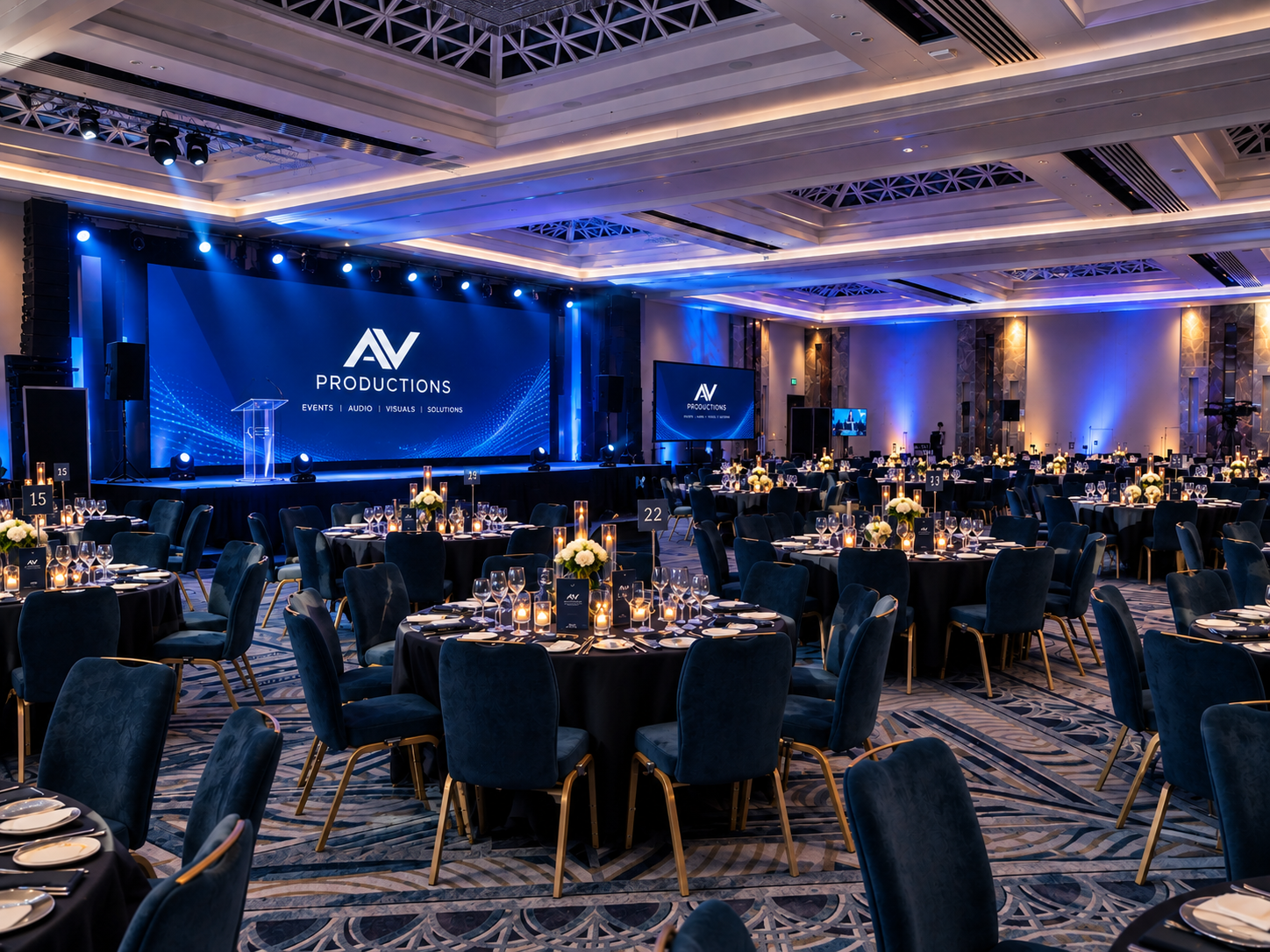
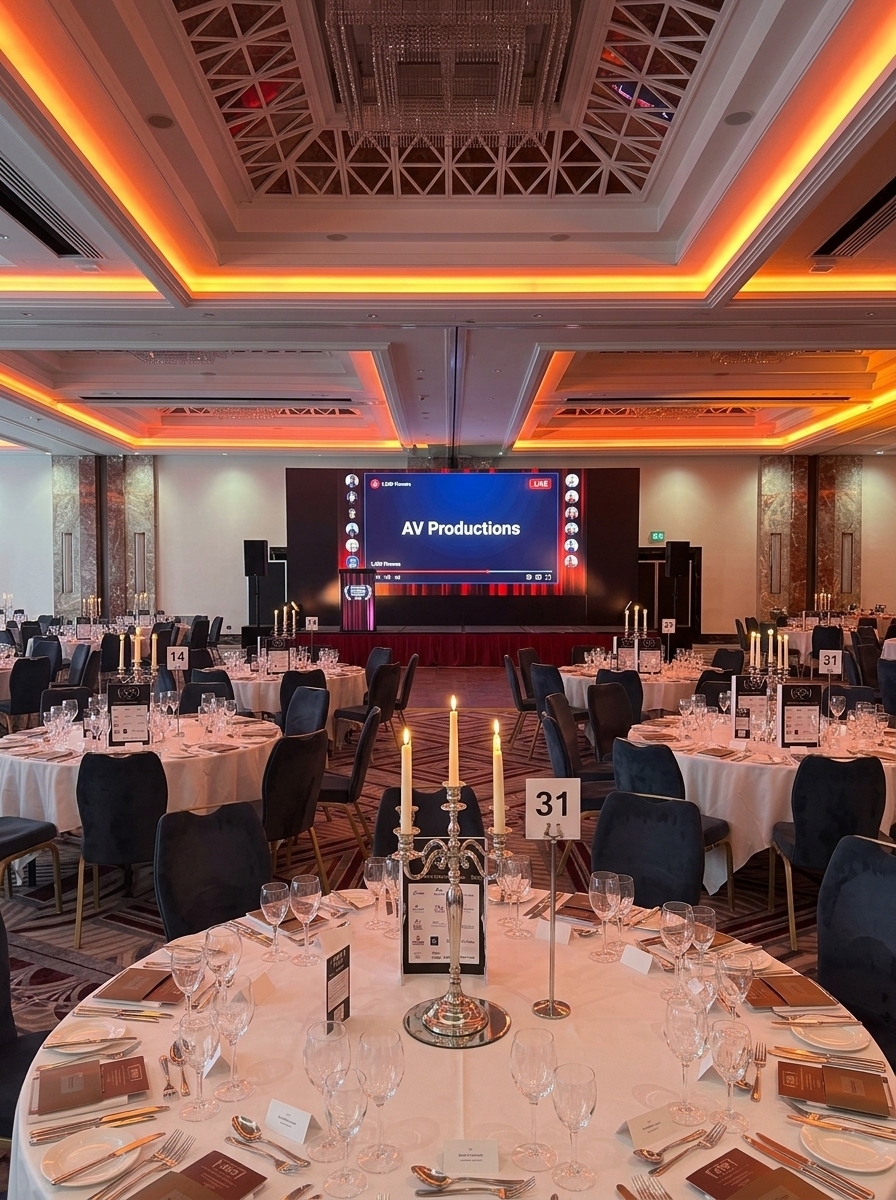
Layered lighting design signals consideration. The presence of:
- Uplighters on walls.
- Gobos projecting brand elements onto surfaces.
- Washes shifting the colour of architectural features.
- Accent lighting picking out scenic elements.
All of these combine into an event atmosphere design the audience reads as premium without being able to articulate why.
Colour temperature matters too.
| Temperature | Reads as | Best for |
| Warm (≤3000K) | Welcome, intimacy, approachability | Evening events, awards and networking |
| Cool (≥4000K) | Energy, focus, modernity | Conferences, product launches, daytime corporate |
One trap worth flagging: lighting the arrival area the same way you light the main stage flattens the visual journey through the event. Arrival should support what comes next, not compete with it.
2. Sound and audio environment
If lighting is the variable production teams over-think, audio at arrival is the one they underthink.
The mistake is assuming the room can be quiet until the content starts. It can’t. Silence in an event space reads as either tense or unfinished, and neither is the mood you want at the door. Default room sound, including HVAC hum, footsteps and the low buzz of voices, is worse, because it tells the audience the production hasn’t started yet, even though they have.
What works is curated arrival audio. Low volume, paced to lift gradually as the room fills, selected to match the event tempo rather than fight it. The audience won’t compliment you on it because they won’t consciously notice it. But they’ll notice when it’s missing somewhere else, and they’ll feel the difference here without being able to name it.
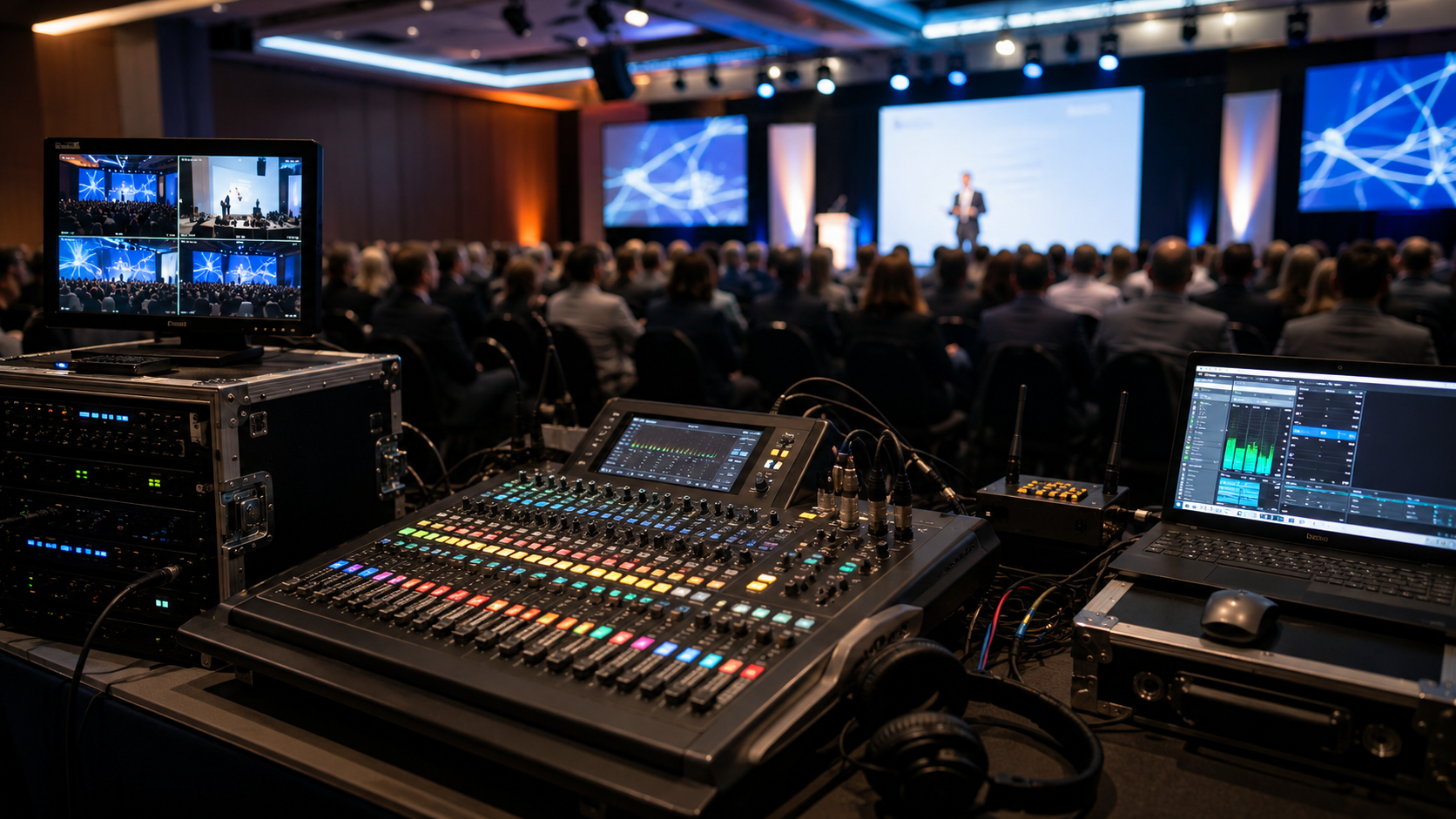
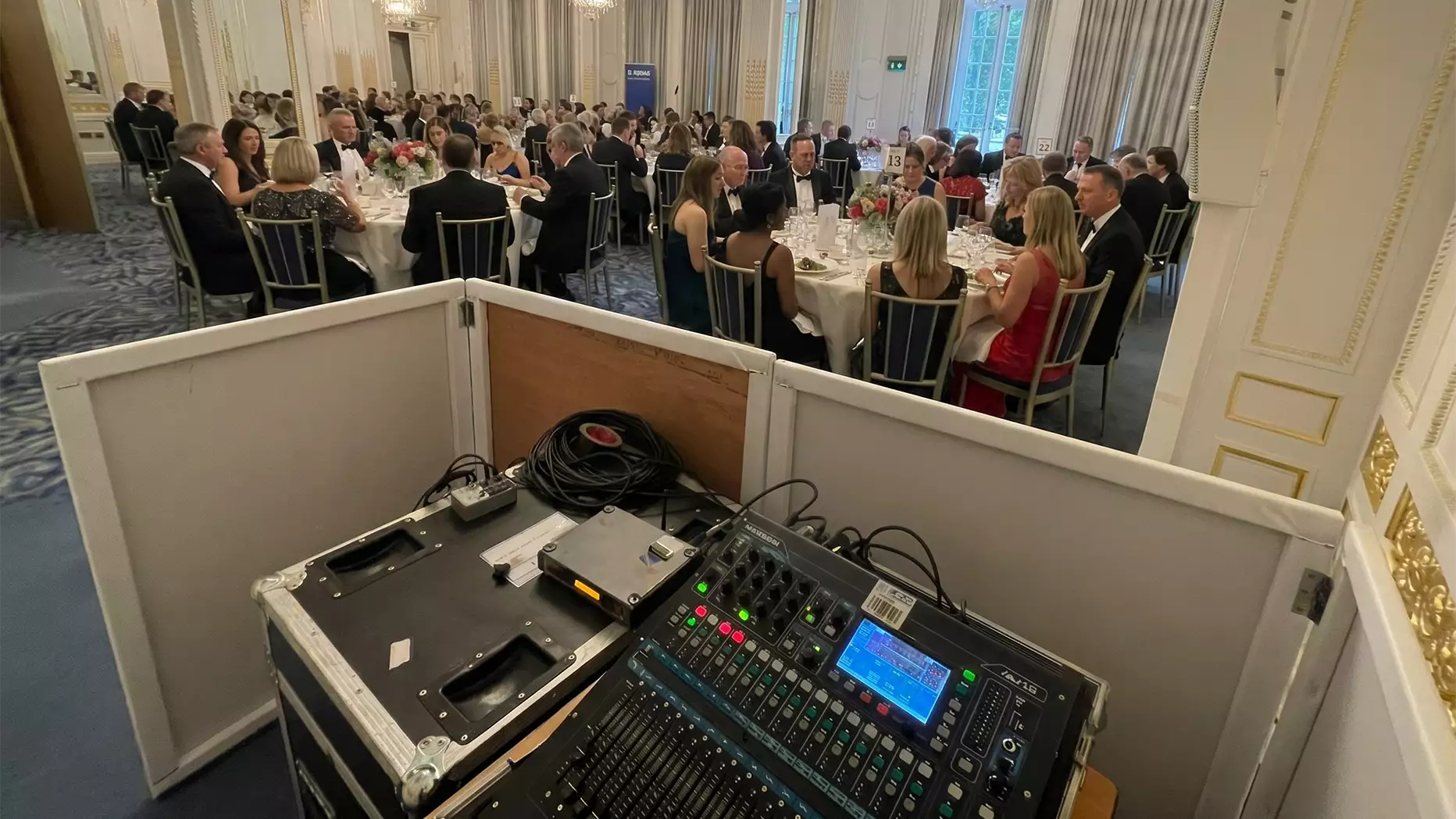
The audio system itself is also doing work at this point.
- Crisp, evenly distributed sound at low volume signals production quality before anyone’s said a word into a microphone.
- Muddy or unbalanced audio signals the opposite, and that reading carries into the main programme.
By the time the keynote starts, the audience has already decided whether the audio is something they can trust.
Underneath all of this sits the venue’s own acoustics, which is one of the reasons venue choice matters more than most planners assume, but more on that shortly.
3. Visual experience and stage design
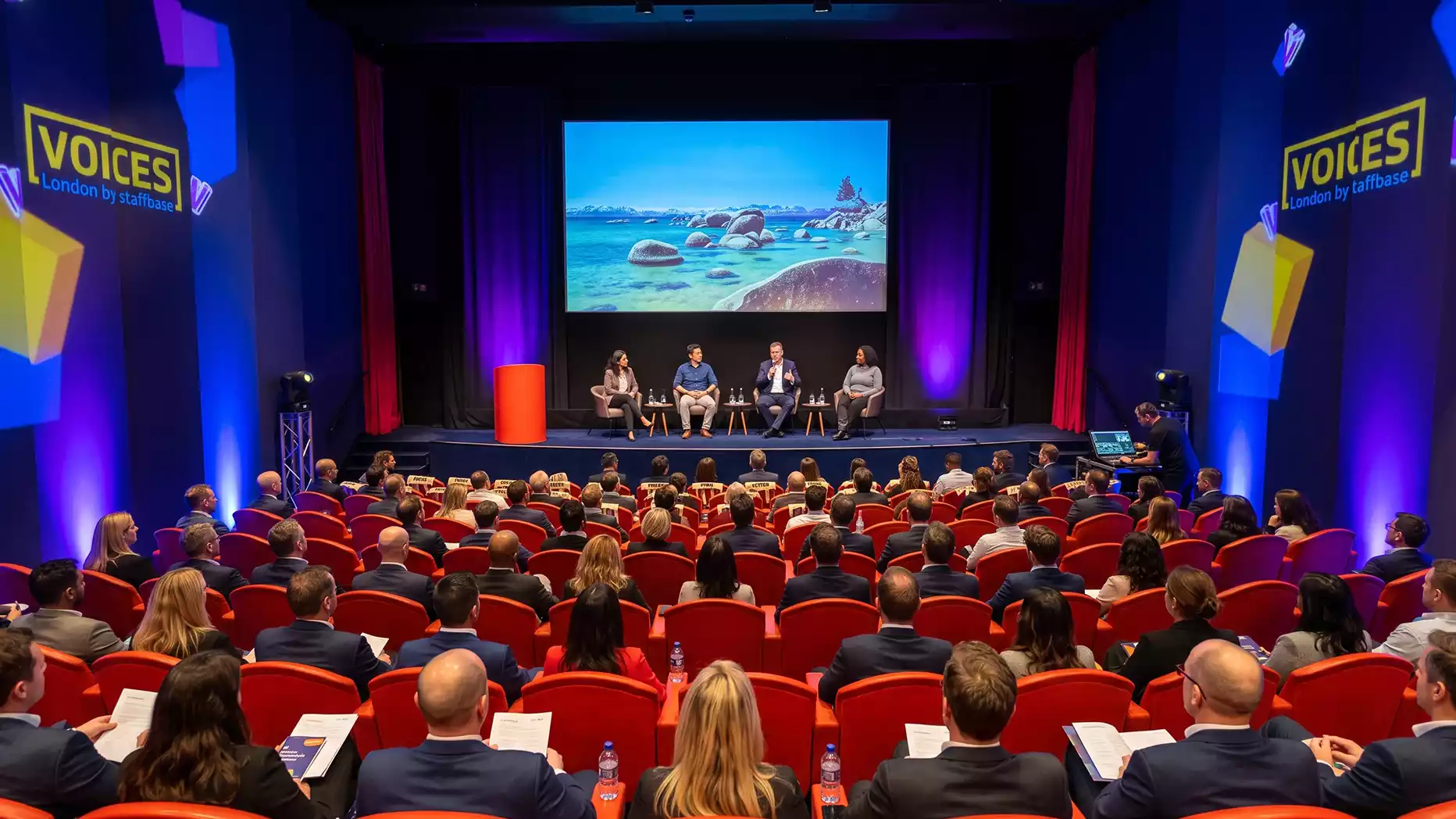
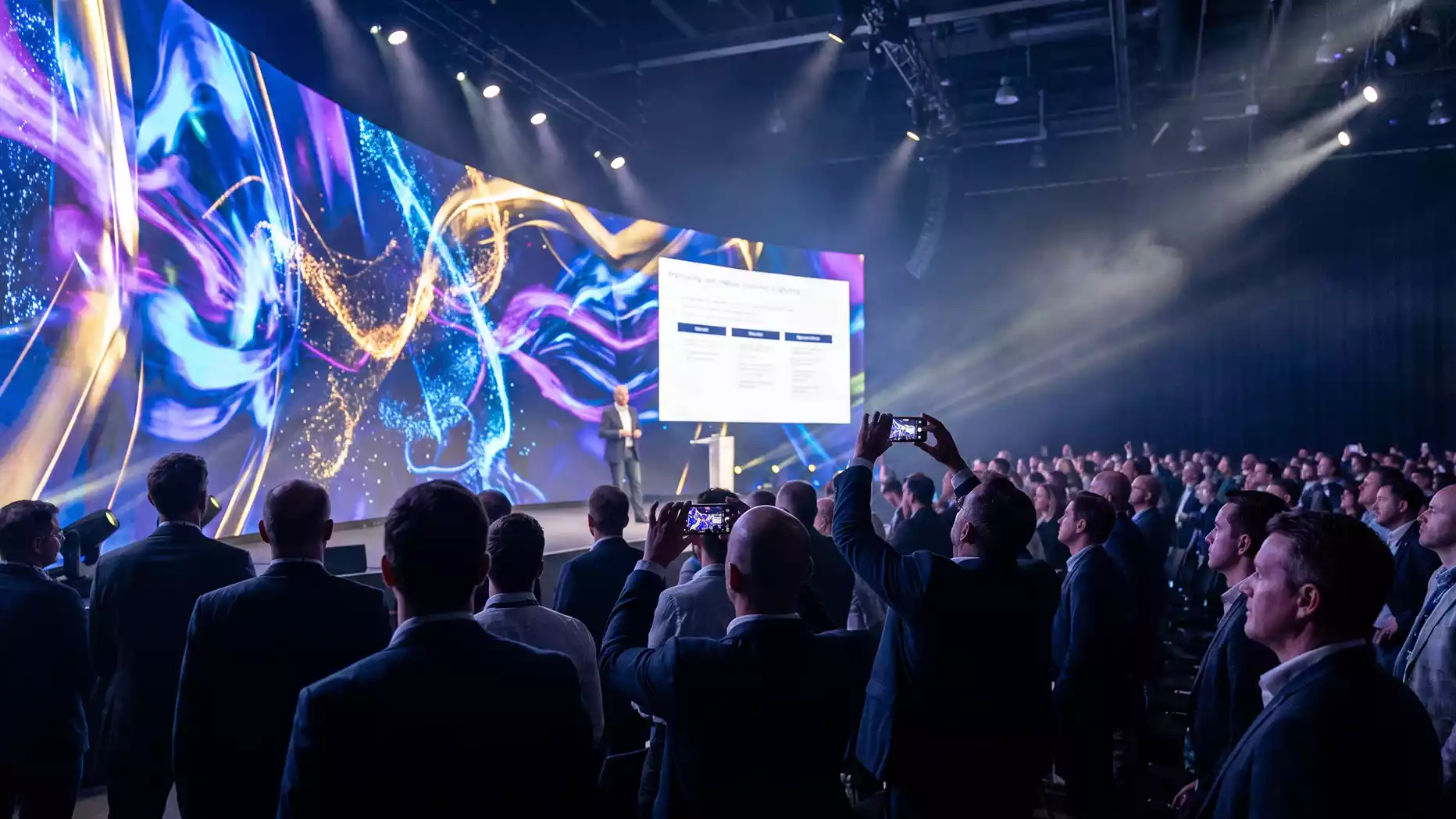
What the audience can see when they walk in does more for visual impact than almost anything you’ll do during the programme itself. Brand signage, scenic, screen content, stage backdrops, the whole visual field is being read at once.
The difference between visual environments that feel intentional and those that feel templated is the difference between:
- An audience that arrives feeling the brand is investing in them.
- An audience that arrives feeling the event is generic.
LED screens and projection have become foundational visual elements at corporate events. They let the visual environment adapt across the run of the event:
- Pre-event holding content.
- Opening sequences.
- Content support during sessions.
- Networking visuals during breaks.
Production teams thinking about stage visuals as part of the arrival experience, not just the main programme, build first impressions that carry through the event rather than reset at the doors.
Visual hierarchy also matters. The room should guide the eye toward the focal point, usually the stage, without competing visual elements pulling attention sideways.
4. Layout and spatial flow
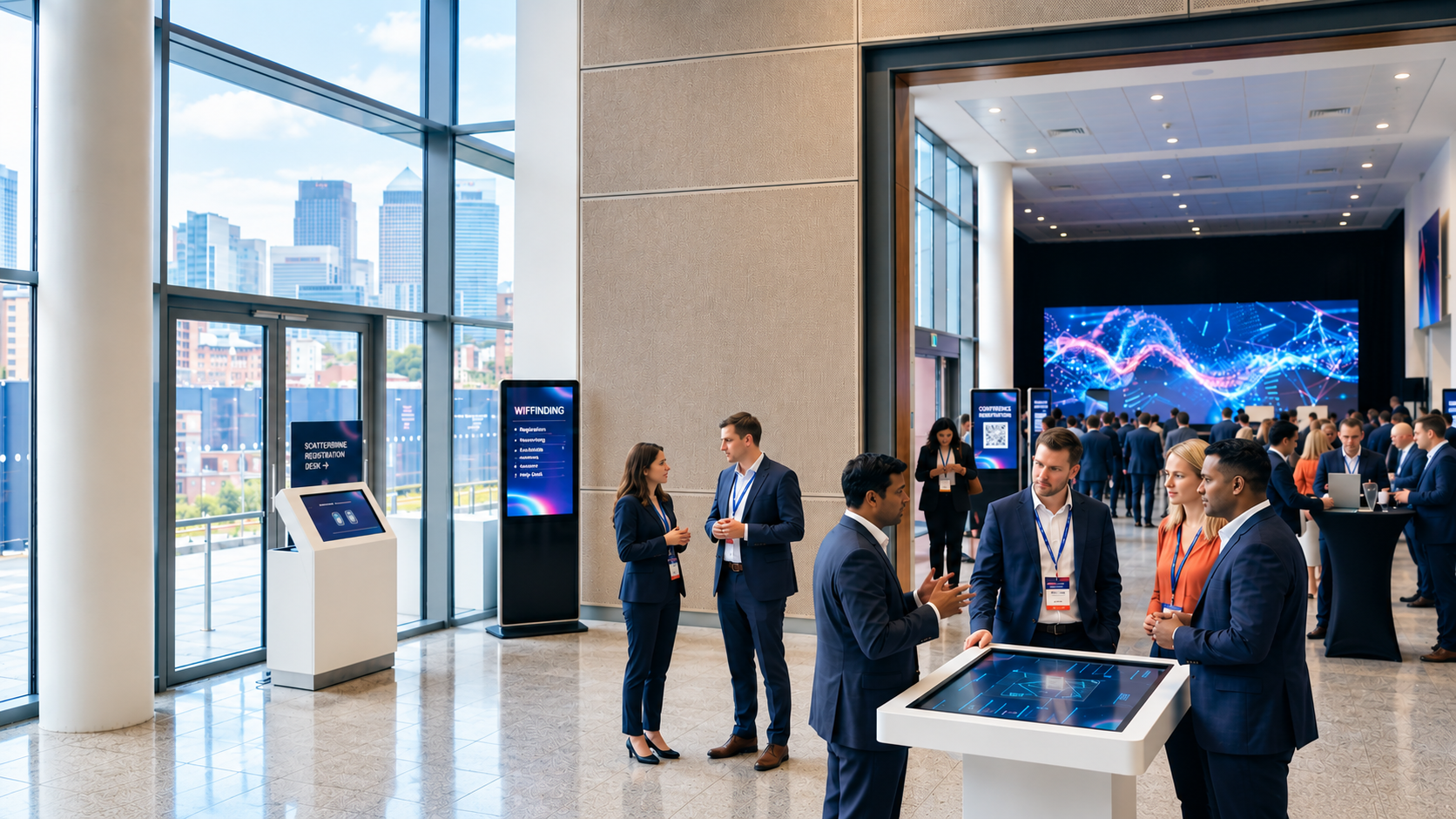
How the audience moves through the space affects their reading of it.
Signals of poor planning:
- Pinch points at registration.
- Queues extending back into the entrance.
- Unclear wayfinding.
- Furniture placed without thought for sightlines.
Audiences read spatial friction as a sign the event hasn’t been thought through end-to-end. It doesn’t matter how strong the rest of the production is.
Signals of considered design:
- Open sightlines.
- Considered furniture placement.
- Intuitive flow.
- Uncluttered arrival areas.
Negative space matters here: empty floor area in an arrival zone reads as confident and premium, not as wasted space. Crowded arrival areas read as rushed, even when the underlying production is strong.
Space perception research consistently shows audiences evaluate room layouts within the first few seconds of entering. Production teams who design arrival flow alongside lighting and audio deliver coherent arrival experiences. Teams that treat layout as the venue’s problem deliver experiences where the audience can feel the seams.
How venue choice shapes the first impression before you’ve done anything
A lot of the work has been done, or undone, before production walks in. The venue brings its own first impression to the room:
- High ceilings or low.
- Natural light or strip fluorescents.
- Architectural character or beige carpet tiles.
- Acoustics that flatter the human voice or fight it.
- Arrival sequences that flow or force people through a corridor.
All of this is fixed before any production decision has been made.
A venue with strong bones gives you a starting point. A venue with weak bones forces you to spend budget on covering for what is not there, before you’ve spent anything on what you actually want to build. Both can produce excellent events, but the second one is harder and more expensive, and it’s worth knowing which one you’ve signed for.
This is why first-impression thinking belongs in the venue choice conversation, not afterwards. Capacity, location, and price are the obvious filters. The ones that are often missed are lighting potential, acoustic character, arrival sequence, visual flexibility and ceiling height, and those are the ones production has to work around for the rest of the build.
Production can lift a difficult venue. The right venue lifts itself.
The production variables most often underestimated
These are the details that don’t make headline production decisions but show up in the audience’s read of the event:
- Arrival audio: The first five minutes before doors open carry as much weight as the lighting state. Most events default to silence or whatever the venue’s playlist happens to be.
- The doors-open lighting cue: The room shouldn’t look the same when the audience enters as it did during setup. A live cue at doors-open signals the event has started.
- Wayfinding and signage quality: On-brand wayfinding visuals versus generic printed signs is a smaller decision than the lighting design, but a more visible one to the audience. It gets handled last and treated as functional.
- Holding screen content: What’s on the screens before the content starts says more than most opening sequences. Static slides versus paced, brand-aligned holding content shifts perception measurably and costs almost nothing.
- Crew presence: Visible, calm crew reads as control. Rushed or invisible crew reads as the opposite. The audience picks up on this without realising they are doing it.
None of these is the big-ticket production items. They’re the ones that separate events that feel considered from events that feel run.
Where the first impression carries through the event
The arrival impression isn’t a single moment. It becomes the reference point for the rest of the event.
Audiences that arrive feeling the event is premium:
- Grade the speakers more generously.
- Read the content more favourably.
- Engage networking more openly.
- Give production the benefit of the doubt when something doesn’t quite land.
Audiences that arrive feeling the event is generic:
- Notice the seams.
- Register small failures more sharply.
- Read content through a more critical lens.
- Carry their first impression into every interaction that follows.
This is why event arrival experience design isn’t separate from content design. It sets the lens through which content is received.
Production teams who design lighting, audio, visuals and layout as a coordinated first-impression system also create an environment in which the audience is primed to receive the content well.
Treating arrival as a phase that ends when the first speaker takes the stage misses the mechanics. The audience is still reading the environment throughout the event. The first impression simply sets the baseline for everything they read afterwards.
Before the doors open
The science of first impressions in event spaces is not decoration theory. It is the mechanical reality of how audiences read environments in seconds, and what that reading does to the rest of the event.
Production teams who treat lighting, sound, layout, and visual experience as a single coordinated system deliver events that feel considered before the first speaker walks on. Teams that treat them as separate workstreams deliver events the audience reads as generic, regardless of how strong the content turns out to be.
The first impression doesn’t end at the door. It carries through the room for the rest of the night.
Frequently asked questions about first impressions in event spaces
How long do first impressions take to form in an event space?
Research on environment evaluation puts the initial read in the 5–10 second range. The audience isn’t analysing; they’re reacting. Lighting, sound, layout, and visuals register at the same time, and the impression is formed before the first conversation or the first content slide.
What’s the most overlooked element in event environment design?
Arrival audio. Lighting gets attention because it’s visible. Audio at arrival shapes the mood just as much, but tends to get left as either silence or whatever the venue puts on. A curated arrival audio environment is one of the lowest-cost upgrades available, and one of the most underrated.
Does venue choice matter more than production design?
Neither replaces the other. The venue sets what’s possible; production shapes how that potential lands. The strongest first impressions come from both working together, not from one trying to compensate for the other.