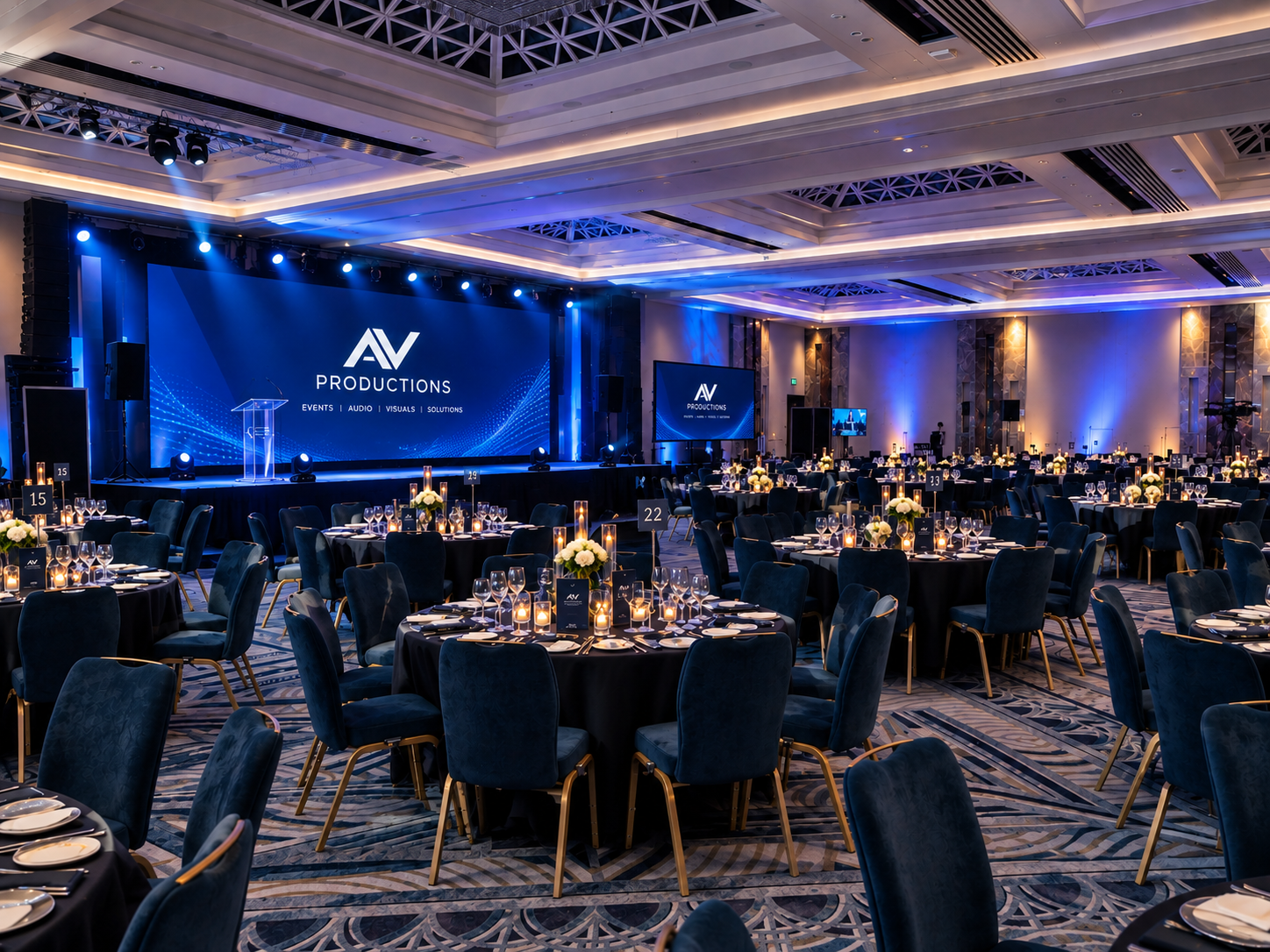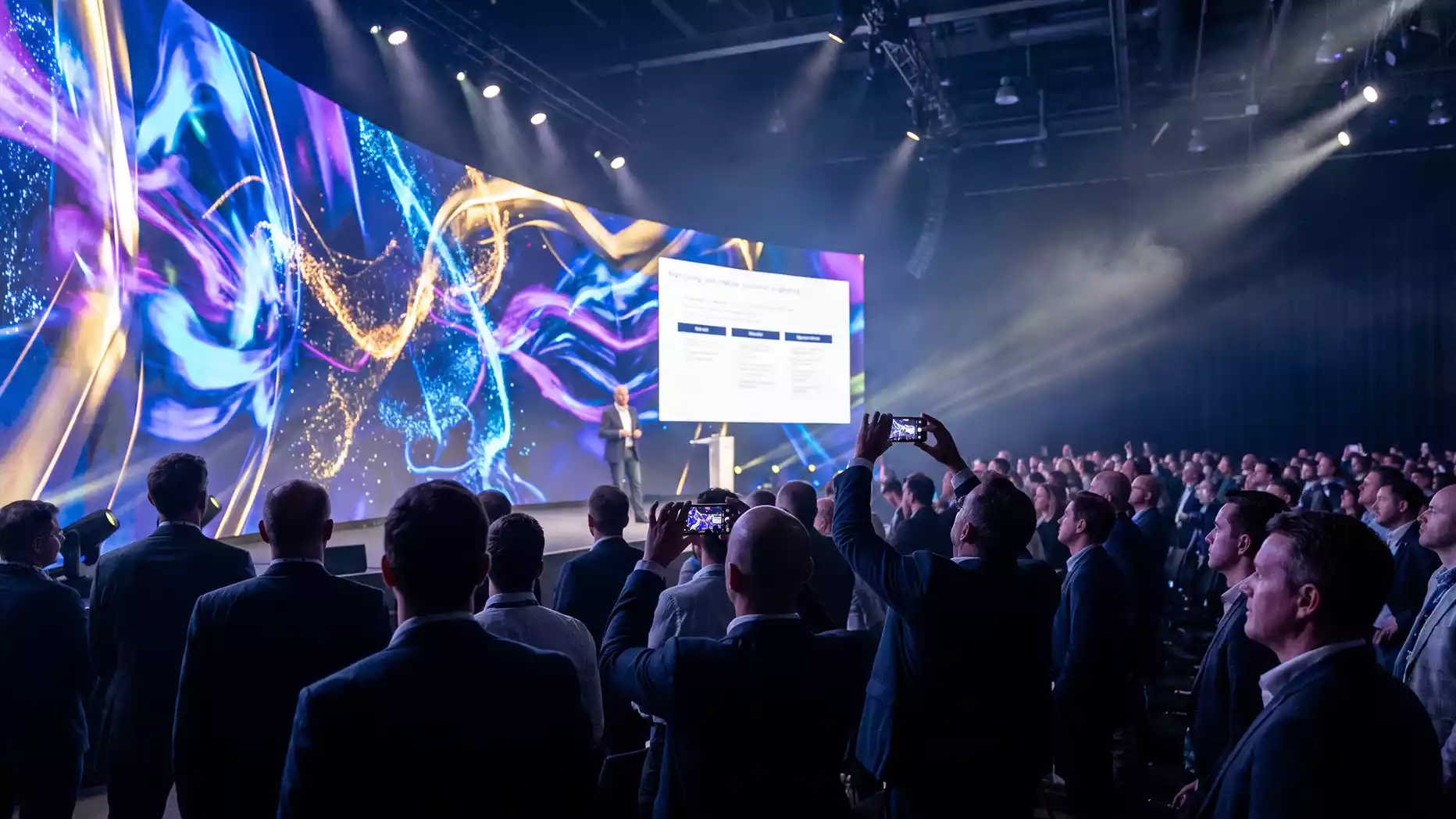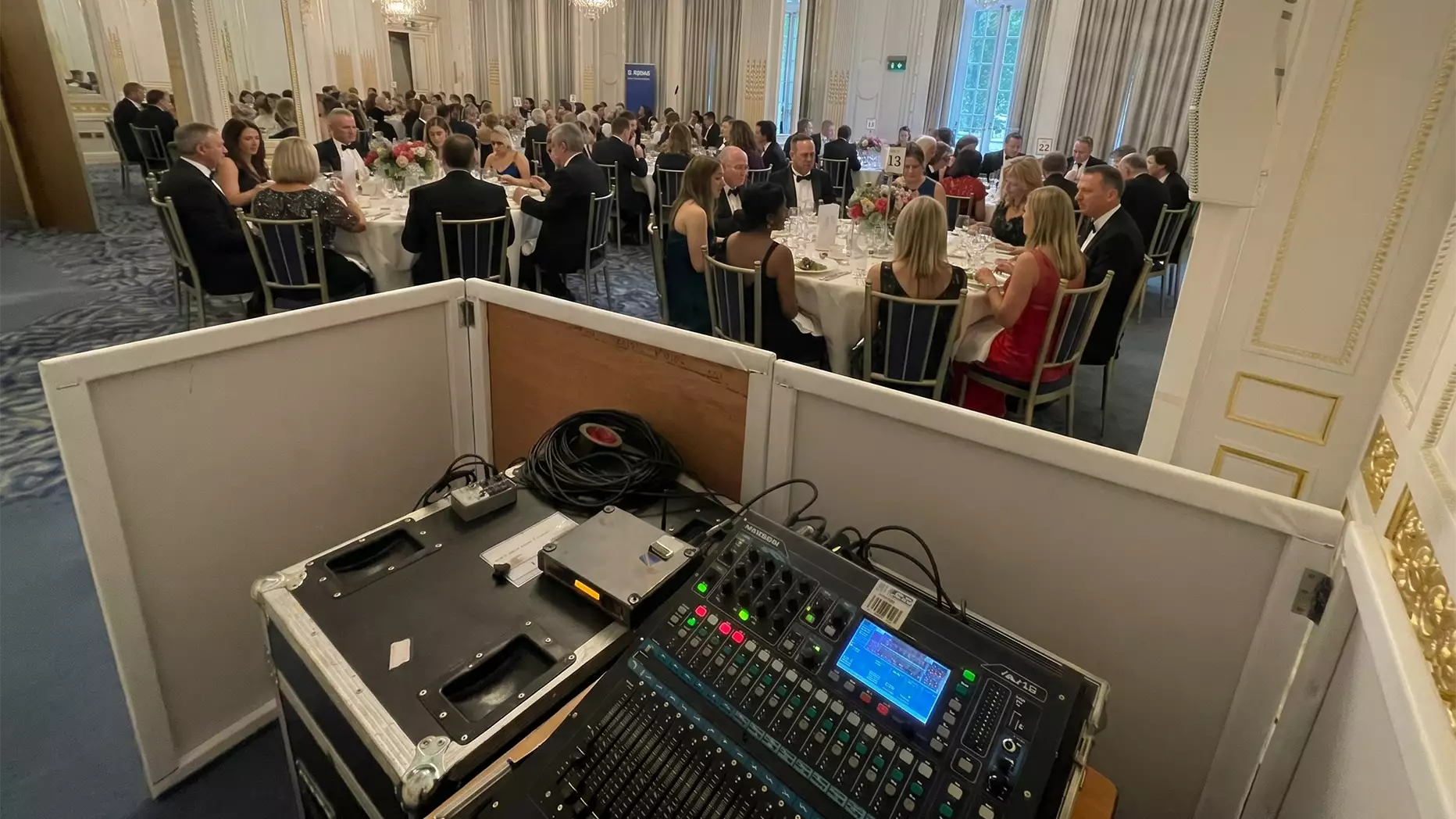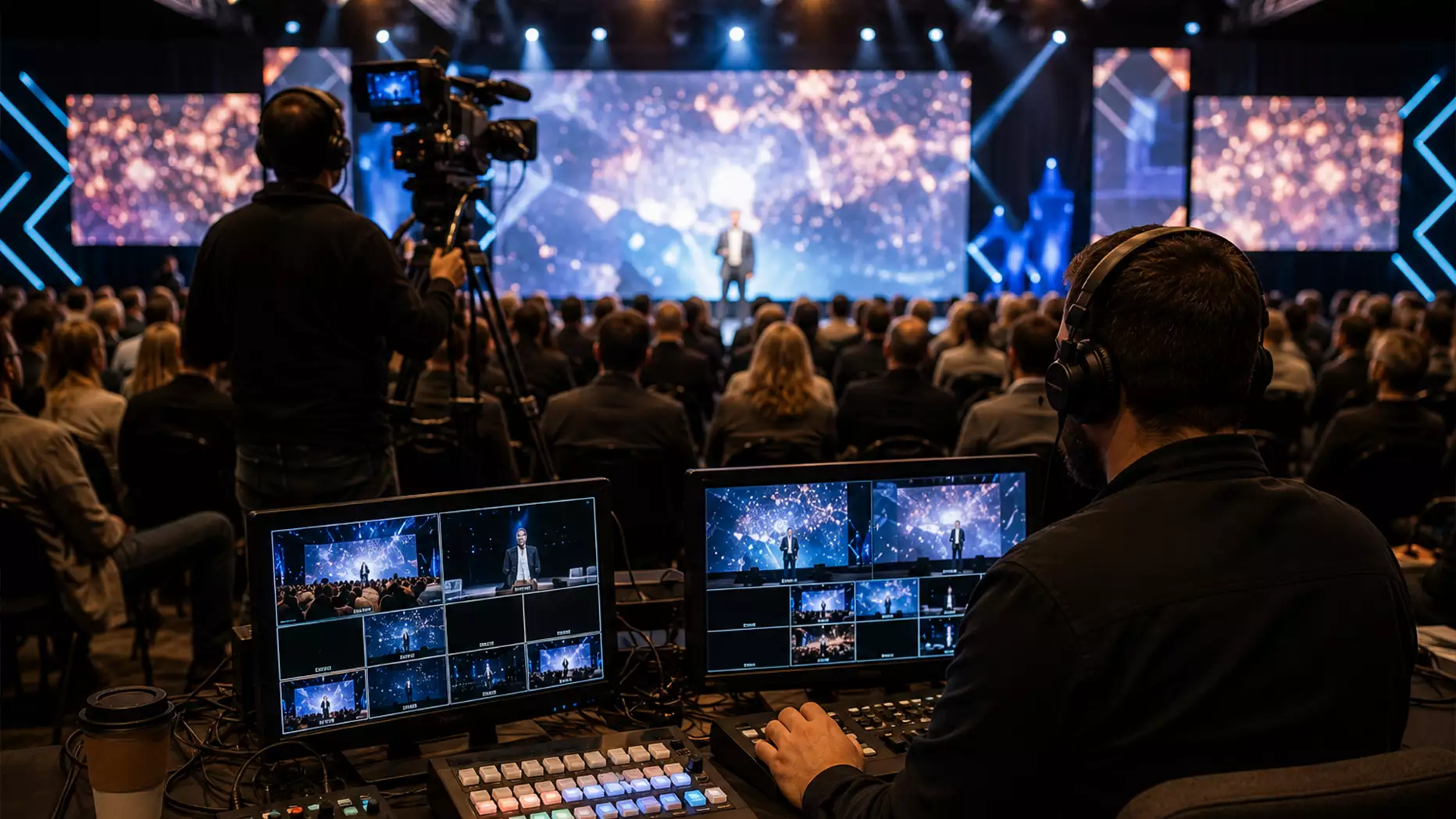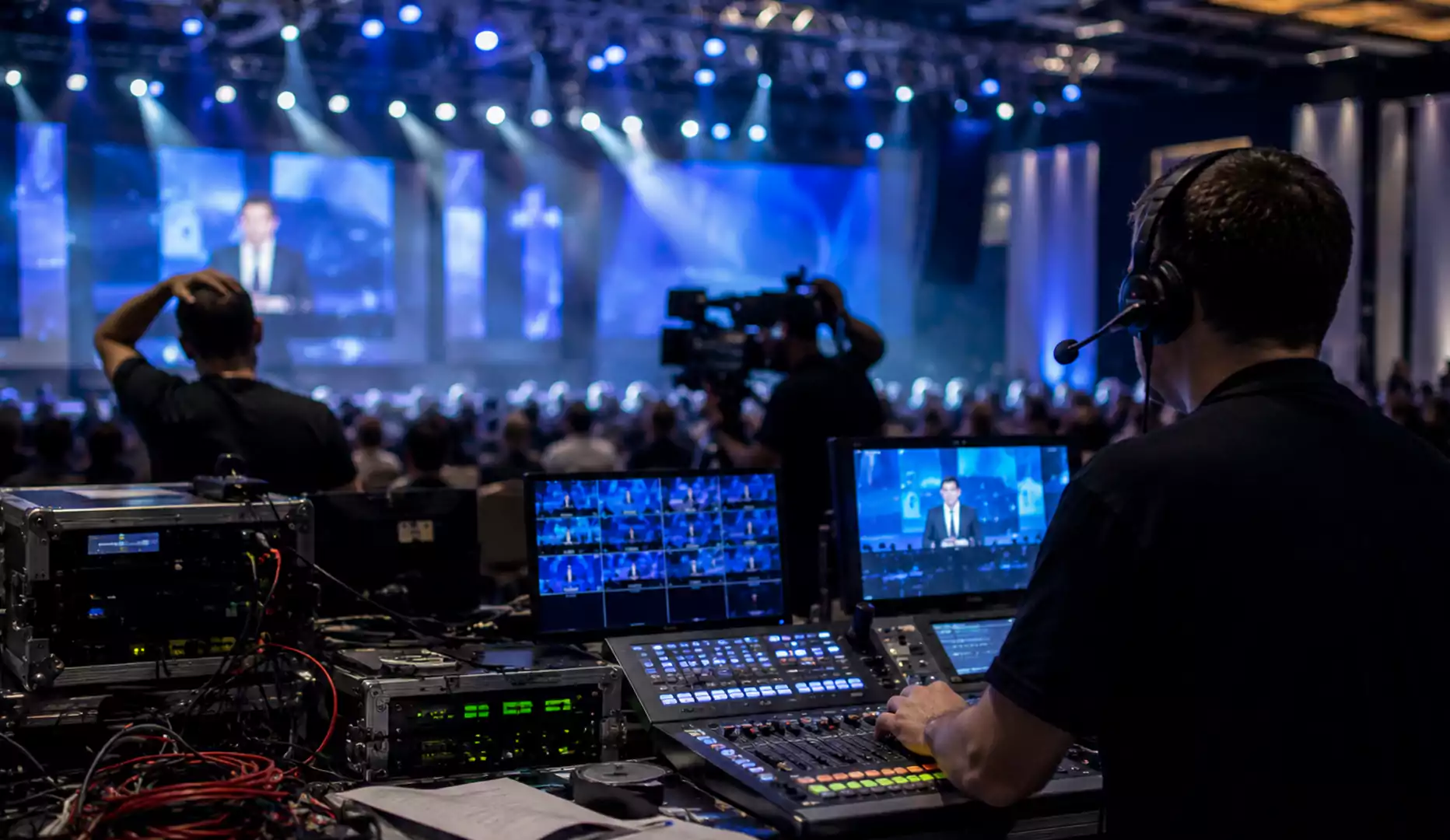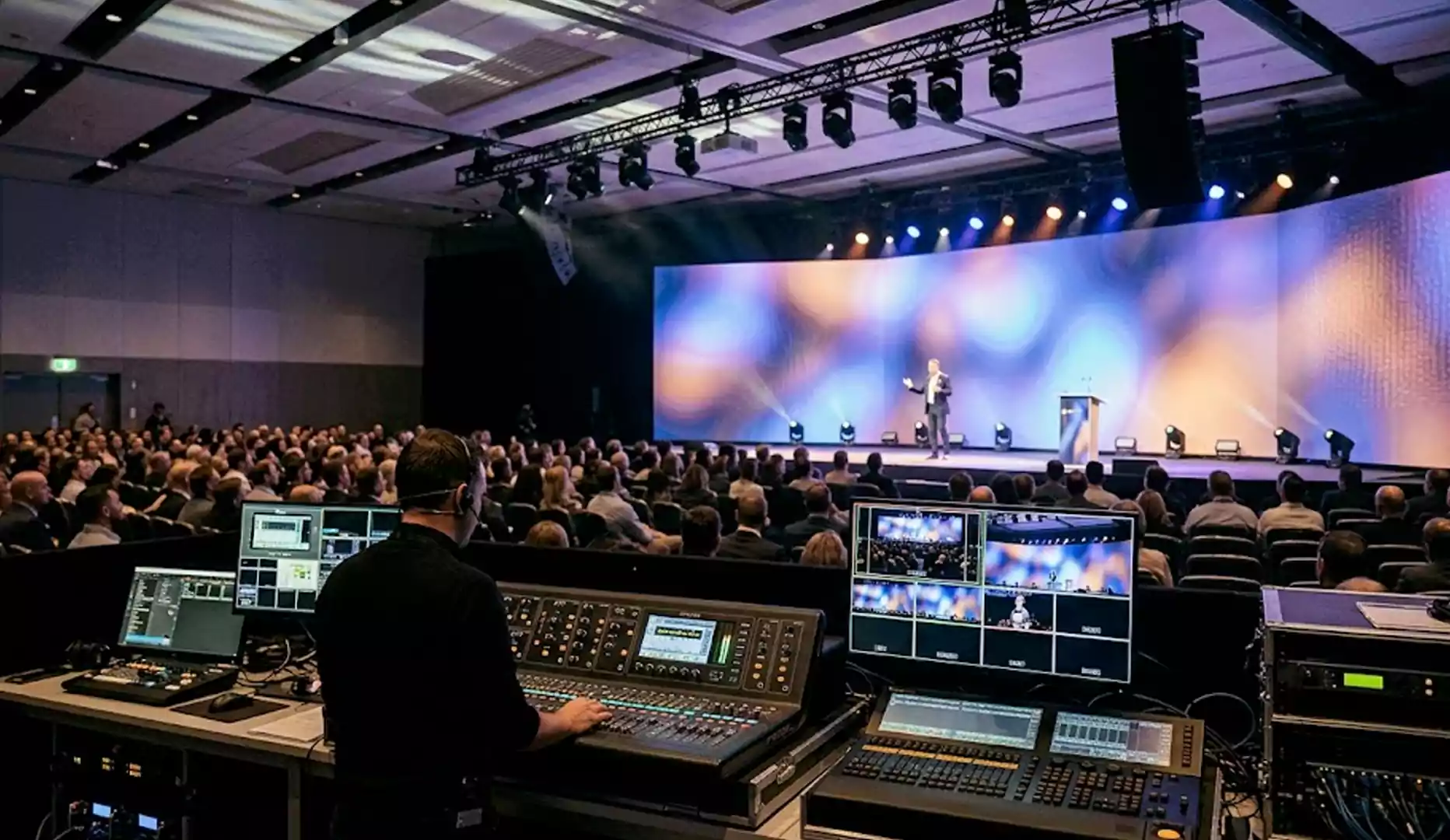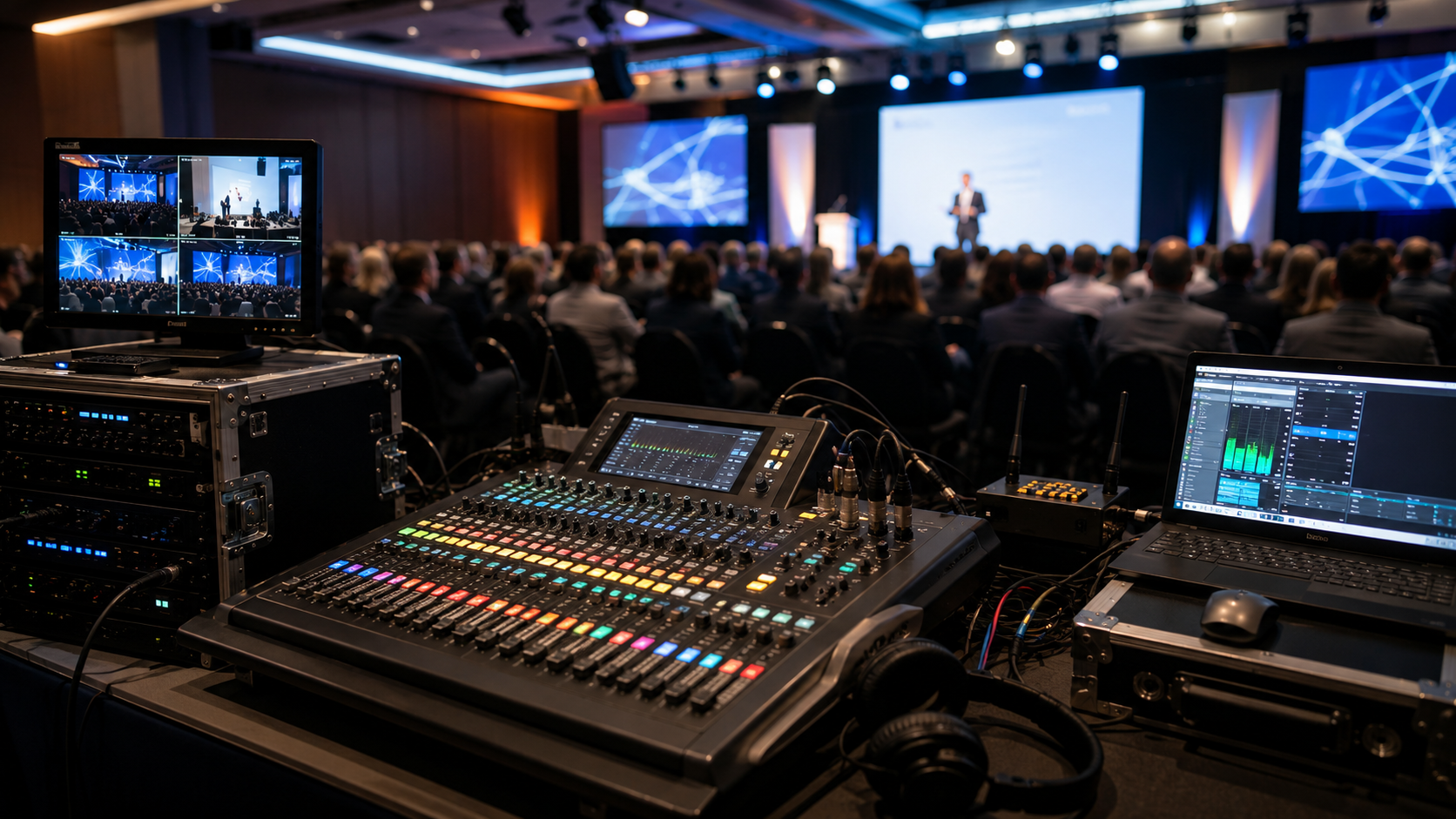
Poor AV leads to low engagement at live events because the audience’s attention is finite, and every problem in the technical delivery layer consumes part of it. When sound is muddy, or screens lag, the brain redirects focus toward the source of friction. That redirection is automatic and preconscious; the audience does not decide to stop listening, but simply finds its attention elsewhere. Strong content cannot compete with that redirection, because the content has already lost the channel it was supposed to travel through.
This is the gap most event planning conversations miss. AV is treated as a service that supports the content, when in practice it is the medium the content depends on to reach the audience at all. A speaker working through a clean technical environment can hold a moderately interesting message in a room for forty minutes. The same speaker working through a flawed technical environment loses the room in fifteen, regardless of how good the underlying material is.
The rest of this piece looks at how the breakdown happens, where the audience’s attention actually goes when AV falters, and what production teams can change before the doors open.
The mechanism: Why does attention reroute around AV problems?
The audience does not consciously evaluate AV quality. Their attention routes around it the way water routes around an obstacle.
Three forces drive the redirection:
- Salience overrides intention: The brain prioritises whatever its sensory systems flag as inconsistent. A speaker is consistent; they are meant to be heard. A crackle in the audio is inconsistent. Attention moves to the crackle, not because it matters, but because it is unexpected.
- Effort taxes engagement: Having to strain to hear, parse lagged video and adjust to harsh light burns cognitive resources that would otherwise be spent on engagement. By the third effortful minute, the audience is tired before the speaker has finished the introduction.
- Reading the room becomes more interesting than the content: Once the audience has noticed the AV is off, they start watching for it. Every wobble confirms the suspicion. Engagement collapses into observation. The result is that AV does not have to fail spectacularly to damage engagement. It only has to keep producing small inconsistencies that the audience’s attention system cannot help noticing.
Sound is the first channel to lose the room
A speaker with poor visuals can still hold an audience. A speaker with poor audio cannot. The reason is asymmetrical: vision can be patched by the brain because the audience can fill in what they did not quite see, but audio cannot. Words missed are words gone. After half a dozen missed words, the audience stops trying.
Poor sound quality at events shows up through specific patterns:
- Reverb that smears the consonants in detailed content, so technical or numerical material becomes hard to track.
- Hot spots and dead zones across the audience seating, so half the room is listening at a comfortable level, while the other half is not.
- Inconsistent levels between microphones during panel discussions or speaker handovers.
- Background bleed from HVAC, staging, or adjacent rooms that the audio system has not been tuned to overcome.
Most of this is determined before the audience arrives. Speaker placement, room treatment, and gain structure are the variables, and they are venue-specific in ways the default audio configuration cannot anticipate. Production teams treating sound control as a tuning discipline rather than an equipment specification deliver rooms where audio supports content. Production teams accepting whatever the venue’s default rig produces deliver rooms where the audio is the first thing the audience notices and the last thing they forget.
Lighting that works against the speaker
Lighting damages engagement in a quieter way than sound, but the effect compounds across the duration of the event.
The audience does not register good lighting. They register bad lighting through fatigue. By the second hour of a poorly lit event, the room is visibly flatter than it was at the start, and the cause is rarely identified correctly.
Common lighting failures in corporate events:
- The speaker is dimmer than the screens behind them, so the audience’s eyes are constantly adjusting between two brightness levels.
- House lighting remains at full brightness during keynote content, washing out the stage lighting and signalling that no visual hierarchy has been established.
- Colour temperature is unflattering on camera or in the back rows, producing visible discomfort that nobody can place.
- Lighting states stay static across the event, so the room does not signal transitions or tempo shifts to the audience.
These are not aesthetic concerns. Visual fatigue is a measurable input to engagement, and an audience whose eyes have been working hard for ninety minutes is not in the same engagement state as an audience whose eyes have been comfortable. The afternoon programme always carries the blame. The lighting design is usually the cause.
Where video and screen issues erode trust
LED screens and projection now carry more of the visual programme than they did five years ago, which means small failures in this layer travel further into the audience experience than they used to.
The damaging issues are not the dramatic ones. A screen going black mid-keynote can be recovered. A calm crew handling a visible problem can even strengthen the audience’s confidence in the production. What erodes engagement is the steady drip of smaller inconsistencies:
- Audio and video fall out of sync by a fraction of a second. The audience cannot quite name what is wrong, but they stop trusting the screen.
- Holding content that loops visibly during breaks, signalling that the production has stopped attending to what the room is seeing.
- Resolution mismatches between content sources, so some slides look sharp and others look soft, with no apparent reason.
- Colour temperature drift between cameras, screens, and stage lighting, producing inconsistency the audience reads as low effort.
Each item is small. Stacked across a session, they accumulate into a perception that the event has not been fully attended to. The audience starts to disengage without knowing why, and the brand running the event starts to look less credible than it did at the door.
The engagement cost of visible crew and operational friction
The audience is also reading the production team, not just the production output.
Visible signs the audience picks up on:
- Crew crossing the stage to fix something that should have been resolved before the doors opened
- Microphone handovers that fail mid-session, requiring speakers to wait or repeat themselves
- Clicker failures that visibly disrupt a speaker’s rhythm
- Dead time on screens during speaker transitions instead of designed handover content
- Sessions starting late because the AV is not ready when the audience is
Each of these is a small operational issue. Together, they form a reading of how much control the production team has over the event, and audience engagement is closely tied to how much credit the audience extends to the people running the room. Visible friction shortens that credit fast.
What pre-event testing actually prevents?
Most AV-driven engagement problems at corporate events are predictable, and the testing window is where they get resolved or ignored.
Comprehensive AV testing is not a checkbox at the end of setup. It is a substantive working session that catches the issues that would otherwise show up as engagement loss across the live event.
What full pre-event testing covers:
- Audio walk-test across every part of the audience seating, checking for hot spots, dead zones and reverb at content-realistic volumes.
- Lighting state rehearsal through the full sequence, including transitions between segments.
- Video and screen verification at every source, checking sync, resolution, and colour calibration.
- Microphone checks for every speaker, including the handover sequences that go wrong most often live.
- Full technical run-through with the crew, so live transitions work under pressure rather than being improvised.
Production teams reducing testing time to save venue hours typically pay more in engagement loss than they save in hire fees. The hours that get cut are also the hours that catch the problems the audience would otherwise have noticed.
What does this change for event planning?
This shift is in how AV is positioned within the planning conversation, not in how much budget it receives.
A few things change when AV is treated as engagement infrastructure rather than supporting equipment:
- Venue selection includes AV feasibility. Some rooms make strong AV simple. Others make it expensive or impossible. The decision belongs at the venue stage, not after the booking has been confirmed.
- The AV brief carries the same weight as the content brief. Speakers, content owners, and AV teams should be aligned before rehearsal day on what the technical layer needs to do.
- Testing time is protected, not negotiated. Reducing the testing window to fit a tighter venue budget tends to cost more than it saves.
- Crew composure is part of the production. A visibly calm crew signals control. A visibly stretched crew signals the opposite, and the audience reads the difference.
The production teams delivering the highest-engagement events are not necessarily spending the most. They are the teams whose AV layer is invisible to the audience because nothing about it asks for the audience’s attention.
After the final soundcheck
AV and audience engagement are bound more tightly than most planning conversations admit. The technical layer does not merely support the content; it carries it. When the carrying mechanism falters, the content cannot complete the journey.
Production teams who treat sound, lighting, screens, and operational delivery as engagement infrastructure deliver events where the AV layer disappears and the speaker holds the room.
Production teams who treat AV as supporting equipment to the content deliver events where engagement drains quietly across the day, and the content is left to take the blame for problems it did not create.
The audience is not choosing to disengage. The room is making the choice on their behalf.
Frequently asked questions
1. Why does my audience seem distracted even when the speakers are strong?
The most common causes are friction in the AV layer, uneven audio, lighting that creates visual fatigue, and screen or sync issues the audience cannot quite name. Strong speakers cannot overcome a delivery environment that keeps pulling attention away from them. The audience experiences content and delivery as a single signal, and when the technical layer falters, the speaker takes the blame.
2. How important is sound quality compared to lighting and visuals at corporate events?
Sound is the highest-impact AV variable for engagement. The audience can tolerate visual imperfections because the brain fills in gaps in what they see, but missed words are simply gone. Once the audience has to work to hear what is being said, listening posture changes and engagement drops within minutes.
3. Can pre-event testing really make that much difference?
Yes. The majority of engagement-damaging AV problems are predictable and resolvable during the testing window. Tuning the audio to the room, sequencing lighting states, calibrating screens, and rehearsing speaker handovers all catch issues that would otherwise appear during the live event. Production teams that protect testing time consistently deliver tighter, higher-engagement events.
4. How early should AV planning start in the event timeline?
AV planning ideally begins at venue selection. Some rooms support strong AV easily, while others require significant investment to overcome their limitations. Identifying that gap before the venue is booked is much cheaper than discovering it during the build. Once the venue is locked, AV planning should run alongside content planning rather than after it.