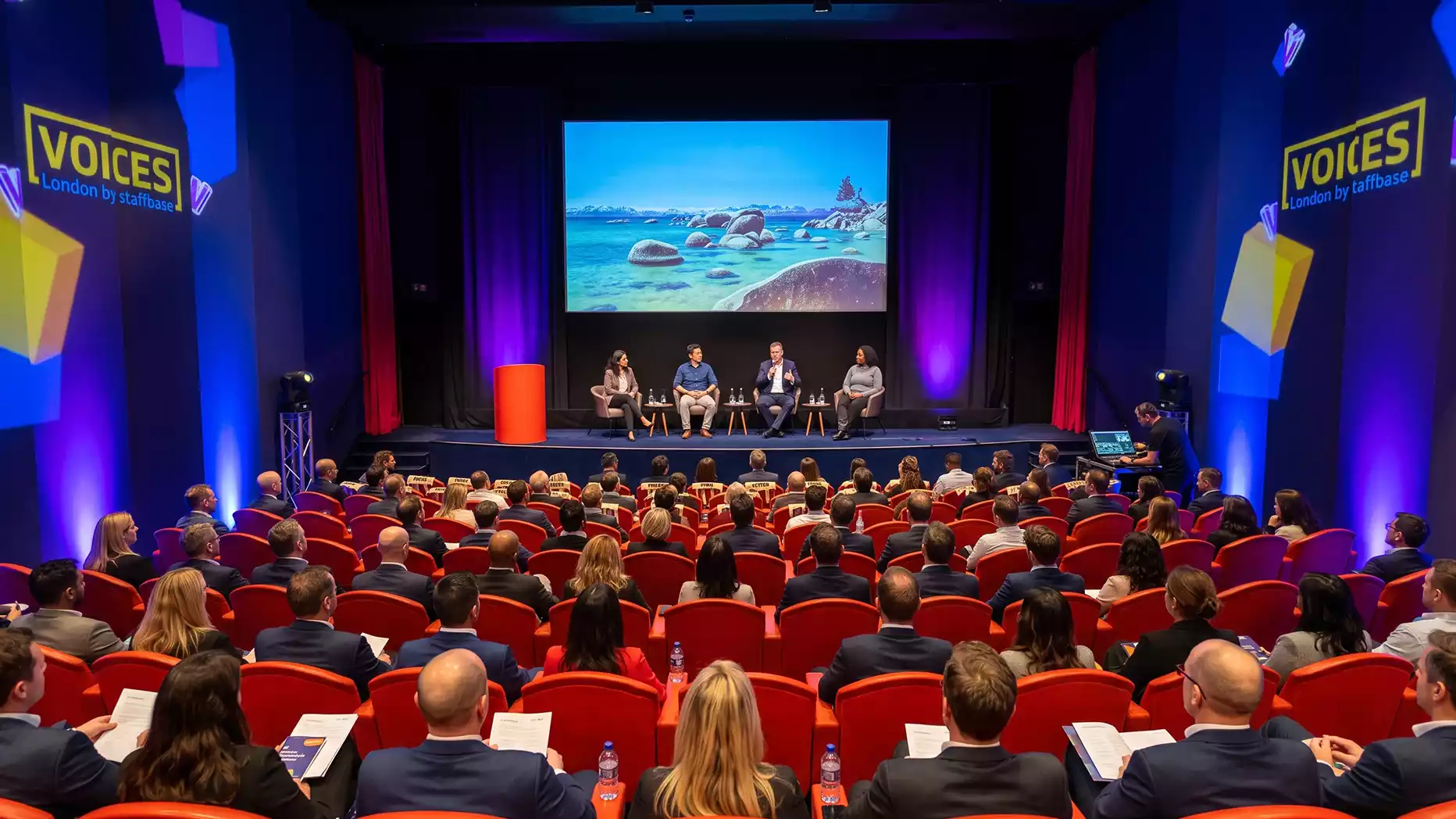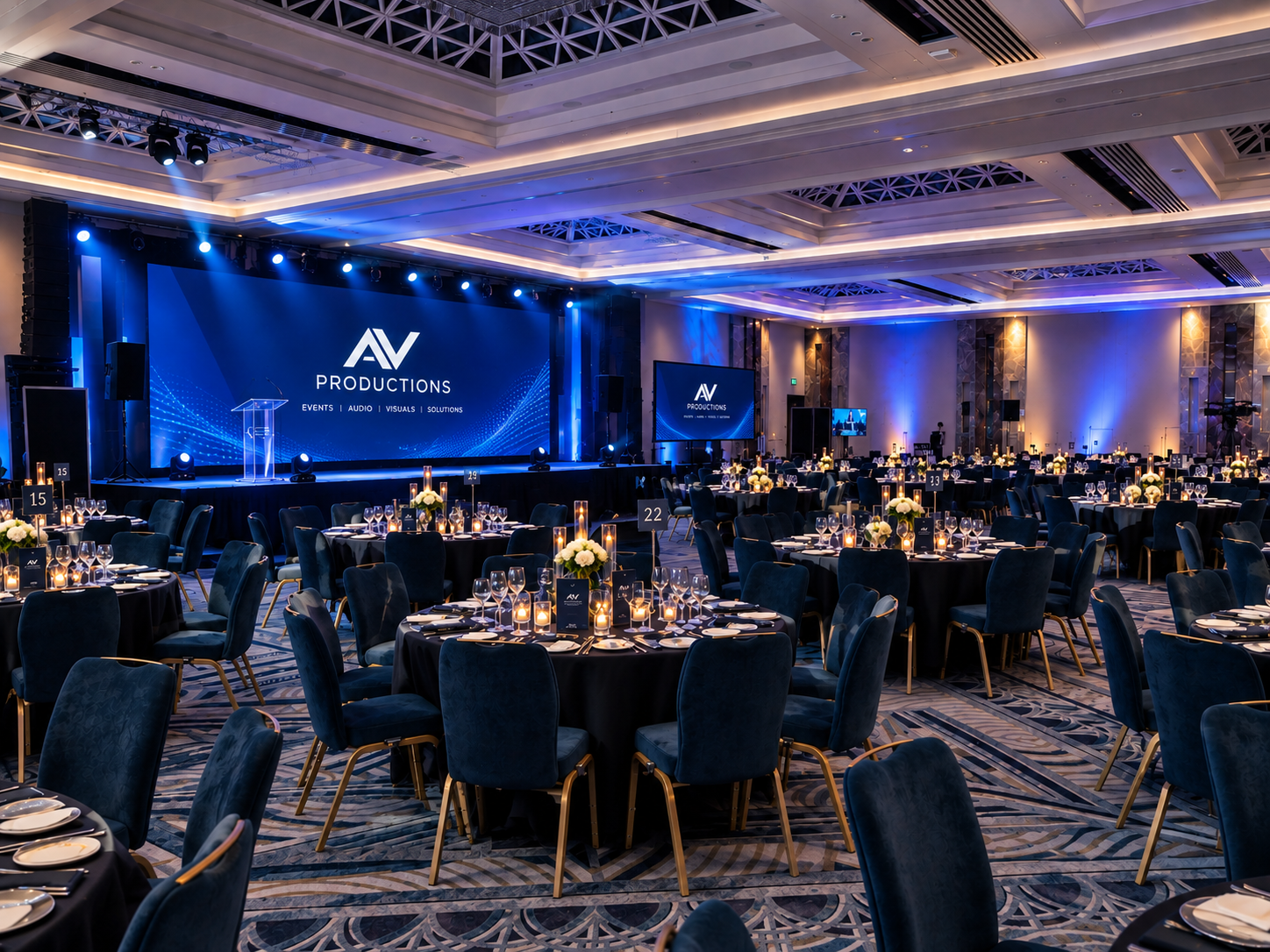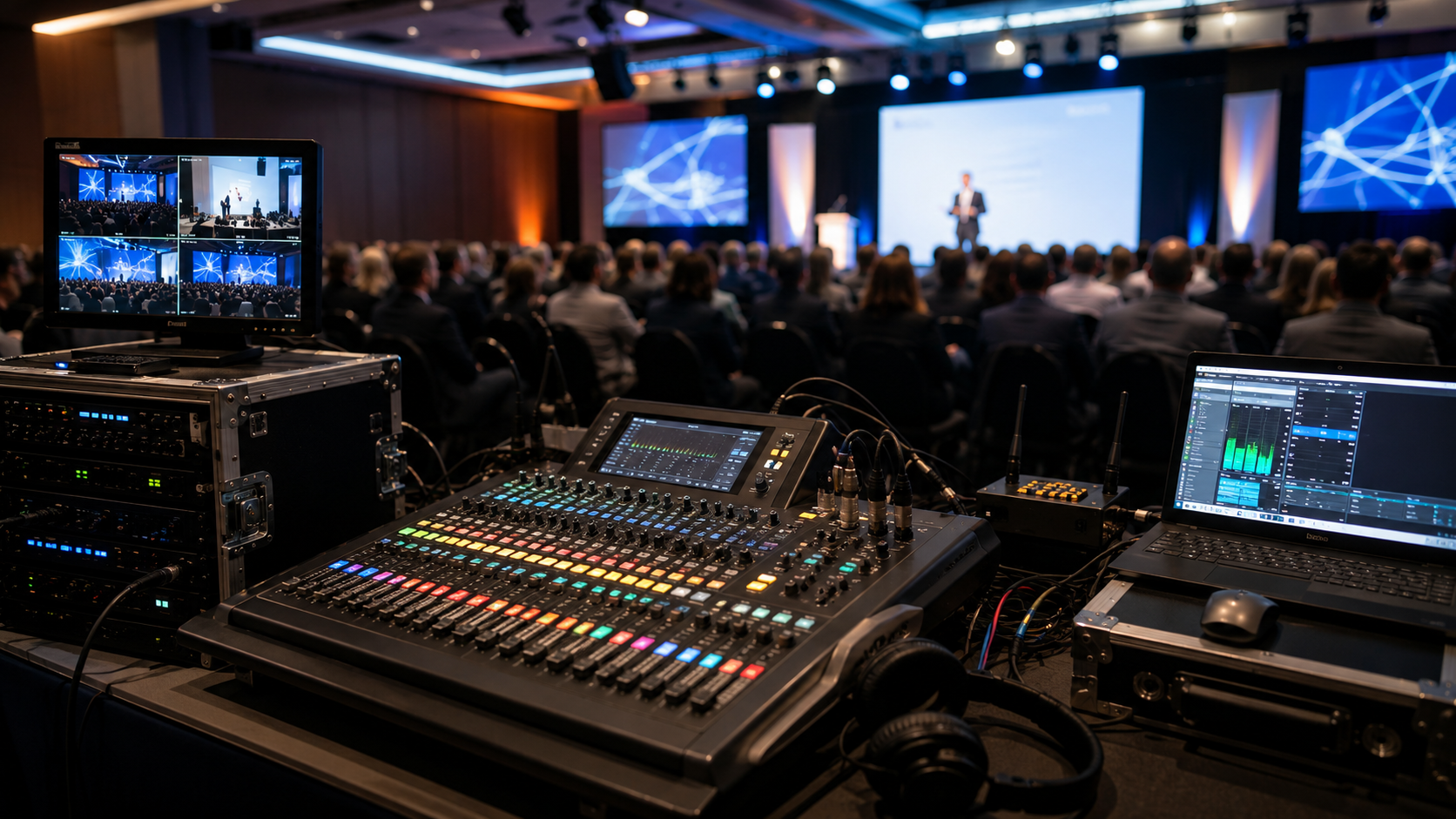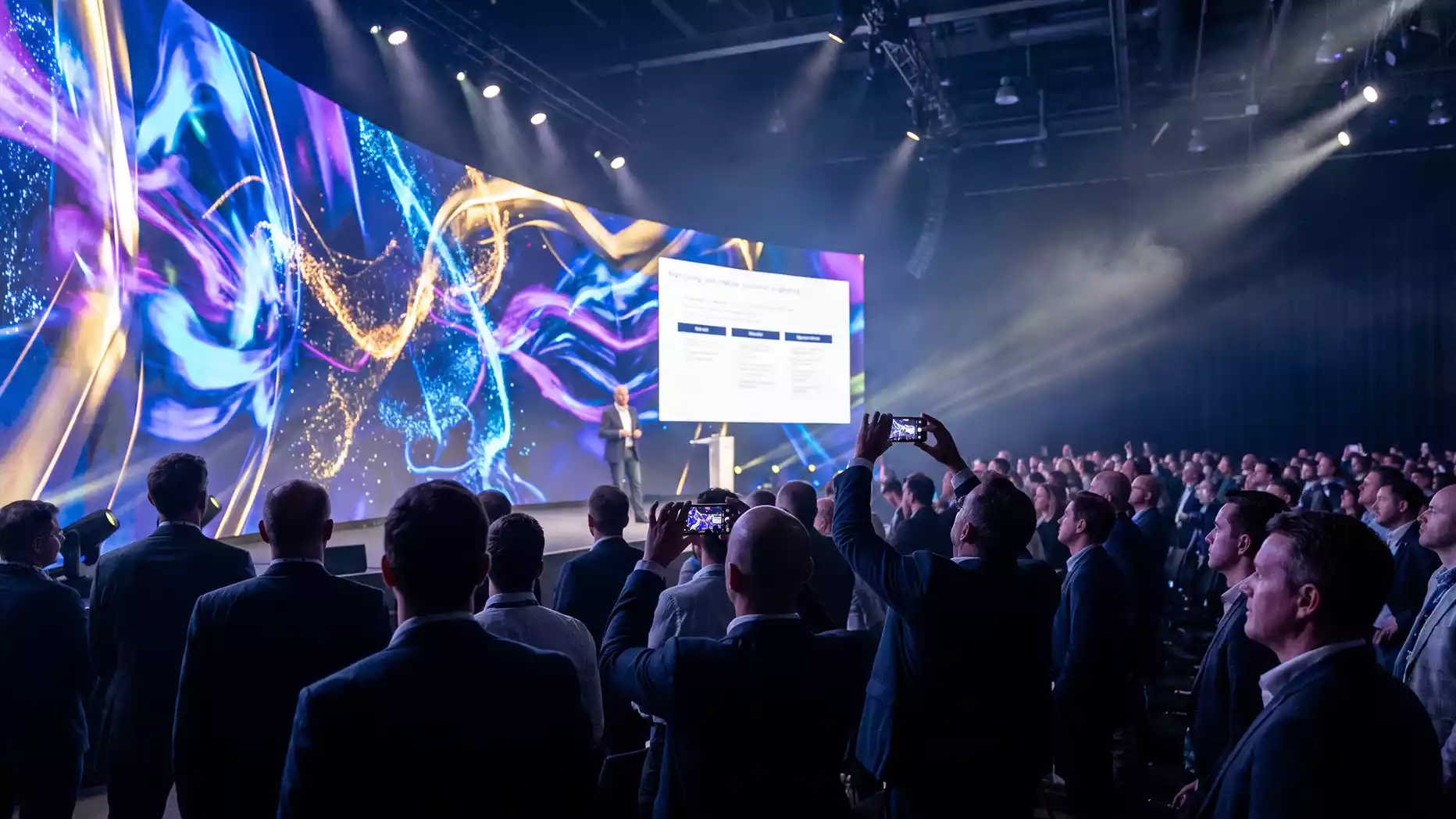
Walk into a major London conference today, then think back to the same event five years ago. Something is missing. The vinyl backdrop behind the main stage is now an LED video wall. The foam-core sponsor logos in the lobby have become a rotating digital reel. The printed agenda you used to collect at registration is a QR code linking to a mobile app.
This shift didn’t happen with a big announcement. It happened quietly, conference by conference, until printed event signage went from default to exception. Most event organisers in London now treat digital displays as the standard, not the upgrade.
What Types of Printed Signage Are Disappearing?
Printed event signage covers a wide range of physical materials, and not all of them are vanishing at the same pace. The categories under the most pressure are:
- Vinyl stage backdrops: Replaced almost entirely by LED video walls at mid-to-large conferences.
- Foam-core sponsor walls: Now rotating digital sponsor reels on screens.
- Pull-up banner stands: Losing ground to digital totems and portable LED panels.
- Printed wayfinding boards: Replaced by digital wayfinding screens and event-app maps.
- Printed lectern fronts: Now interchangeable with digital lectern displays.
- Printed agendas and session guides: Superseded by mobile event apps.
- Printed exhibitor booth panels: Being replaced by projection mapping and LED skins.
The shift is concentrated in high-volume, single-use printed graphics. It hasn’t touched every category of print at an event yet, and probably won’t.
What’s Replacing Printed Event Signage?
The replacements fall into five categories of event technology:
- LED video walls
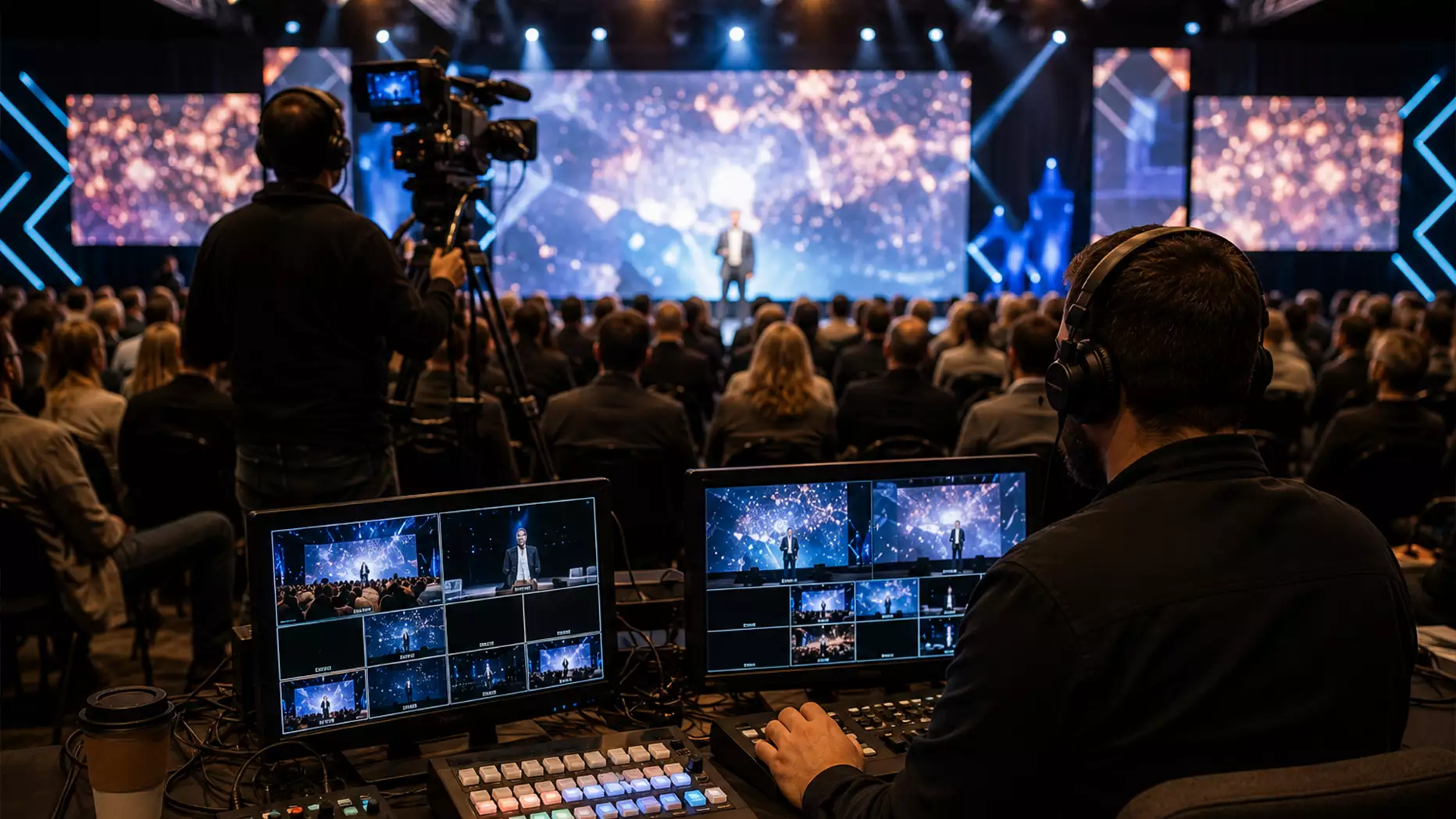
Modular, reusable, and capable of displaying speaker visuals, live data feeds, or rotating sponsor content. LED is now the default for stage backdrops and main-room signage.
- Projection mapping
Used for booth dressing, lobby installations, and immersive walkthroughs that no printed graphic can match.
- Digital wayfinding
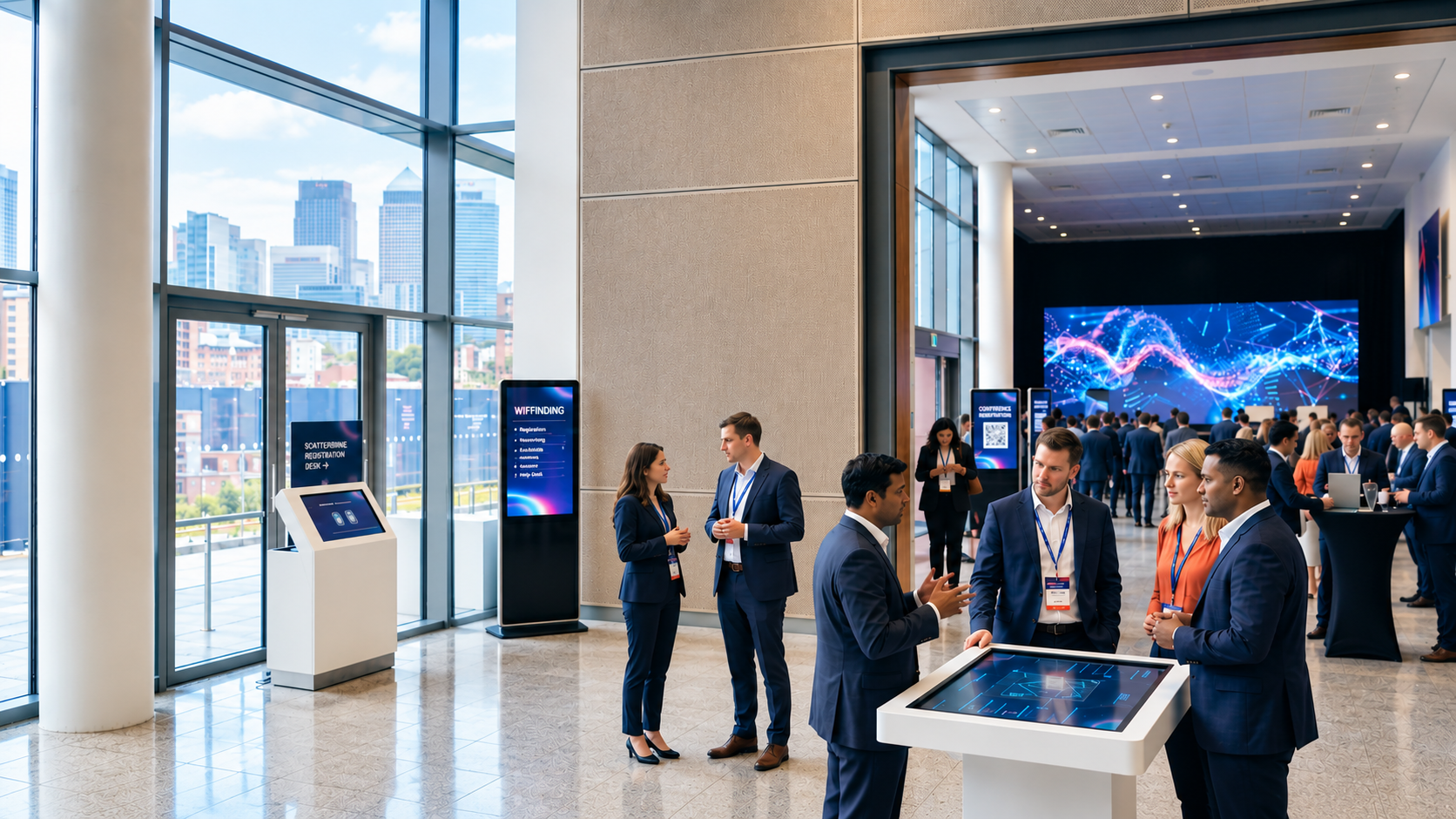
Touchscreen kiosks and lobby displays now guide attendees through multi-room venues, with real-time session updates and personalised routing.
- Mobile event apps
A single app replaces printed agendas, session guides, attendee lists, and feedback forms. Updates are pushed in real time.
- QR-linked digital handouts
Whitepapers, speaker bios, and session resources are now delivered via QR scan rather than printed and handed out.
Why Are London Conferences Going Digital?
Five forces are driving the shift, and each one is gaining weight every year.
- Sustainability and ESG mandates
UK corporate buyers are under increasing pressure to deliver lower-impact events. Many venues now align with the ISO 20121 sustainable event management standard, and corporate ESG reporting often requires evidence of reduced single-use materials. Printed signage, designed for one event and then discarded, is a visible and easy target.
- Cost over the full event cycle
A printed vinyl backdrop is cheap to produce once. But event organisers running quarterly conferences, AGMs, or roadshows reprint the same kinds of assets repeatedly. LED video walls, projection rigs, and digital displays are reusable across an entire calendar of events, and the cost per event drops sharply after the first deployment.
- Flexibility on the day
A printed backdrop says one thing for the whole event. A digital backdrop changes between sessions, sponsors, languages, and speakers, and accommodates last-minute schedule changes that printed materials can’t. For events with multiple sponsors, agenda shifts, or international audiences, the operational flexibility alone justifies the switch.
- Venue restrictions
London venues, including ExCeL London, the QEII Centre, Tobacco Dock, and Business Design Centre, operate strict rules on what can be attached with adhesive, suspended from ceilings, or handled as post-event waste. Digital displays sidestep these restrictions because they’re freestanding, modular, and removed cleanly at de-rig.
- Attendee expectations
Modern conference audiences read dynamic displays as “current” and static print as “dated.” It’s a perceptual signal more than a functional difference, but it influences how attendees rate the production quality of an event.
What Printed Materials Still Hold Their Place at Events?
The shift isn’t total. Several categories of printed event materials still earn their place:
- Lanyards and badges: Printing remains cheaper and more practical for one-off identification
- Swag and branded gifts: Physical items carry tangible weight in attendee memory
- Ceremonial signage and awards: Printed nameplates, certificates, and award boards have a tactile permanence that screens can’t replicate.
- Venue-mandated safety signage: Often required by law to be physical and permanent
- Premium printed collateral: Annual reports, keepsake programmes, and high-end brand materials at flagship events
Printed event signage isn’t extinct, but it’s been pushed to the edges of the London conference floor.
| Over the last three years on our London builds, the print-to-digital ratio has flipped completely. A regular conference brief used to include six to ten printed items, such as backdrops, lobby boards, pull-ups, lectern fronts and wayfinding. Today, the same brief usually has two or three, and they’re almost always lanyards, badges, and ceremonial pieces. Everything else is on screens. The shift has been driven by clients, not by us; they arrive with sustainability targets and digital-first content already prepared. |
What This Means for Event Organisers
If you’re planning a London conference for 2026 or beyond, the implications are practical:
- Budget shifts away from print suppliers and toward AV partners. The cost line moves from print procurement to event production.
- Planning timelines compress: Digital content can be updated 24 hours before doors open. Printed materials need a much longer lead time.
- Supplier mix changes: Event teams that used to brief print suppliers separately from AV teams now benefit from a single partner who handles both. This is the reason end-to-end AV production services have grown in demand.
- Content workflows change. Digital displays need motion graphics, looping reels, and dynamic agendas. That’s a production task, not a print job.
The Next Five Years
Three shifts worth planning around:
- Generative content on LED walls
AI-built motion graphics produced on demand for sponsor reels and session intros, displacing the bespoke agency loops that currently dominate.
- Personalised signage triggered by badge or app data
Different sponsor messages are shown to different attendees based on session interests and registration profiles.
- Sustainability reporting is built into the delivery
Venues and AV partners will produce waste and carbon dashboards as a standard part of the post-event handover, not a separate ESG exercise. The shift to digital signage feeds directly into the numbers that need reporting, which is also reshaping hybrid event production and virtual event production.
The conferences that lean into this earliest will set the visual standard that the rest of the industry catches up to.
Bottom Line
The honest picture is hybrid. Print still matters, but mainly where it adds practical or ceremonial value. From the centre of the room to stage backdrops, sponsor displays, wayfinding, and exhibitor signage, the space now belongs to LED, projection, and digital displays. The shift is driven by hard economics, venue policy, and ESG reporting, not by novelty.
Planning a 2026 London conference? Get in touch for a project walkthrough of a digital-first signage setup. Our team will map your current printed signage stack to LED, projection, and digital wayfinding equivalents, and quote against your venue and timeline. You can also browse our LED video wall hire inventory if you want to see what’s available.
FAQs
Is printed event signage going away completely?
No. Printed materials such as lanyards, badges, swag, and ceremonial signage still play a role at most conferences. The shift is concentrated in high-volume, single-use graphics like vinyl backdrops, foam-core sponsor walls, and printed agendas.
What is the most common replacement for printed signage at London conferences?
LED video walls are the most common replacement for stage backdrops and main-room signage. Projection mapping, digital wayfinding screens, and mobile event apps cover the rest.
Are London venues banning printed signage?
No outright bans, but most major London venues operate strict rules on adhesive mounting, suspension, and post-event waste, which makes large-format printed signage harder to deploy than digital displays.
Is LED signage more sustainable than printed signage?
In most cases, yes. Printed signage is built for one event and then discarded, while LED panels and projection rigs are reusable across hundreds of events. The carbon footprint per use drops sharply once equipment is in active rotation. The exception is short-run print on recycled stock for genuinely one-off events, but for any recurring conference, AGM, or roadshow series, digital signage carries a clear sustainability advantage.
How much does it cost to switch from printed to digital event signage?
The upfront cost of digital signage hire is usually higher than printed equivalents per event, but the cost-per-event drops sharply for organisations running multiple events a year. A genuine one-off conference may still be cheaper in print; a programme of four to six conferences a year almost always favours digital. The economics also shift once you factor in storage, transport, and waste-disposal costs for printed assets, which often go undercounted in initial quotes.