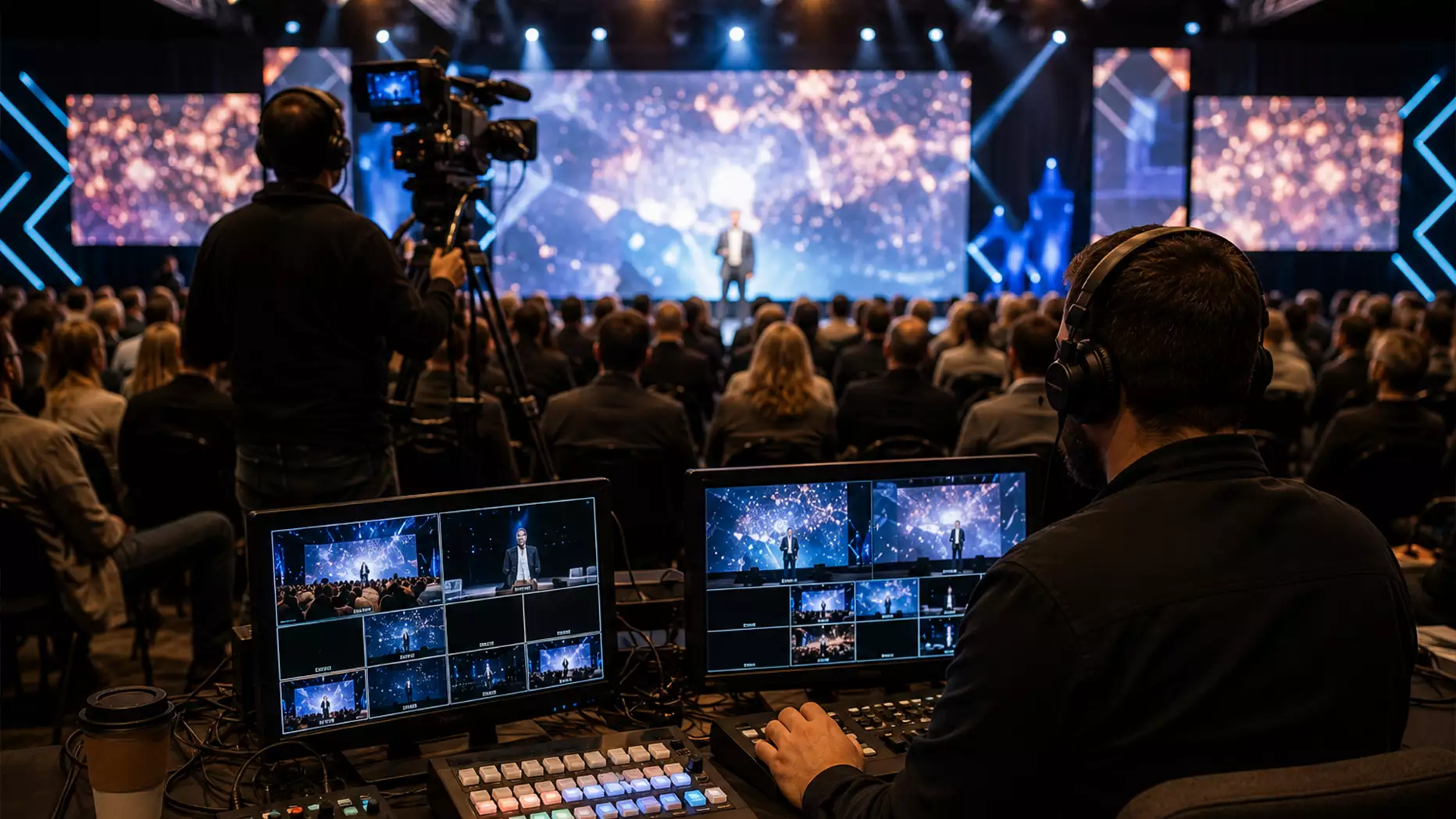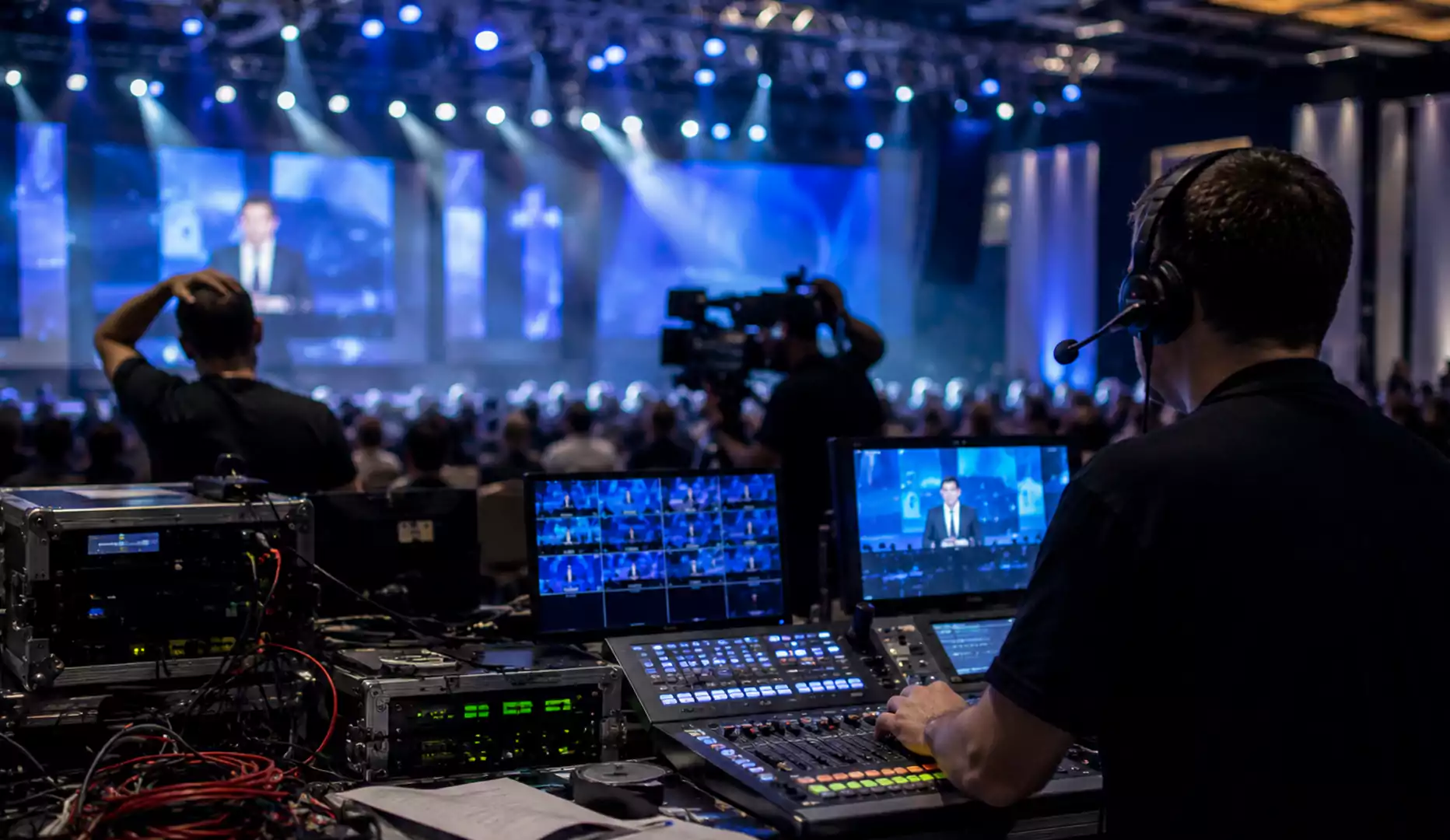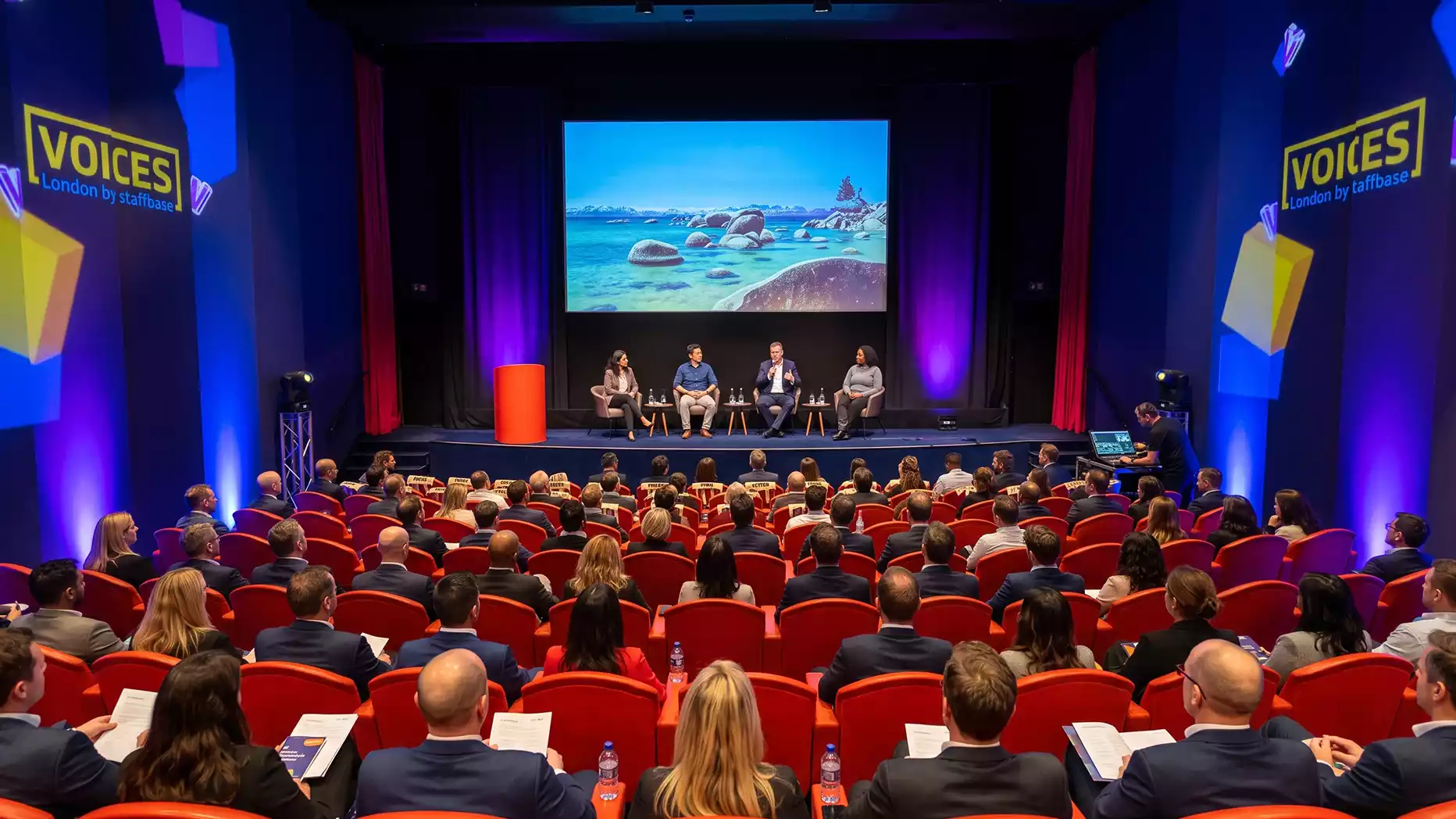
The best-organised event you run this year might also be the most forgettable. Flawless deck. Polished speakers. An agenda timed to the minute. Yet twenty minutes in, a third of the room is quietly thumbing their phones.
That’s the uncomfortable truth about audience attention at corporate events: organisation is not the same as engagement. Attention rarely collapses from one big failure. It drains through flat pacing, content that doesn’t feel relevant, and audio the back row has to strain to hear.
In 2026, the bar has moved. This post breaks down what actually holds attention now, and what quietly loses it.
What actually shapes audience attention at corporate events?
Attention is shaped less by “big production” and more by relevance, clarity, pacing, interaction, environment, and emotional connection working together. Attendees now expect an event to feel worth their time, not just well organised. Production protects attention; it no longer buys it on its own.
In our experience, planners over-invest in content and under-invest in the conditions that let content land. A strong keynote still fails if the back rows can’t read the screen or the speaker’s wireless microphone (a body-worn mic that frees the presenter to move) keeps cutting out. Attention is physical before it is intellectual.
The industry data backs this shift. Cvent’s 2026 research points to relevance driving engagement, with personalisation becoming attendee-led and micro-events shaping experiences that feel intentional and built around peer-to-peer connection. Audiences increasingly decide what’s worth their focus, then give it selectively.
Here is how attention breaks down across an event:
| Attention driver | What it controls | Common failure |
| Relevance | Does the session answer a real need? | Generic content aimed at “everyone” |
| Audibility | Can everyone hear without effort? | Uneven coverage, feedback, low gain |
| Visibility | Can everyone see screen and speaker? | Low LED brightness, poor sightlines |
| Pacing | Does the flow hold momentum? | Long single-format blocks, dead transitions |
| Interaction | Are people doing, not just watching? | Passive listening with no participation |
| Emotional beats | Are there moments that land? | A chain of updates with no thread |
Why are audiences harder to hold than they used to be?
Audiences are harder to hold because their baseline for quality has risen and their tolerance for friction has dropped. People compare your stage to the streaming-grade content they watch daily, often on the same phone pulling them away. Relevance and pacing now matter as much as polish.
Two patterns drive this. First, sustained focus fades quickly during passive listening, so long static lectures lose the room. The fix is rhythm: shorter speaker blocks, keynote-style talks, clear visual changes, and well-timed interaction rather than one long monologue. A short session can fail if it’s flat; a longer one can hold if it has movement and contrast.
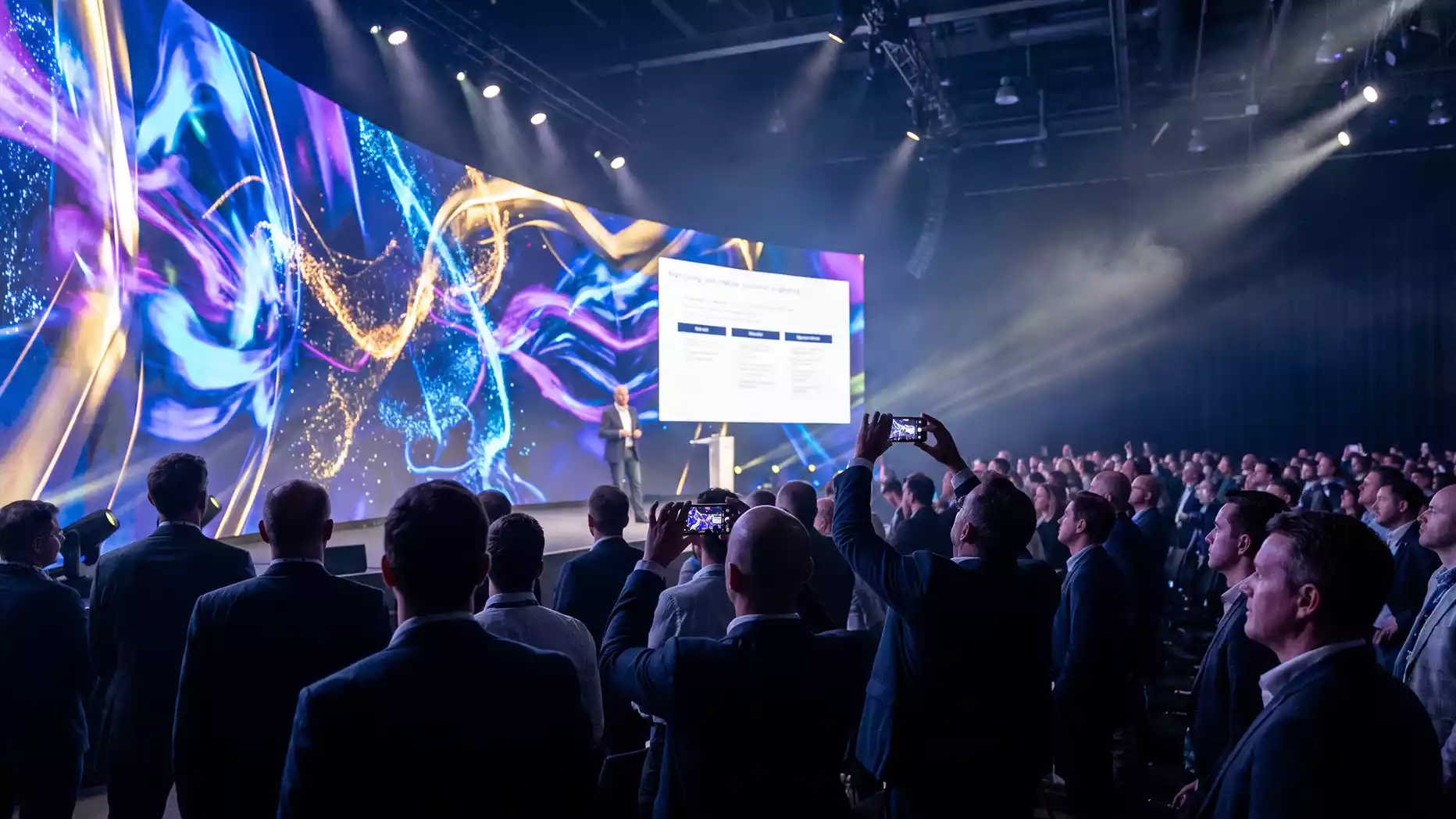
Second, strong screen content has become a pacing tool, not decoration. Planners are using layered motion graphics, timed reveals, and dynamic content on LED screens to boost audience engagement, rather than static slides that the eye stops registering after a few minutes.
A few things we see consistently at London conferences:
- Attention resets on change: A new visual, a lighting shift, or a format switch, from talk to panel or from panel to demo, recaptures focus.
- Screens must be readable, not just big: An LED wall at the wrong pixel pitch (the spacing between LEDs, which sets how close people can sit before it looks grainy) looks worse up close than a smaller, sharper one.
- Silence and stillness are risky: Dead air during transitions is when phones come out; audio beds and lighting cues bridge those gaps.
| You might be thinking: why do audiences lose focus during presentations?The answer is because the format never changes and the visuals stop carrying new information. The brain deprioritises anything predictable. Varied pacing and purposeful visual change are the simplest fixes. |
How do visuals, sound and staging work together?
They work together by removing every reason to disengage, then adding reasons to lean in. Sound makes the message effortless to receive. The room directs where attention goes, and storytelling gives the content a thread worth following. No single element holds a room alone; the integration does.
- Sound: the foundation everyone underestimates
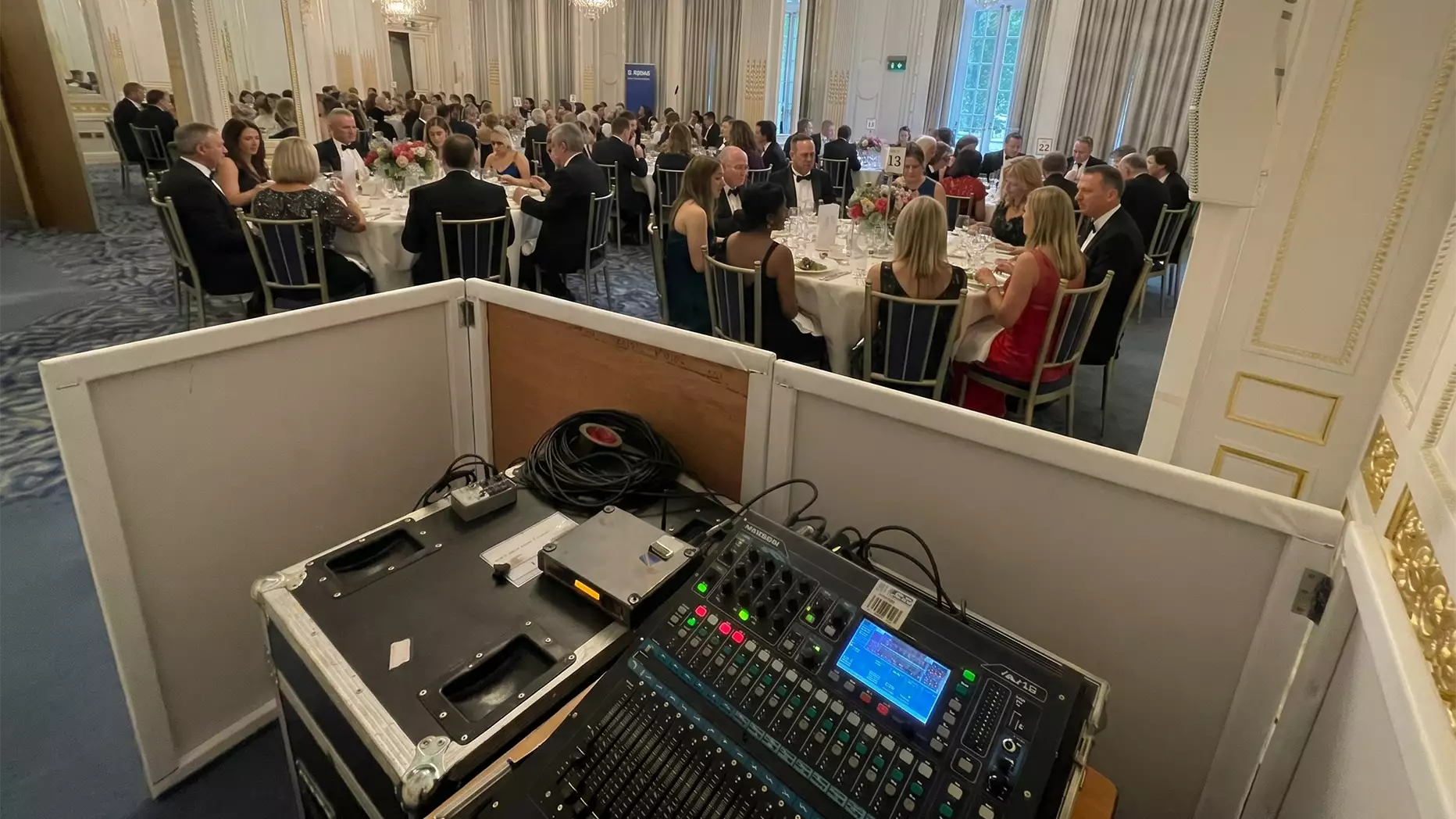
Sound is the element most often taken for granted, and the one that loses a room fastest. Audiences forgive a modest screen far faster than they forgive struggling to hear. Even and well-distributed coverage is what lets people relax into listening, which is why thoughtful speaker placement and venue acoustics for business venues affect attention more than raw volume ever does. If people at the back of the room have to strain, you’ve lost them before the visuals matter.
- Staging: the room shapes the mind
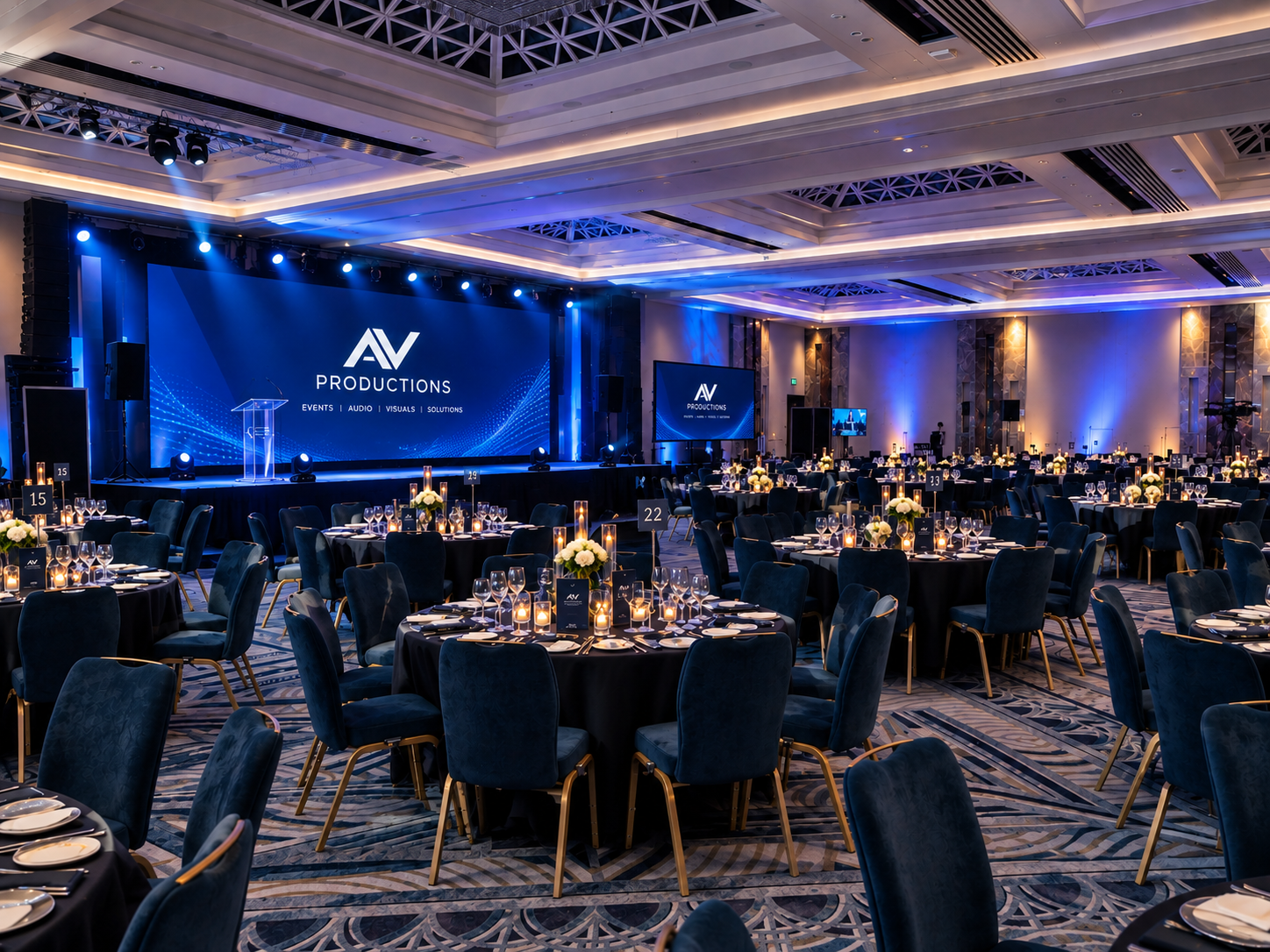
The physical space decides how easy it is to stay focused. Seating, sightlines, lighting, and screen position all influence whether attention holds or wanders. Many planners now treat the stage as a focal surface, which is where designing stage backdrops with LED screens and projections turns a flat platform into a controlled point of focus rather than a distraction.
- Storytelling: the thread that makes content stick
Storytelling is what makes corporate content memorable. Events fail when they become a chain of slides and updates, because people remember a thread, not disconnected information. That mirrors the wider shift, where Cvent frames strong events as following a narrative arc: a compelling opening that captures attention, a core experience that delivers value, and an ending that lands with impact.
- The invisible layer that holds it all up
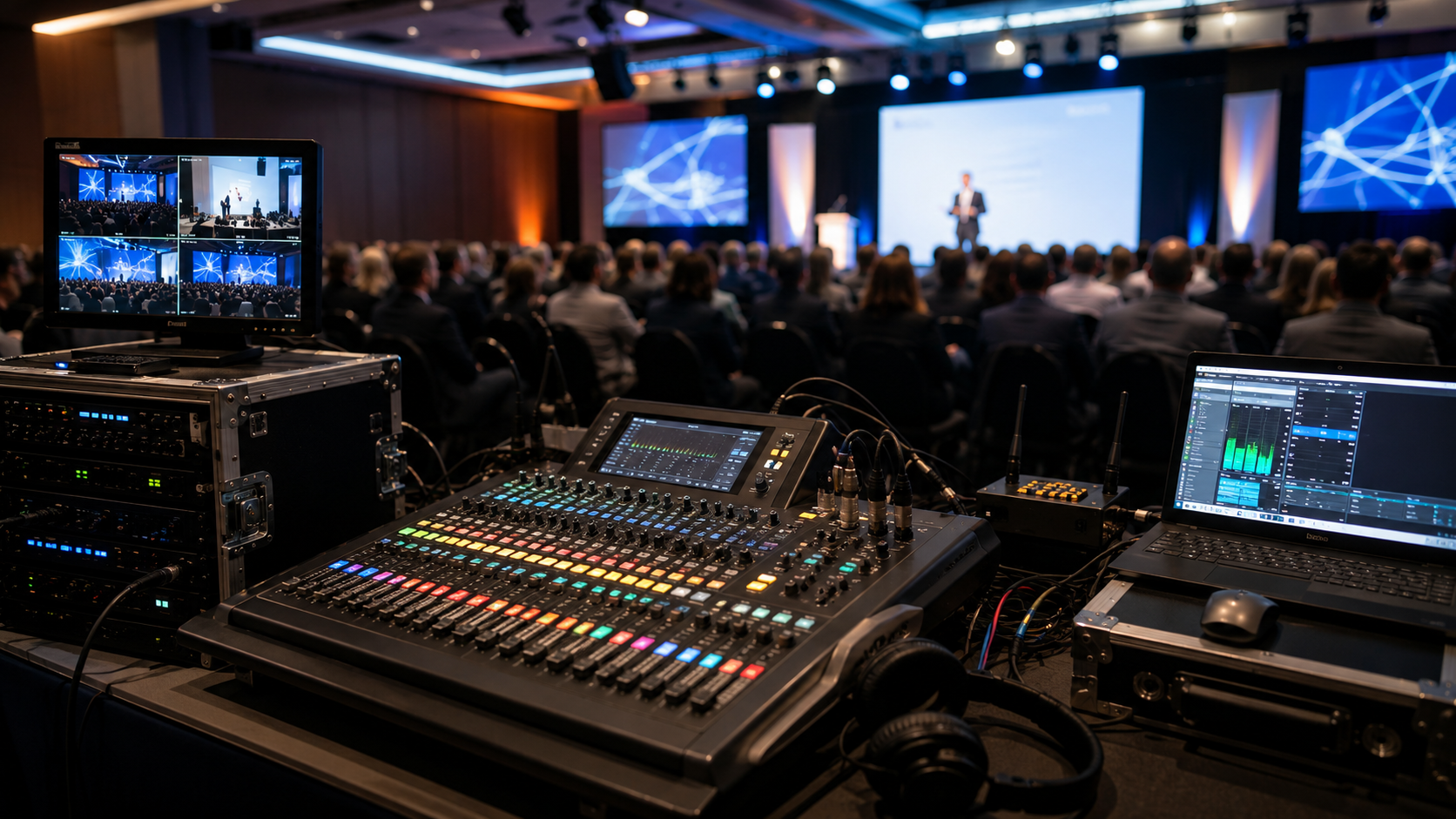
Storytelling and immersive design only work when the technical layer underneath is invisible and reliable. Latency (the delay between a live source and what shows on screen), feedback, or a dropped feed do not just create glitches; they break the spell. Rehearsal time and a technician at the desk are not luxuries; they are what allow the experience to land. For planners who want the Audio Visual equipment Rental side of this handled end to end, the right AV setup to boost interaction and participation is where production and attention design meet.
Final words
Attention in 2026 isn’t won by the biggest screen or the loudest system. It’s won by an event where every element, seen and unseen, works to keep people present. Visibility, sound, pacing, and emotional beats are the levers; reliable production is what protects them.
AV Productions has supported more than 11,000 events across London and brings over 25 years of experience to getting these fundamentals right. Call 0207 177 3405 or request a no-obligation quote to plan an event your audience actually stays with.
FAQs
What shapes audience attention at corporate events?
Audience attention is shaped by visibility, sound quality, presentation pacing, and well-timed emotional beats. When people can see and hear effortlessly, and the flow keeps changing, attention holds naturally. When the technical layer fails, even briefly, focus breaks and is hard to recover, regardless of how strong the content is.
How do visuals and sound affect audience engagement?
Sound makes the message effortless to receive, while visuals reinforce and pace it. Clear, even audio coverage lets audiences relax into listening, and purposeful visual change resets drifting focus. Together, they remove friction and add re-engagement points. A weakness in either one quietly pulls attention away before the content gets a fair chance.
Do you need a big budget to keep an audience engaged?
No. Engagement depends more on getting the fundamentals right than on spending heavily. Clear sound, readable screens, and varied pacing matter more than expensive effects. Cost depends on venue, equipment, staffing, timing, and event complexity, but a modest, well-executed setup usually outperforms a lavish one that ignores sightlines and audio.