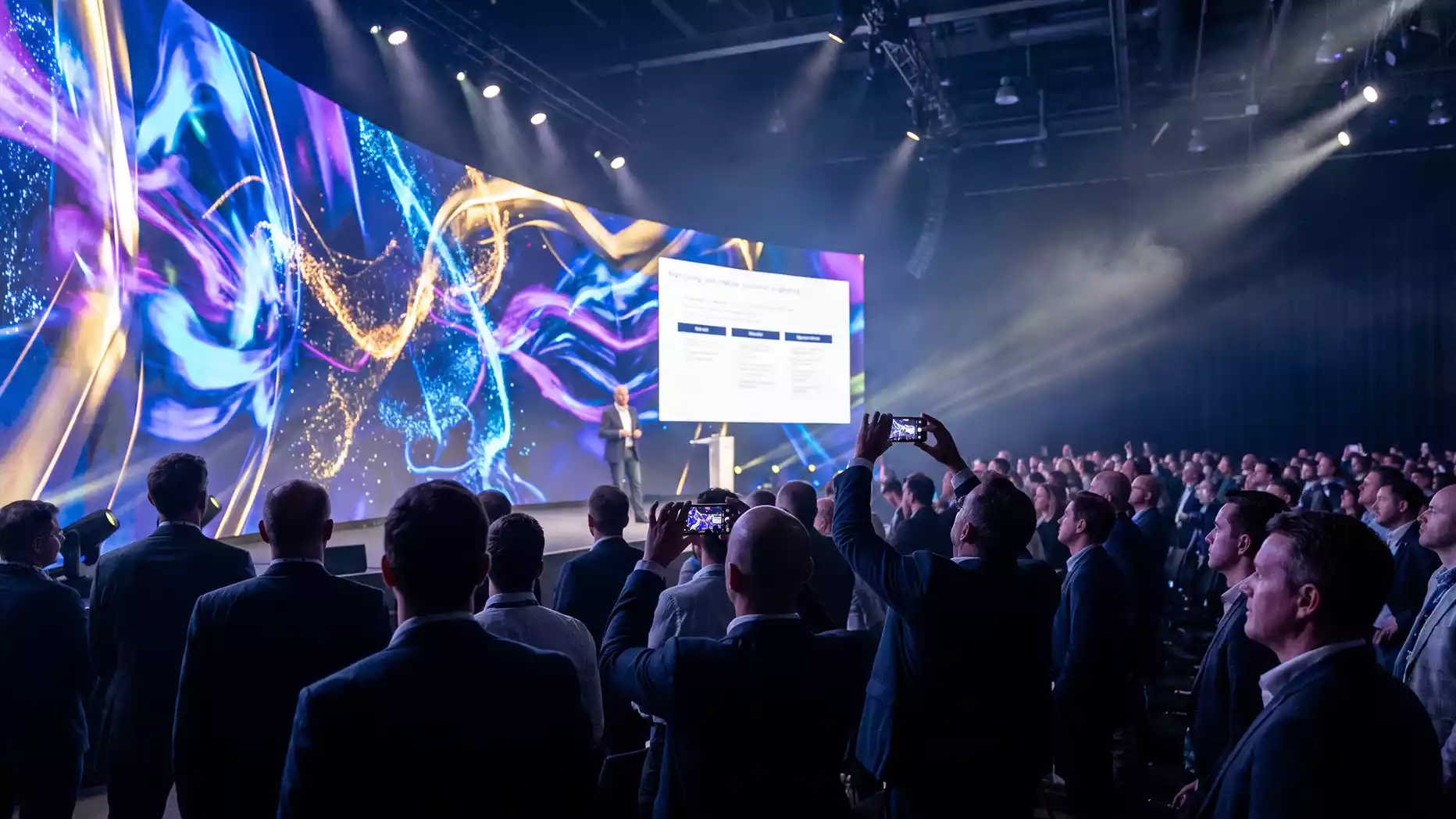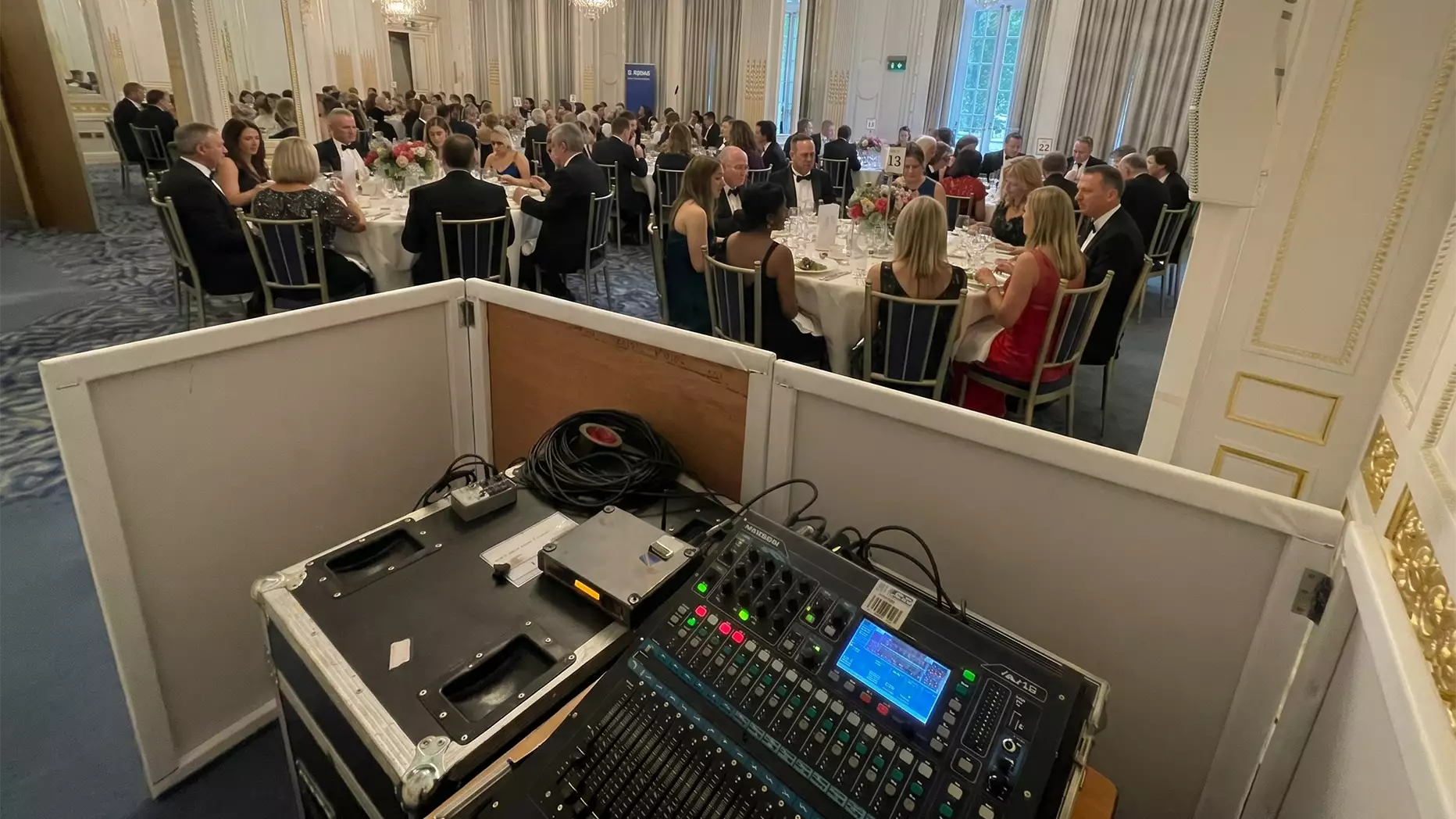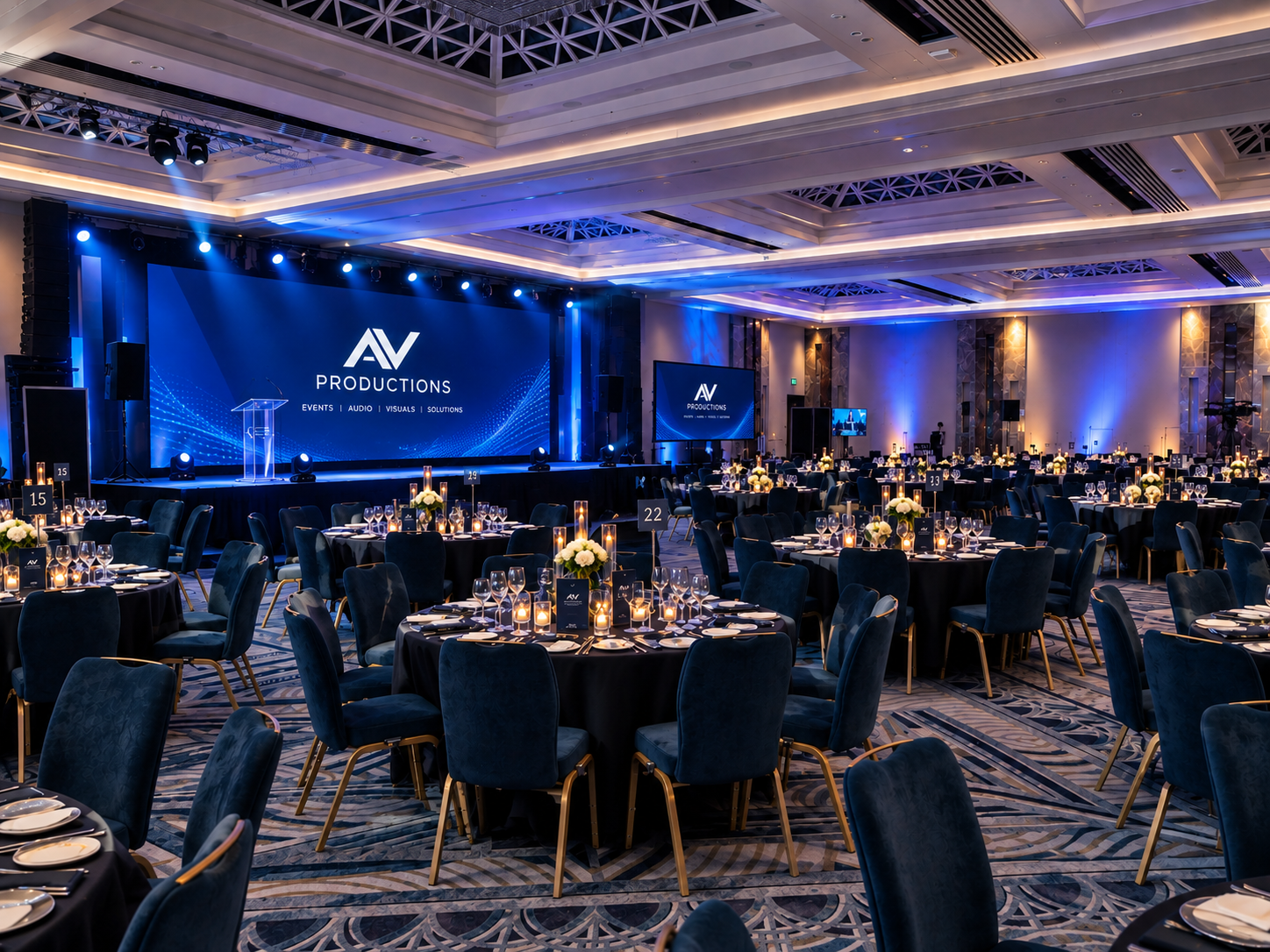
Event environments and audience behaviour are tied more closely than most planning conversations admit. Lighting decides whether audiences lean forward or sit back. The sound environment determines whether networking produces real conversation or surface-level interaction. Spatial design shapes where the room gathers and where it stalls. None of this is decided by content. The room decides it, and the audience reacts to the room more consistently than to anything else happening inside it.
The blog works through how lighting design, sound environment, spatial design, and visual experience shape audience behaviour at live events, and what production teams can change to design environments that produce the outcomes the brief specifies.
Why Behaviour Follows The Environment, Not The Brief
The audience does not behave the way the brief says they will. They behave the way the environment cues them to. A keynote brief might ask for engaged listening, but if the lighting state keeps the house lights up, the audience defaults to passive consumption. A networking brief might ask for active conversation, but if the room is acoustically harsh, the audience drifts toward the walls.
This happens because environmental cues are processed faster than spoken instructions, behaviour follows the path of least friction, and social cues amplify environmental ones. Once a few people have settled into a passive posture, the rest of the room follows. Once a few have started conversations, the rest join. The environment determines what the first few people do, which is to say, the environment determines everything.
How Lighting Directs Audience Posture And Energy
Lighting is the most direct behavioural lever in the room. The audience reads lighting states as instructions about what they should be doing, and adjusts within seconds.
| Lighting State | Behaviour It Produces | Best For |
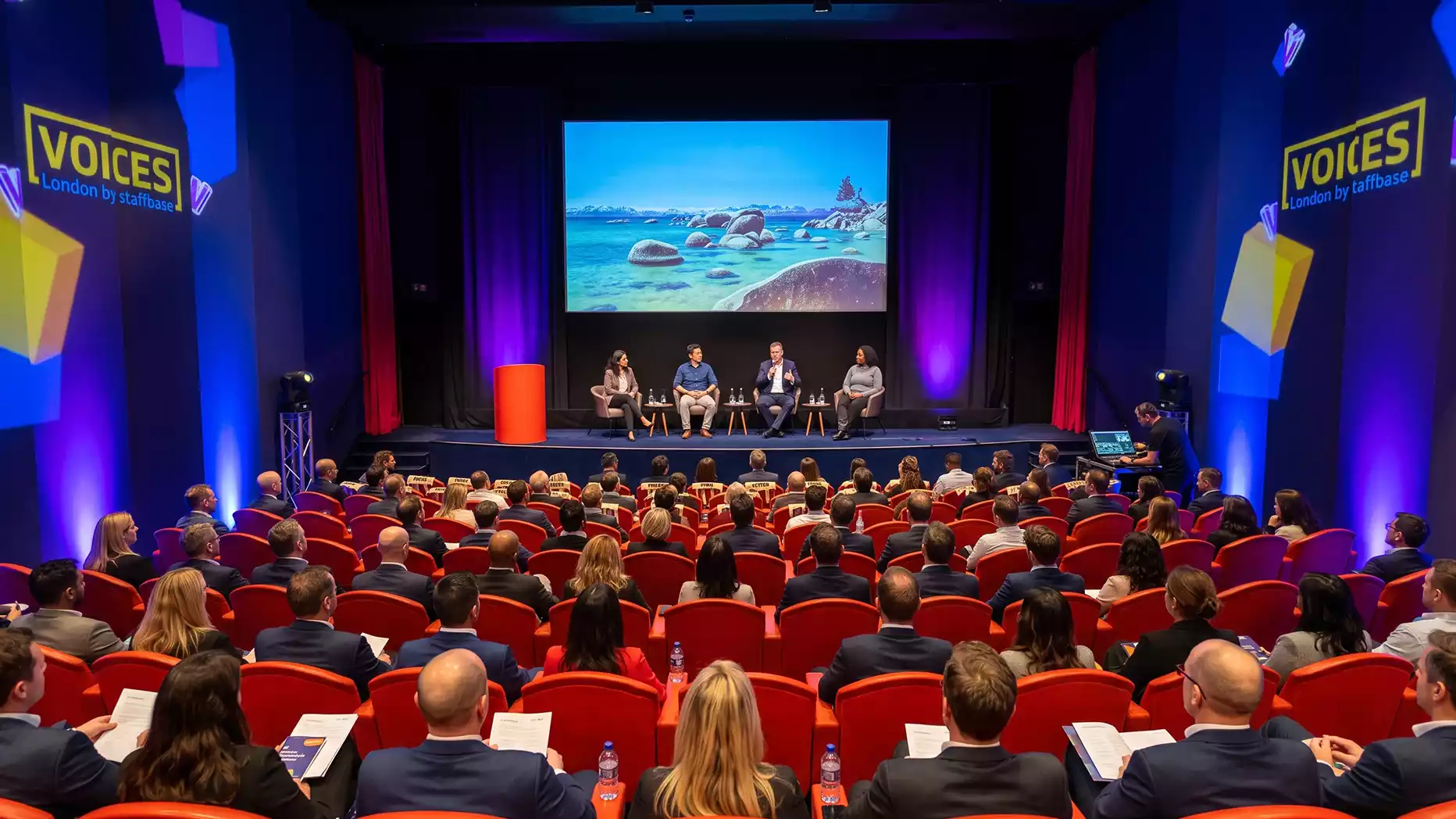
| Warm, dimmed with a focused stage light | Lean forward, take notes, engage with the argument | Keynotes, panel discussions |
| Cool, bright, full-room | Alert but critical, maintains analytical distance | Technical content, training sessions |
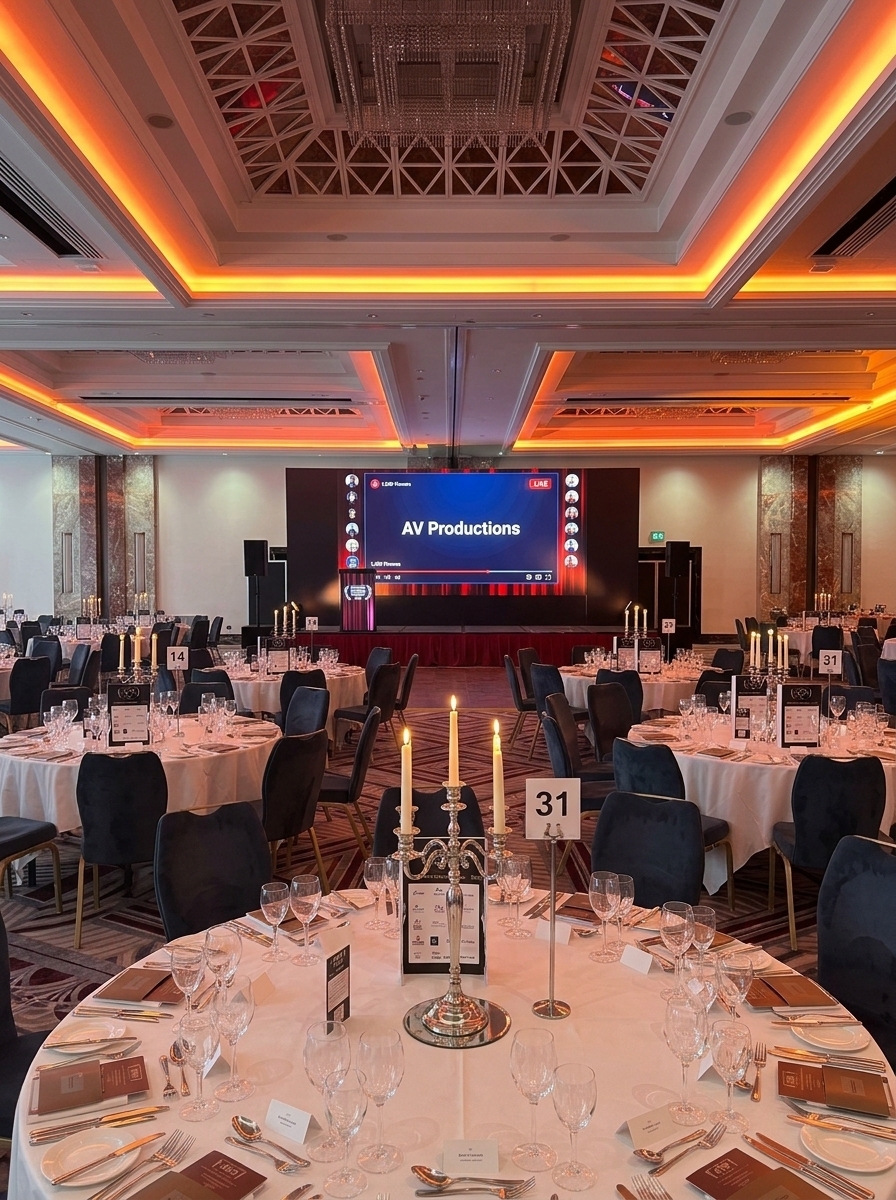
| Layered uplighting, low ambient, active stage | Readier applause, emotional response, comedy reception | Awards, brand moments, celebrations |
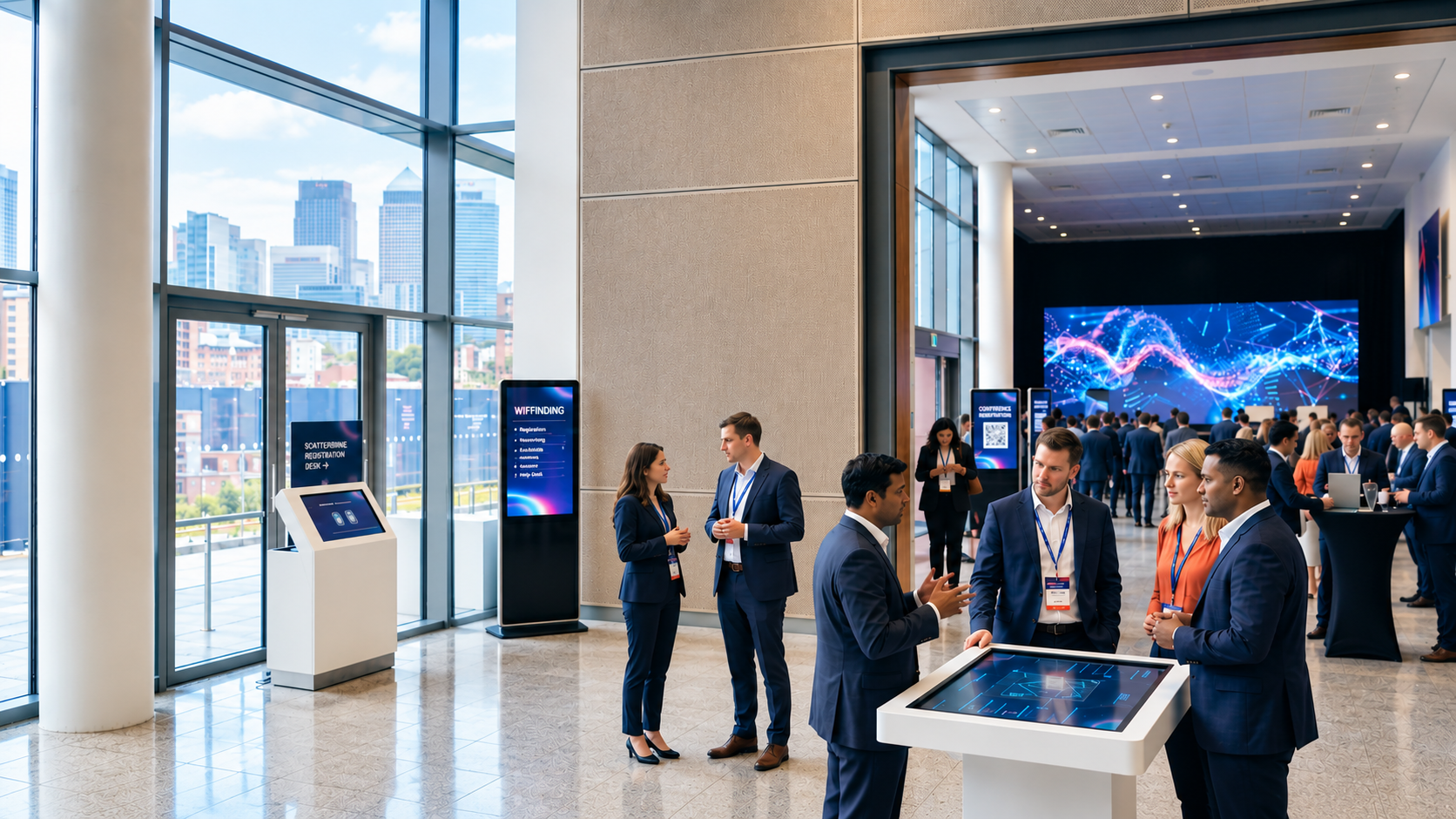
| Bright, even house lighting | Casual, conversational, transitional | Networking, breaks, registration |
| Static across the full event | Steady disengagement regardless of content | Avoid as it makes a flat audience by mid-afternoon |
Lighting changes at transitions are not aesthetic flourishes. They tell the audience whether the next moment is for listening, networking, applauding, or resting. A keynote that begins with house lights still up never gets the audience into a focused listening mode, regardless of how the speaker opens.
What The Sound Environment Does To Conversation And Engagement
The sound environment shapes two behaviours that planning conversations treat separately, but the room treats as one: how the audience listens, and how they speak to each other.
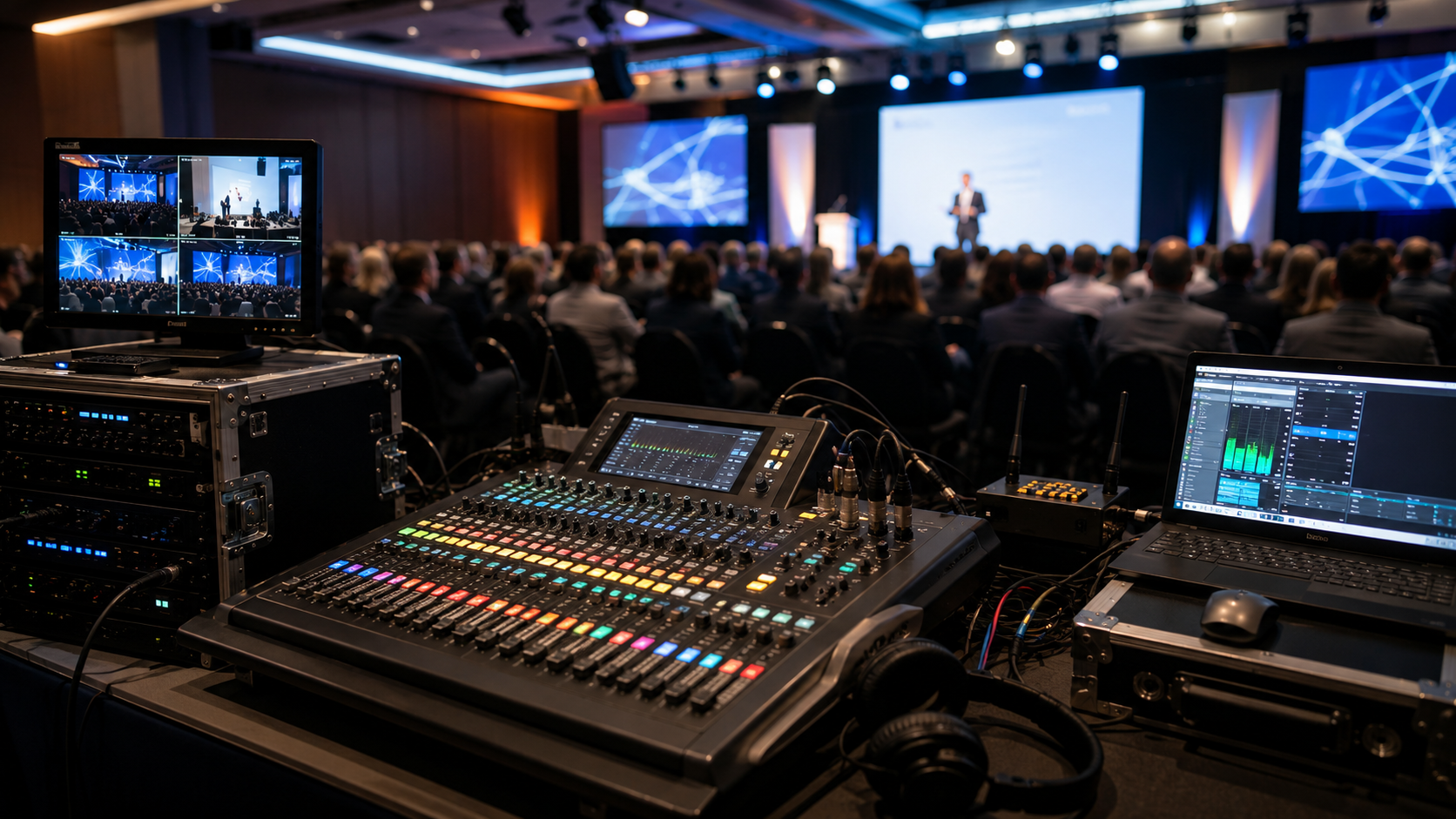
Clean audio in a room with workable acoustics produces active listening. Muddy audio or harsh reverb produces strained listening, which collapses into phone-checking and side conversation within minutes. That much is expected. What gets underestimated is the second effect, how the sound environment during breaks shapes whether networking happens at all.
The acoustic conditions that determine networking outcomes:
- Too much reverb forces people to stand close and speak loudly, producing exhausting conversation that ends quickly.
- Background music too loud cuts conversation off before it deepens.
- No ambient sound at all makes quiet conversation feel exposed, defaulting the room to small talk.
- Curated background sound at the right level cushions social risk and produces longer, deeper conversations.
This is where venue acoustics function as a behavioural variable rather than a technical specification. Rooms tuned for conversation produce networking by default. Rooms left to whatever the venue offers produce circulation, exchanged business cards, and early exits.
Spatial Design And Where Audiences Choose to Gather
Audience movement at events follows the room. People gather in clusters, not in open floor space. Designed clusters with intentional furniture placement produce conversation. Open floor space produces drift.
Three spatial decisions shape behaviour most:
- Cluster design: Furniture placement creates the conversation zones. Without it, the audience disperses along the walls.
- Pathway between zones: Clear paths between content, networking, and food areas keep the audience circulating. Pinch points stop them moving, and once they stop moving, they stay where they are.
- Seating geometry: Curved seating produces shared attention. Long rectangular rows produce isolation in the back half of the room, and audiences seated beyond roughly fifteen rows from the stage disengage at measurable rates regardless of content.
The back-half engagement problem is the most common behavioural failure in corporate event layout. It is treated as a content problem and addressed with better speakers when the cause is sightlines, audio coverage, and the absence of a shared focal point. Spatial design fixes it. Speaker quality cannot.
How Visual Atmosphere Cues Emotional Response
The audience walks in and reads what they see as a signal about what kind of event this is. They adjust their behavioural register accordingly, almost without exception.
A room with layered visual environments, scenic depth, and integrated brand presence reads as premium. The audience matches it: more attentive listening, more deliberate networking, and more willingness to engage with sponsor activations and participation moments. A room with a generic backdrop and default house signage reads as routine. The audience matches that too: passive listening, quick exits, and low engagement with anything asking for participation.
This is where stage visuals shape behaviour beyond the keynote moments. The visual atmosphere produced by integrated static backdrops and LED environments operates across the full event, not just during content delivery. Even applause patterns follow this; the same line delivered by the same speaker draws different responses in different rooms, and the difference is the visual register that the room established before the speaker walked on.
What Production Teams Can Actually Design For
Designing for audience behaviour changes the planning conversation in a few specific ways:
| Planning Element | Conventional Approach | Behavioural Approach |
| Lighting cues | One state per session | One state per moment, cued for transitions |
| Sound design | Keynote-focused | Includes networking, acoustics and break audio |
| Spatial layout | Designed for capacity | Designed for sightlines, clusters, and circulation |
| Visual environment | Built for the stage | Built for the full room across the event |
| Brief | Specifies what to see and hear | Specifies what the audience should do |
The shift is in what the brief is asking for. Production teams designing around the behaviour they want, such as applause, conversation, attention and participation, and then building the environment to produce it, deliver events where the audience does what the event was designed to achieve. Production teams designing around the visible elements and hoping the audience responds correctly deliver events where the speakers perform, but the audience does not respond.
What The Room Tells The Audience To Do
Event environment and audience behaviour are linked through cues that the audience processes without realising. Lighting tells them whether to listen or talk. Sound tells them whether to engage or drift. Layout tells them where to gather. Visual atmosphere tells them what register the event is operating in, and they match it.
Production teams who design environments around the behaviour the brief asks for deliver events where the audience does what the event was designed for. Production teams who design around the visible elements without designing for behaviour deliver events where the audience watches but does not respond, networks but does not engage, and applauds politely but does not lean in. The audience is not failing to engage. They are responding accurately to the room they were put in.
Frequently Asked Questions
1. Why does my audience disengage halfway through corporate events?
The most common cause is environmental rather than content-related. Static lighting across the full event, poor acoustics in the back of the room, or spatial design that isolates the back rows all produce mid-event disengagement that gets blamed on the programme. Reviewing lighting cues, audio coverage, and seating layout usually finds the real cause faster than reviewing speaker quality.
2. How can I encourage more networking at corporate events?
Networking is shaped almost entirely by the environment during breaks. Lighting that signals a different mode from the keynote, audio that cushions conversation without overwhelming it, and spatial design that creates intentional clusters all produce more networking than host encouragement. The environment is the instruction the audience follows.
3. Does room layout really affect audience engagement?
Yes, measurably. Audiences seated more than fifteen rows from the stage in long rectangular layouts disengage at higher rates than audiences in curved or shorter configurations, even when the content is identical. Sightlines, audio coverage, and shared visual focus are all determined at the layout stage, not during the event.
4. What’s the most overlooked environmental factor at events?
The acoustic environment during networking. Lighting and visuals get planned because they are visible. The acoustic conditions of break and networking spaces rarely get planned, and yet they decide whether those parts of the event produce conversation or polite circulation.