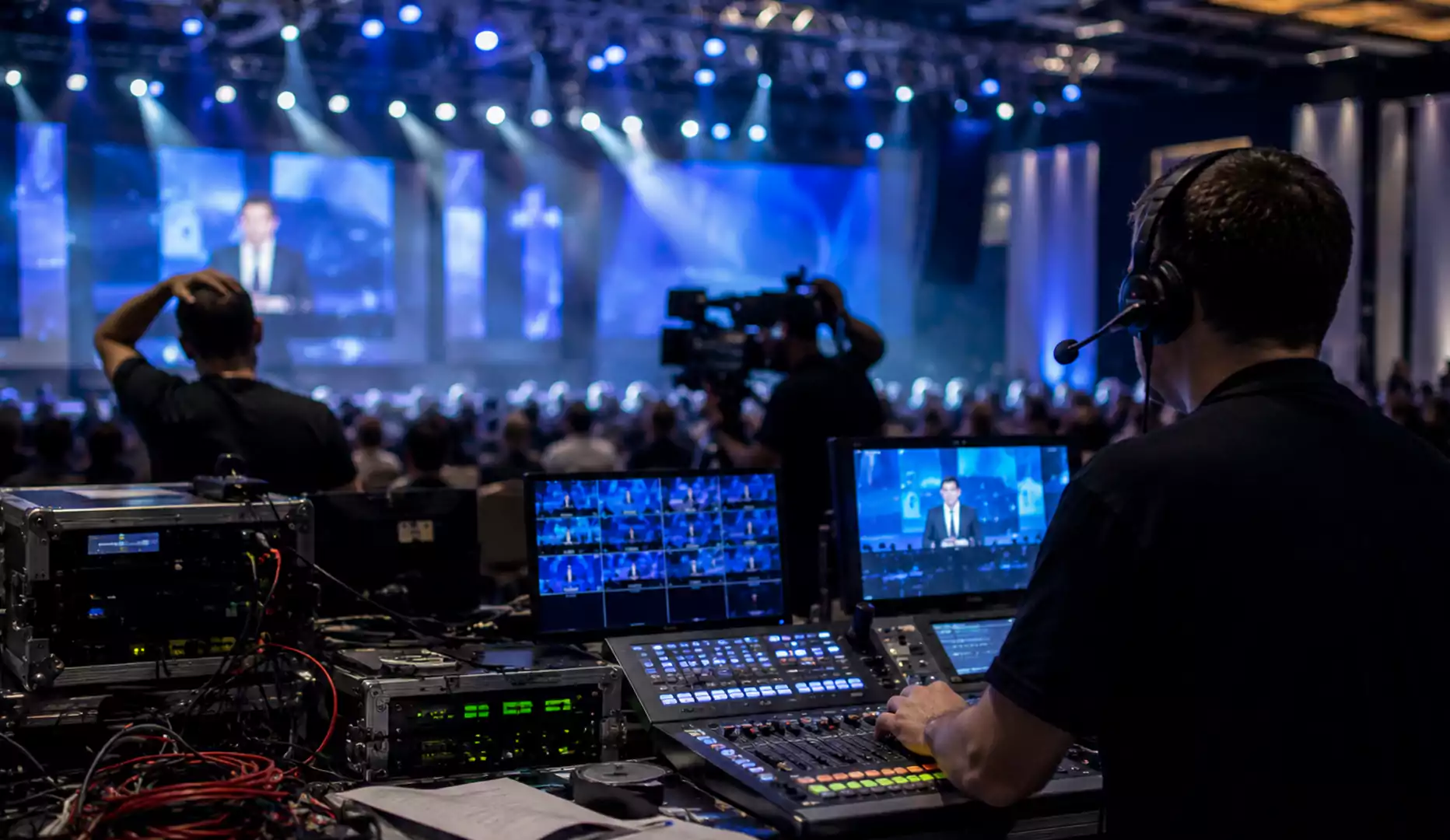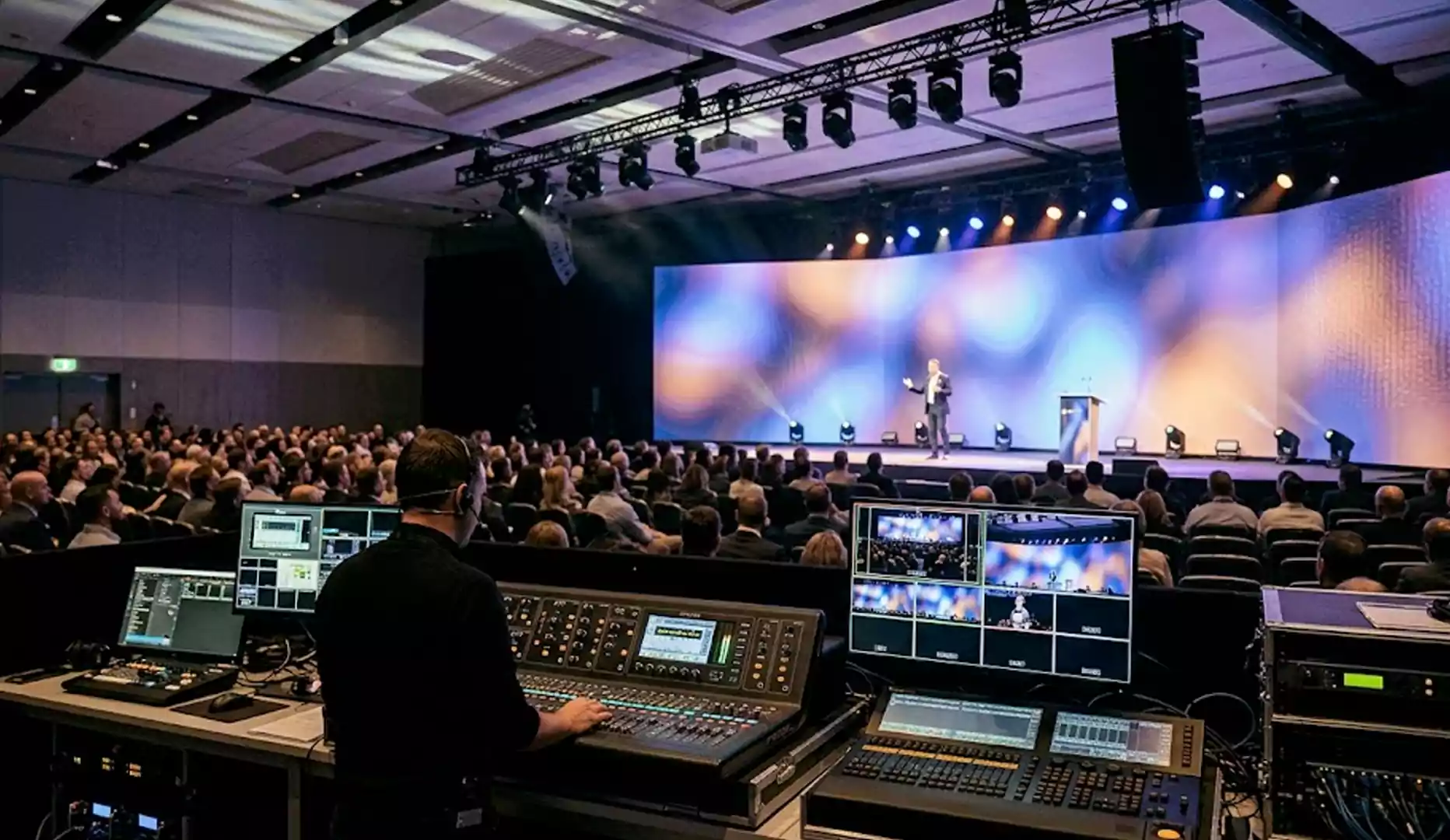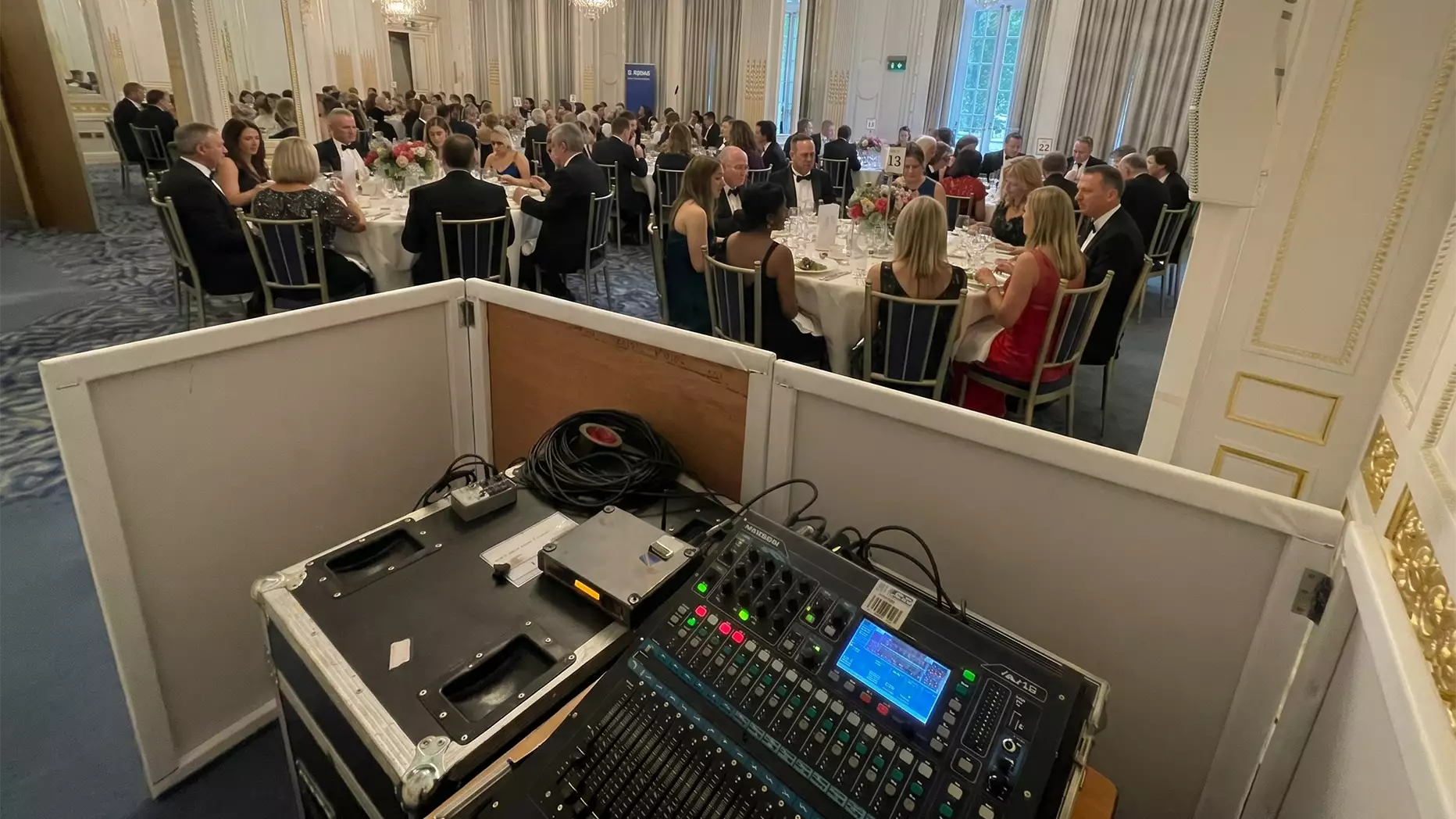
You have ninety minutes on the agenda, a strong speaker, and a room full of people who chose to be there. Then the lapel mic crackles. The first slide loads three seconds late. A back-row attendee leans forward, frowns, then quietly checks their phone.
That is how engagement is lost. Not all at once, but through small technical breaks that the audience never fully forgets.
AV quality and audience retention are tightly linked at live events. When the sound is clear and the visuals are sharp, attendees stay focused on the message. When either falters, attention drifts, and the value of the whole event drops with it.
This guide explains what “AV quality” means in a live setting, how poor audio and weak visuals cause noticeable drops in attention, and the specific setup decisions that protect your audience experience from start to finish.
What AV quality means at a live event
AV quality refers to how clearly and consistently sound, visuals, and supporting systems deliver your content to every person in the room. It is the combination of sound clarity, the visual experience, lighting, signal routing, and the people operating it all on the day.
At a corporate event, AV quality usually breaks down into four areas:
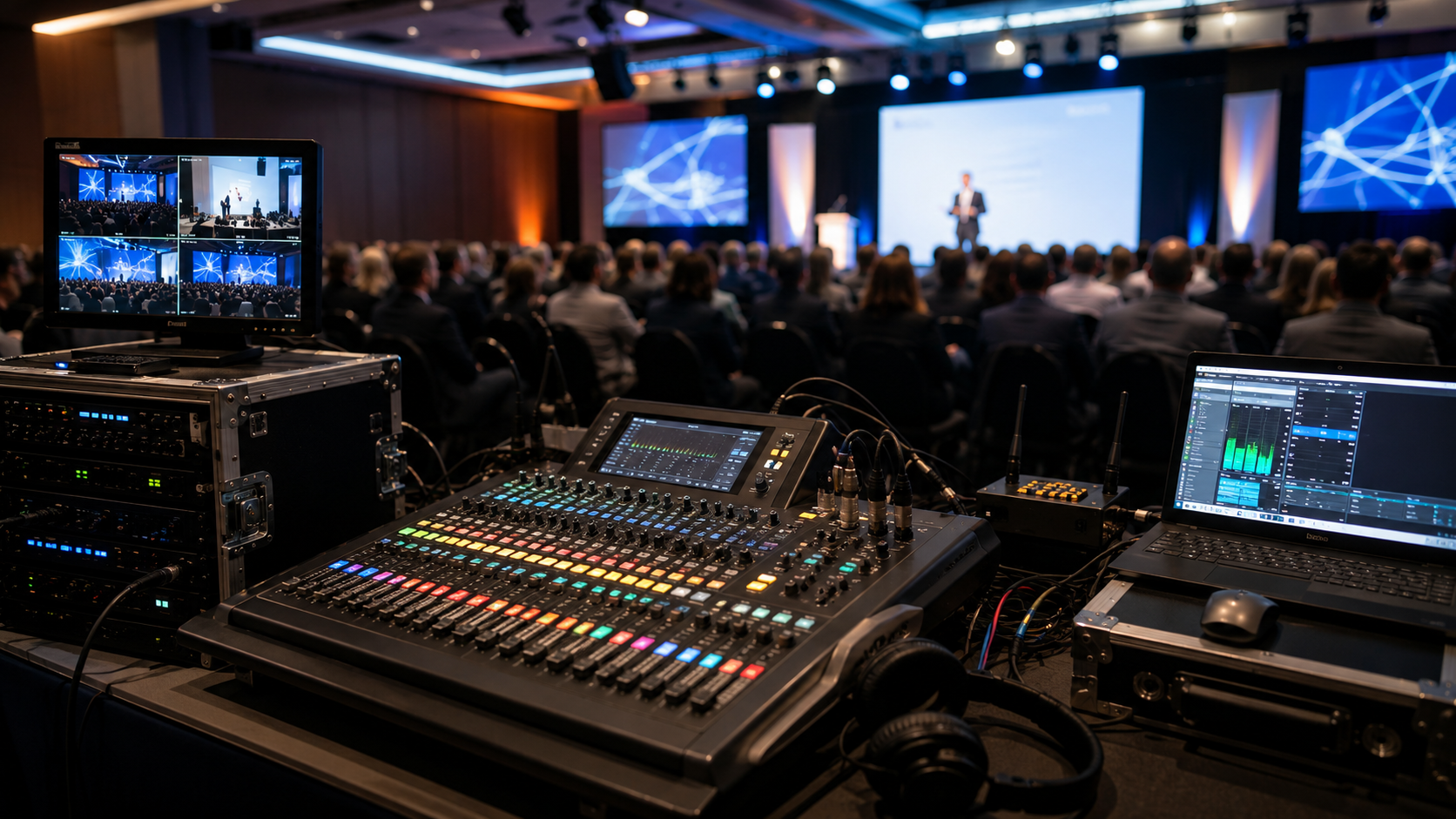
- Audio: Microphones, mixers, PA systems, speaker layout, and acoustic treatment.
- Video: Projectors or LED screens, source switching, image scaling, and brightness.
- Lighting: Stage wash, key lighting for speakers, and audience lighting balance.
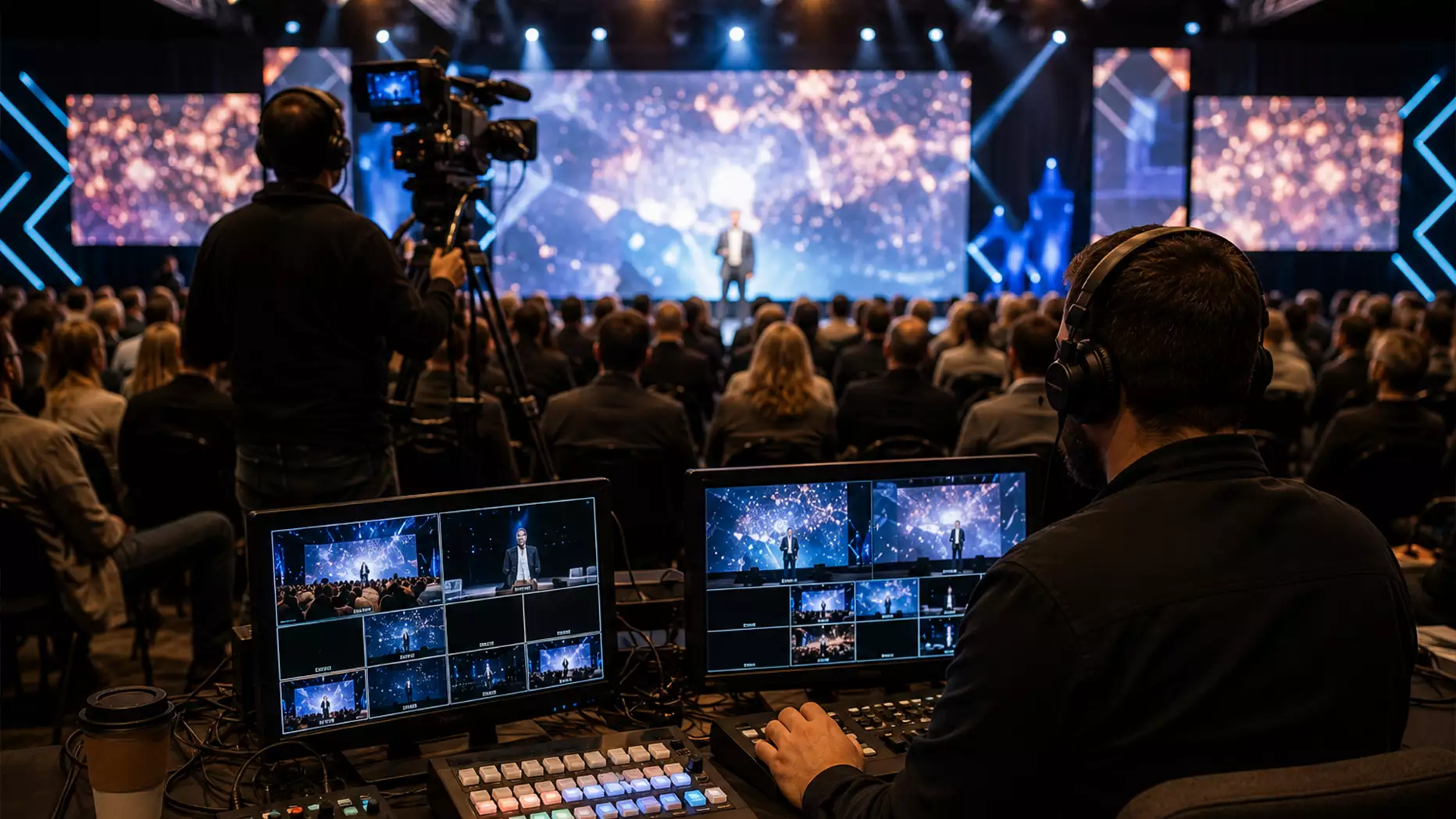
- Integration: How cleanly the above are timed, cued, and operated as one show.
A presentation can have brilliant content and still lose its audience if any one of these slips. That is the heart of the link between presentation quality and audience attention at events.
Why audience attention is more fragile than planners think
The audience’s attention span at events is limited, and it can break faster than planners expect. People in a conference room are doing several things at once: listening, watching slides, taking notes, glancing at their phones, and deciding whether the next session is worth staying for.
In that state, the brain treats any technical disruption as a reason to disengage. A muffled microphone is not just an inconvenience. It signals to the audience that the content may not be worth the effort. Once attention is lost, regaining it is difficult.
This is why event engagement factors sit on top of, not after, the AV setup. The agenda, the speakers, and the visuals only land if the technical foundation lets them.
How specific AV failures cause specific retention drops
Different AV problems break audience attention in different ways. Recognising the pattern helps you decide where to spend the production budget.
| AV problem | What the audience experiences | Effect on retention |
|---|---|---|
| Muffled or echoing audio | Strain to follow the speaker, missed key points. | Sharp drop within minutes; back rows disengage first. |
| Microphone feedback or pops | Physical discomfort, distraction. | Immediate attention break, slow recovery. |
| Dim or low-contrast screens | Slides are hard to read from the middle and back of the room. | Audience stops referencing visuals, follows audio only. |
| Latency between speaker and screen | Lip-sync mismatch, confusion. | Subtle but constant drain on focus. |
| Poor side-of-room sightlines | Off-axis viewers tune out. | Lower engagement from side seating and back rows. |
| Lighting too dim on the speaker | The audience cannot read facial cues. | Reduced emotional engagement, lower trust in the message. |
| Uneven volume between speakers | Audience adjusts posture repeatedly. | Steady low-level fatigue, drop-off after breaks. |
The audio-first principle: why sound clarity matters most
If you only invest in one part of the AV setup, invest in sound.
Audiences are forgiving of average visuals. They are not forgiving of poor audio. A slightly soft image is something they will lean past. A microphone that cuts out, a speaker stack that booms in the front row and disappears in the back, or a presenter whose words echo into mush are the things people remember as “a badly run event.”
Three specific audio issues cause the most retention damage at corporate events:
- Unbalanced room coverage. When the sound is loud at the front and thin at the back, the back third of the room mentally checks out before the second speaker.
- Hard-surface echo. Glass walls, concrete floors, and tall ceilings cause reflections that smear speech. Attendees stop trying to follow detail.
- Microphone choice and handling. A lapel mic with the wrong pickup pattern, a handheld held too far from the mouth, or a missed mic swap during a panel can derail a session.
Getting these right is largely about layout, not equipment cost. Smart speaker placement and acoustic planning, height, angle, fill speakers, and treatment of reflective surfaces do more for clarity than an expensive kit ever will.
The visual experience: clarity, scale, and sightlines
Visuals are the second pillar. Once the audio is solid, visual clarity in events becomes the next attention lever.
The three things to get right:
- Brightness for the room. A projector that looks bright in a dark demo room can be washed out in a window-lit ballroom. Match the brightness and screen technology to the lighting conditions of the actual venue.
- Sightlines for every seat. A centre screen is not enough in long, narrow, or L-shaped rooms. Repeater screens or side LED walls protect viewers from the centre line.
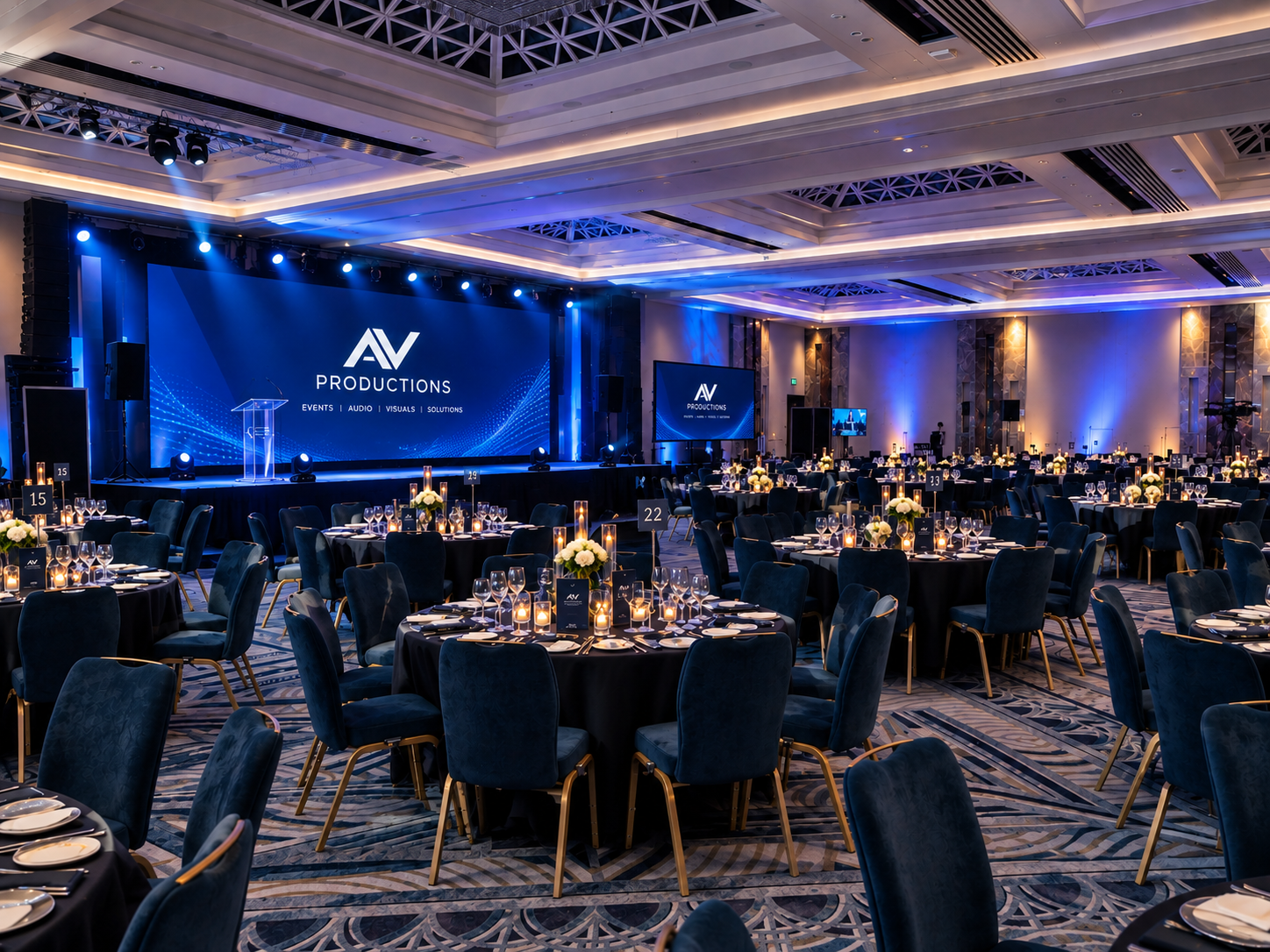
LED screens have become the default for medium and large corporate events because they hold brightness regardless of ambient light, scale to fit awkward rooms, and stay sharp from the front row to the back. In difficult venues, heritage buildings, low ceilings, curved walls, flexible LED wall installations handle constraints that projection simply cannot, which is why they are often preferred over projectors for events where every seat needs a clear view.
Final thoughts
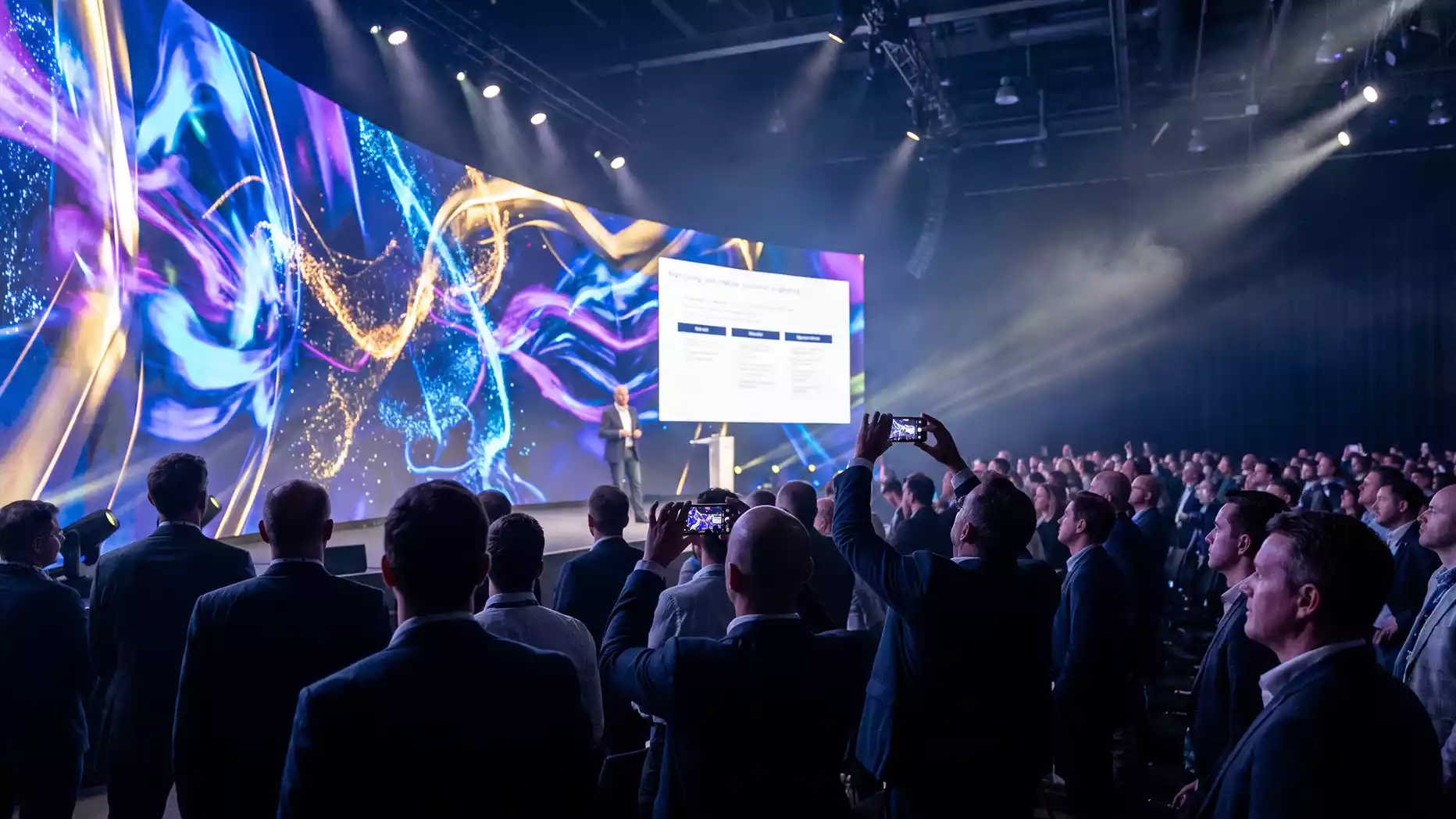
The link between AV quality and audience retention is not abstract. It shows up in visible ways: such as how many people are still in the room after the second break, how attentive the Q&A is, how many phones come out during the keynote, and whether the post-event survey scores the content or the experience.
Strong AV does not make weak content land. But poor AV will lose strong content fast. A reliable AV setup protects the message, reduces distractions, and helps the audience stay with the session from the opening line to the closing slide.
If you are planning a corporate event in London or the UK and want a steady pair of hands on the AV side, our team is happy to walk through your venue, agenda, and audience size to recommend the right setup.