A planner can book the right LED wall, PA system, stage, and microphones, yet still end up with a forgettable event. The kit was specified perfectly. The story was never designed at all.
That is the problem that story-driven event production sets out to solve. It starts earlier than the equipment list. It asks what the audience should feel, understand and remember before deciding how the room should look, sound and move.
For corporate events, conferences and product launches, this shift matters. Audiences are used to strong visual content, clean sound and smooth transitions. They notice when a presentation feels flat, and they notice when every cue, screen, light and speaker moment feels connected.
This guide explains how modern event production has shifted from technical setup to experience-led storytelling. It also shows how AV, visuals, sound and staging work together as one narrative journey and how AV Productions applies this approach across London events.
What is story-driven event production?
Story-driven event production means building the event around a clear message, not just around equipment. The AV design, staging, lighting, sound and screen content all support the same audience journey. The technical plan should support the story rather than start it.
In a traditional setup, a planner may start with a list: an LED wall, lectern, microphones, stage, lighting, laptop playback and technicians. Those items still matter. But they are only the tools. In a story-led approach, the first questions are different:
- What should the audience understand by the end?
- Where are the key emotional or commercial moments?
- Which speaker moments need the most focus?
- How should the room change between sessions?
- What should the audience see, hear and feel at each stage?
That thinking shapes the technical plan. A product reveal may need a darker stage wash before the reveal cue. A leadership conference may need a clean LED backdrop, strong sound coverage and confidence monitors so speakers stay natural. A fundraiser may need lighting shifts, music cues and screen content that build energy before the donation moment.
This is also a shift in how the audience is treated. Story-led design makes the attendee an active part of the experience, not a passive spectator. It guides them through a clear journey, from curiosity to connection to belief. This is where stage backdrops with LED and projection become more than background design. They help direct attention, frame the speaker and make the message easier to follow.
A common issue we see in event storytelling
A frequent problem is that event storytelling is treated as a content job only. In reality, it depends on technical reliability. If a wireless microphone drops, the screen content lags, or a transition feels slow, the story breaks. Good immersive event design links creative planning with signal flow, rehearsals, playback, front-of-house audio, and show calling. This helps the story stay clear on the day.
Why are events moving from equipment to experience?
Events are shifting from equipment to experience. Audiences expect live moments to be clear and polished. Audiences also want live moments to feel worth their time. The real value comes when every technical element supports the audience journey.
Corporate events compete with digital content, hybrid meetings, short-form video and packed calendars. People do not attend only to receive information that they could get from a PDF. They attend to connect with a message, a brand or a moment.
This is part of a wider industry move from a logistics-first model to a story-first one. The creative brief and audience goals are agreed upon first. Any technical specification is set afterwards. That change shows up clearly when you compare the two approaches:
| Old equipment-led planning | New story-driven approach |
|---|---|
| Starts with a kit list. | Starts with audience goals. |
| Screens show slides only. | Screens guide the story. |
| Lighting is added at the end. | Lighting supports mood and focus. |
| Sound is treated as basic support. | Sound clarity protects the message. |
| Rehearsal checks equipment. | Rehearsal checks flow and timing. |
| Success means “nothing failed.” | Success means the message landed. |
For London conferences, this is especially important. Many Central London venues have short load-in windows, strict access rules, limited rigging points and tight derig timing. A story-led plan still has to work inside those limits. Experienced logistics teams build a master timeline backwards from the event date. They add a buffer, often around 20% to 30%, for load-in, setup, and transitions. This matters because underestimating load-in time can put a strong event plan at risk on the day.
That means the production team must understand both the creative goal and the venue reality. The LED wall must be visible from the back row. The PA system must cover the room evenly. The switcher or vision mixer must handle every screen source. The live stream feed must stay stable. The show caller needs clear cues for speakers, walk-ons, videos and transitions.
AV Productions has over 25 years of experience in AV hire. We also provide technical event management. That experience helps turn creative plans into practical show flows, not just mood boards. The real shift is simple: the audience does not remember the equipment list. They remember whether the event felt clear, smooth and worth being in the room for.
So, when planning a London conference or product launch, consider the “why” before the “what.” Why are these delegates here? What is the core narrative arc? Once that is defined, the production team can use LED video wall hire to build an atmosphere rather than just displaying static logos.
How do AV, sound and staging create a narrative journey?
AV, sound and staging create a narrative journey by controlling attention. They tell the audience where to look, when to listen, when to react and when a moment matters. This does not mean every event needs theatre-level drama. It means each technical choice should have a purpose.
Visuals set the scene
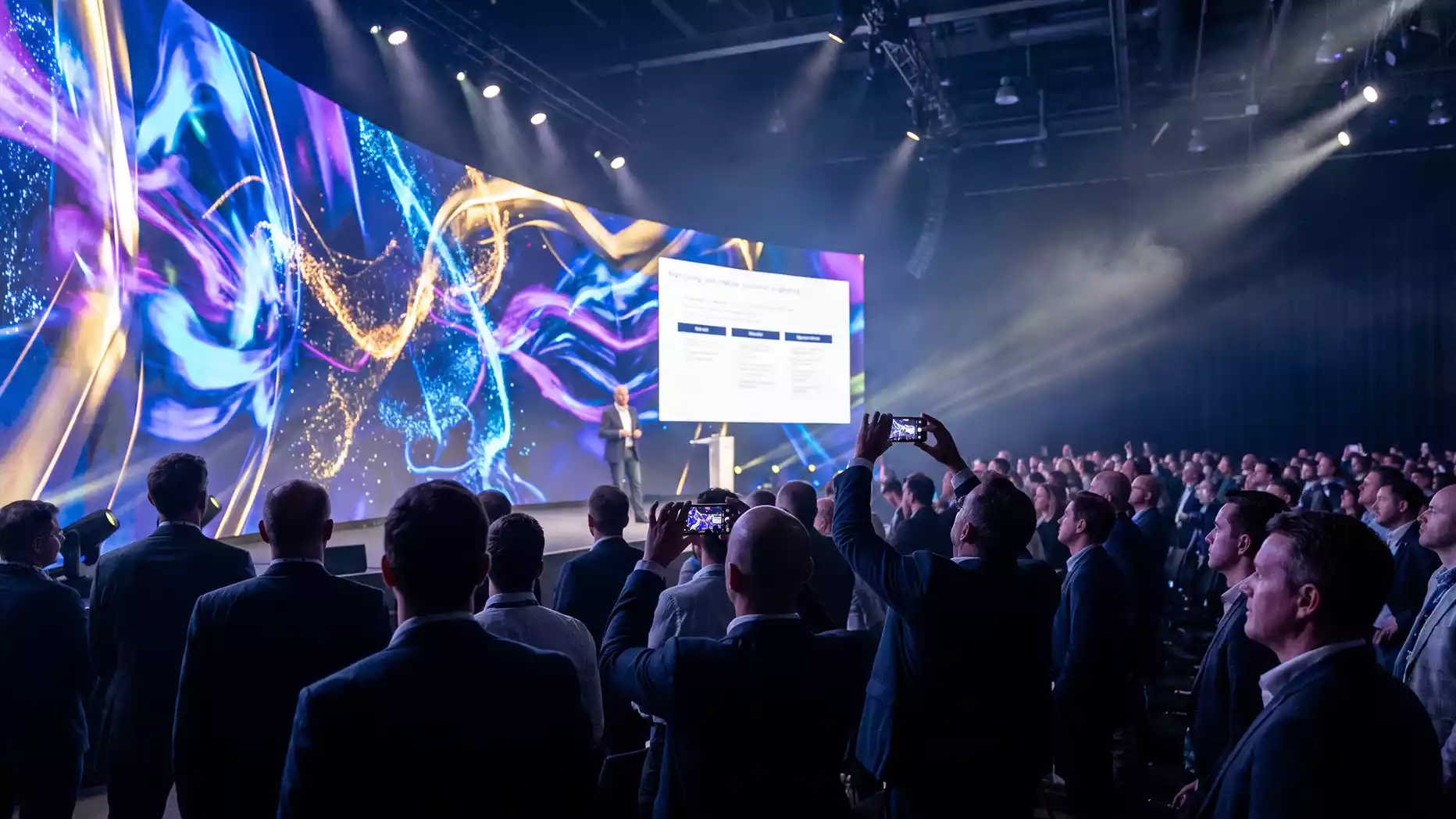
Visuals are often the first storytelling layer. An LED wall, projection screen or branded backdrop tells the audience what kind of event they are entering. A leadership summit may use clean branded graphics, agenda screens, and name cards to create structure. A product launch may use countdown content, motion graphics, and reveal visuals to build anticipation. This is why LED screens can enhance branding at corporate events when they are planned as part of the journey, not added as decoration.
Sound carries the message
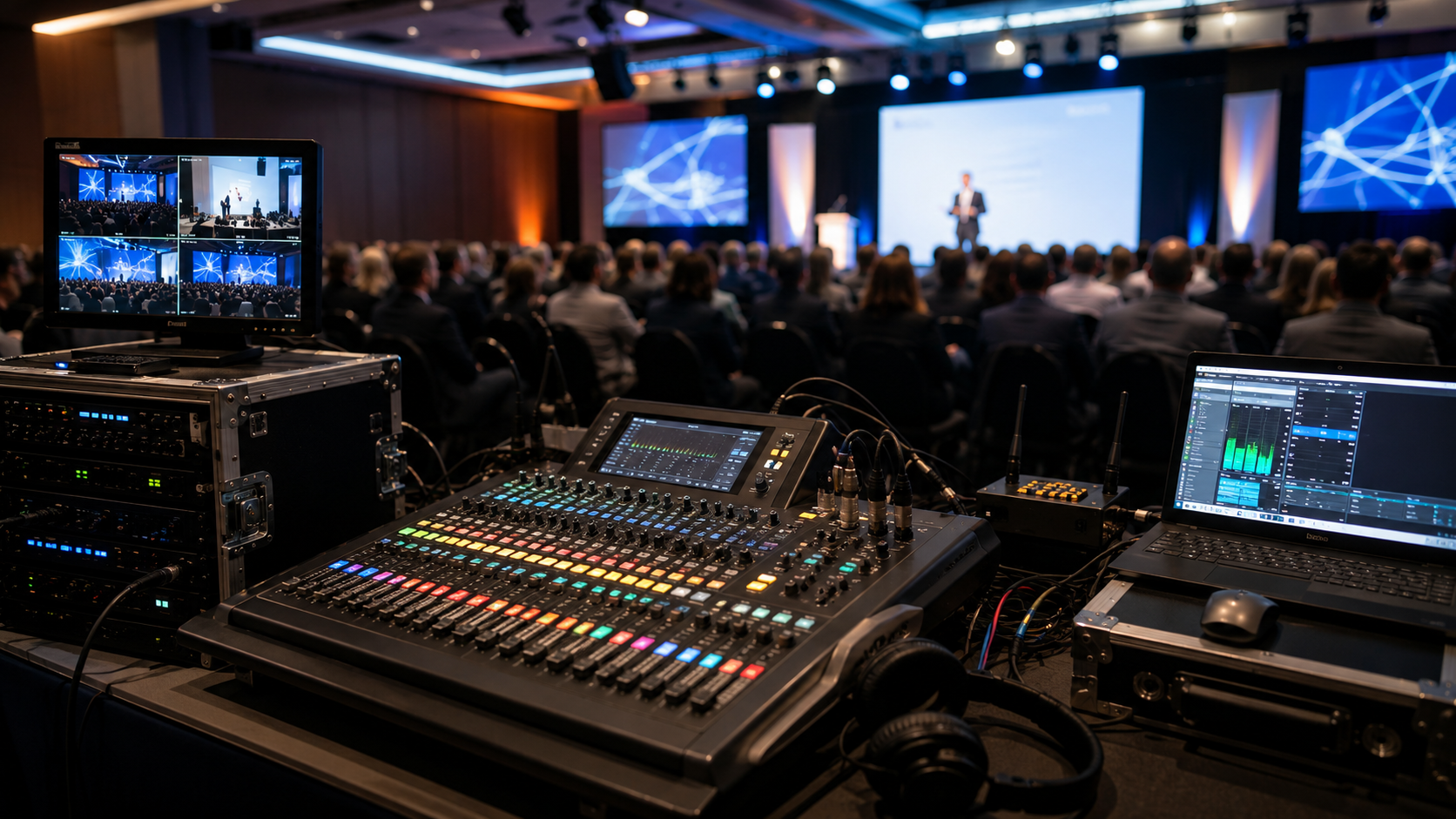
Sound is one of the most important parts of the audience experience. If people strain to hear, they stop listening. A PA system sends speech and music clearly through the room. Front-of-house audio is the main control position, where a technician manages microphones, levels, playback and room balance. Wireless microphones let speakers move freely. Speaker support may include a confidence monitor. This screen lets presenters see slides or notes without turning around. Poor sound can make a strong message feel weak; clear sound keeps people with the story.
Staging gives the event structure
Staging is not only about height. It creates focus. A raised stage helps the audience see the speaker; a lectern suits formal talks, and soft seating may work better for a fireside chat. Lighting then shapes that focus. A stage wash lights the speaker evenly, uplighting adds atmosphere, and timed lighting changes can mark a new section. They can also highlight a key announcement or an awards moment.
Playback and transitions keep the flow moving
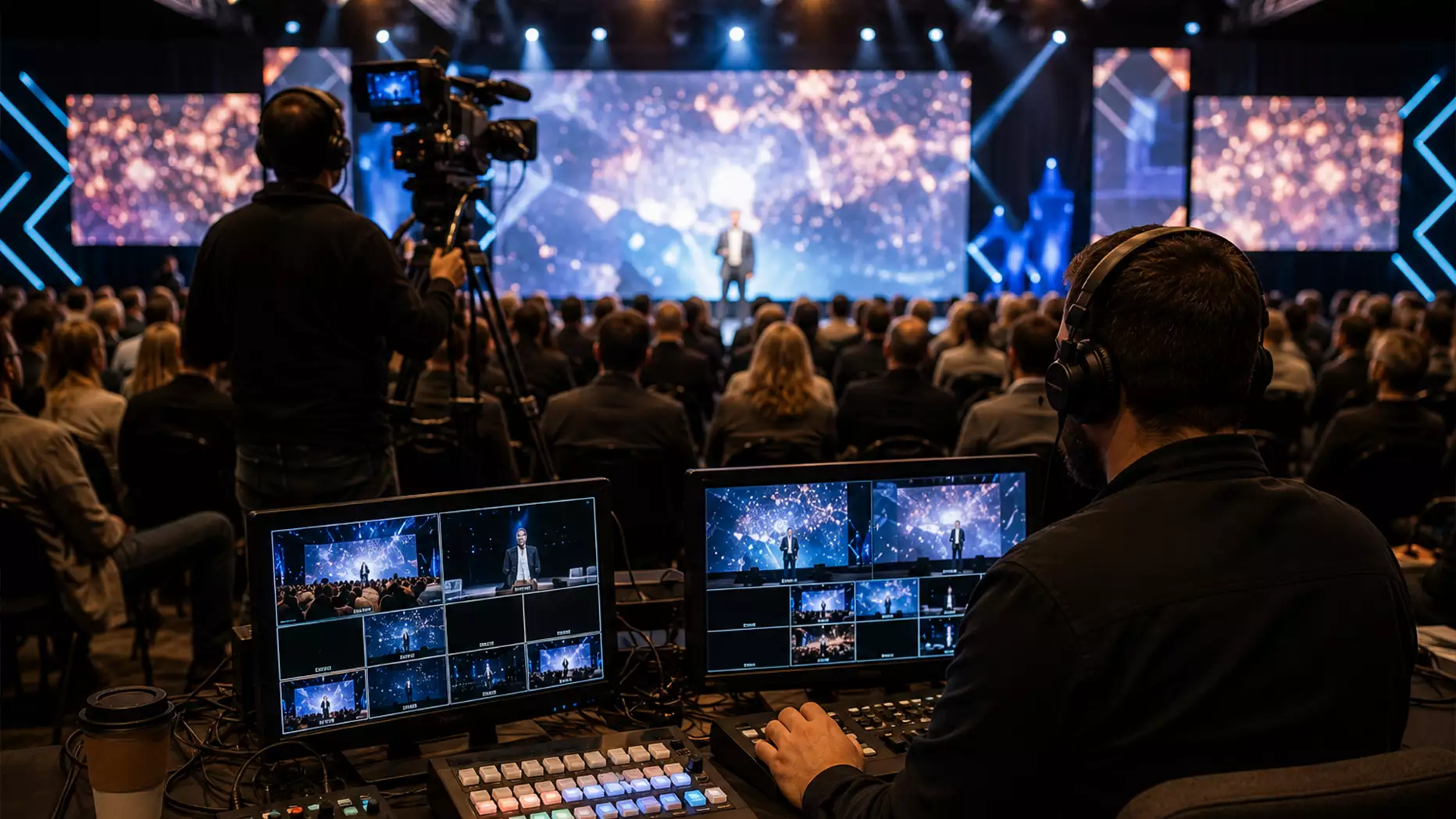
A strong event story depends on rhythm, so slides, videos, music, walk-ons, live cameras and hybrid feeds must run in the right order. Playback is the control of video and presentation content. A switcher or vision mixer changes between sources such as laptops, cameras and media. Latency, meaning delay in the signal, can make a live stream or hybrid feed feel awkward if it runs too high. For more visual events, plan dynamic content on LED screens into the running order. This helps each agenda change, sponsor moment and live update land at the right beat in the story.
A short walkthrough of one sequence
To make this concrete, picture a single ninety-second sequence at a product launch. The room is held in a low, warm wash while the presenter sets up the problem. The PA mix is kept tight and intelligible so every word registers. On the cue line, “so we built something different,” three things happen at once. The lighting lifts and cools. The LED wall shifts from the problem to a clean product shot. The front-of-house mix opens up and carries a short music sting. None of those actions are impressive alone. What makes the moment land is that they are synchronised to one line of script, planned days earlier and rehearsed against the run-of-show.
In our experience, the most polished events are not always the ones with the most equipment. They are the ones with proper rehearsal time, clear cue sheets and enough technical planning to make each transition feel natural. A useful test is the chat in the lobby afterwards. If the most interesting thing someone says is, “the screen was huge,” the production served the equipment. If they say, “when they revealed the figures, the whole room went quiet,” the production served the story.
How do you plan an experience-led event?
You plan an experience-led event by mapping the audience journey first, then matching AV, content and technical support to each stage. The industry calls this a story-first approach, and a practical version of it follows a clear sequence:
- Define the core message. Decide what the audience should remember after the event.
- Map the key moments. Identify arrivals, openings, speaker sections, reveals, awards, networking and closing moments.
- Match AV to each moment. Choose screens, sound, staging, lighting and playback based on purpose.
- Plan transitions. Decide how the event moves from one section to the next.
- Build the run-of-show. Create a timed show plan with cues for speakers, videos, lighting, microphones and screen content.
- Rehearse the technical flow. Test microphones, playback, speaker positions, hybrid feeds, slide control and screen visibility.
- Protect the story on event day. Use technicians, show callers and clear communication to keep everything aligned.
One point competitors often miss is that creativity needs structure. A bold visual idea can fail if the signal flow is weak, the content format is wrong, or the venue does not allow the planned rigging. Good production protects the creative idea by making it technically possible. Projection mapping in corporate events is a useful example: it can turn a wall, stage set or object into part of the story, but it needs planning around projector brightness, throw distance, content design, surface shape and room lighting.
The most useful thing a planner can hand a production team is the outcome, not the equipment. A brief that says, ‘The board needs to leave confident in the three-year plan,’ gives the team room to design the right setup, which is sometimes smaller and cheaper than expected. A brief that says, “We need a four-metre LED wall and four radio mics” decides the answer too soon. It does so before anyone maps the story. Bringing the production partner in while the agenda is still flexible matters too. Many of the strongest narrative moments depend on small agenda choices, such as speaker order, break timings and how long a reveal is held. These are simple to shape early, but expensive to fix late.
This is also why the production conversation should start before the kit list is locked, much like integrating AV production into your event marketing strategy works best when it is planned early rather than bolted on.
Bringing it together
Story-driven event production changes how events are built. It moves the focus from “what equipment do we need?” to “what experience should the audience have?” The equipment still matters; LED walls, microphones, lighting, staging, playback and live streaming all need to work. But the real value comes when those elements work together to support the audience journey.
AV Productions has supported 11,000+ events across London with AV hire, LED video wall hire, PA and sound hire, lighting, stage hire, live streaming and on-site technicians. Starting early gives enough time to plan the story, test the flow and make sure the audience experience holds together.
AV Productions is only a call away. Contact 0207 177 3405 or request a no-obligation quote for your next event.
FAQs
What is story-driven event production?
Story-driven event production means planning the technical setup around the audience journey. AV, sound, lighting, staging and content are chosen to support one clear message, so the event feels connected instead of built from separate pieces of equipment.
How do AV, sound and staging work together to tell a story?
AV provides the visual structure, sound carries the message, and staging directs audience focus. When these elements are planned together inside one run-of-show, the event feels connected. For example, a speaker introduction may combine music, lighting, screen content and stage positioning to create a stronger moment than slides alone.
Is experience-led event design only for big-budget events?
No. Experience-led event design is about clear planning, not bigger budgets. Even a small seminar can use better speaker positioning, clear sound, branded screen content and smooth transitions. The key is deciding what the audience needs to understand, then using the available AV in a focused way, which often means leaving elements out rather than adding cost.