Technical risks in large-scale events are the failures that disrupt sound, visuals, staging, streaming, timing, or speaker delivery during a live show. In most cases, these problems do not come from one major breakdown. They come from planning gaps, rushed rehearsals, poor signal flow, venue limitations, or systems that were never fully tested together.
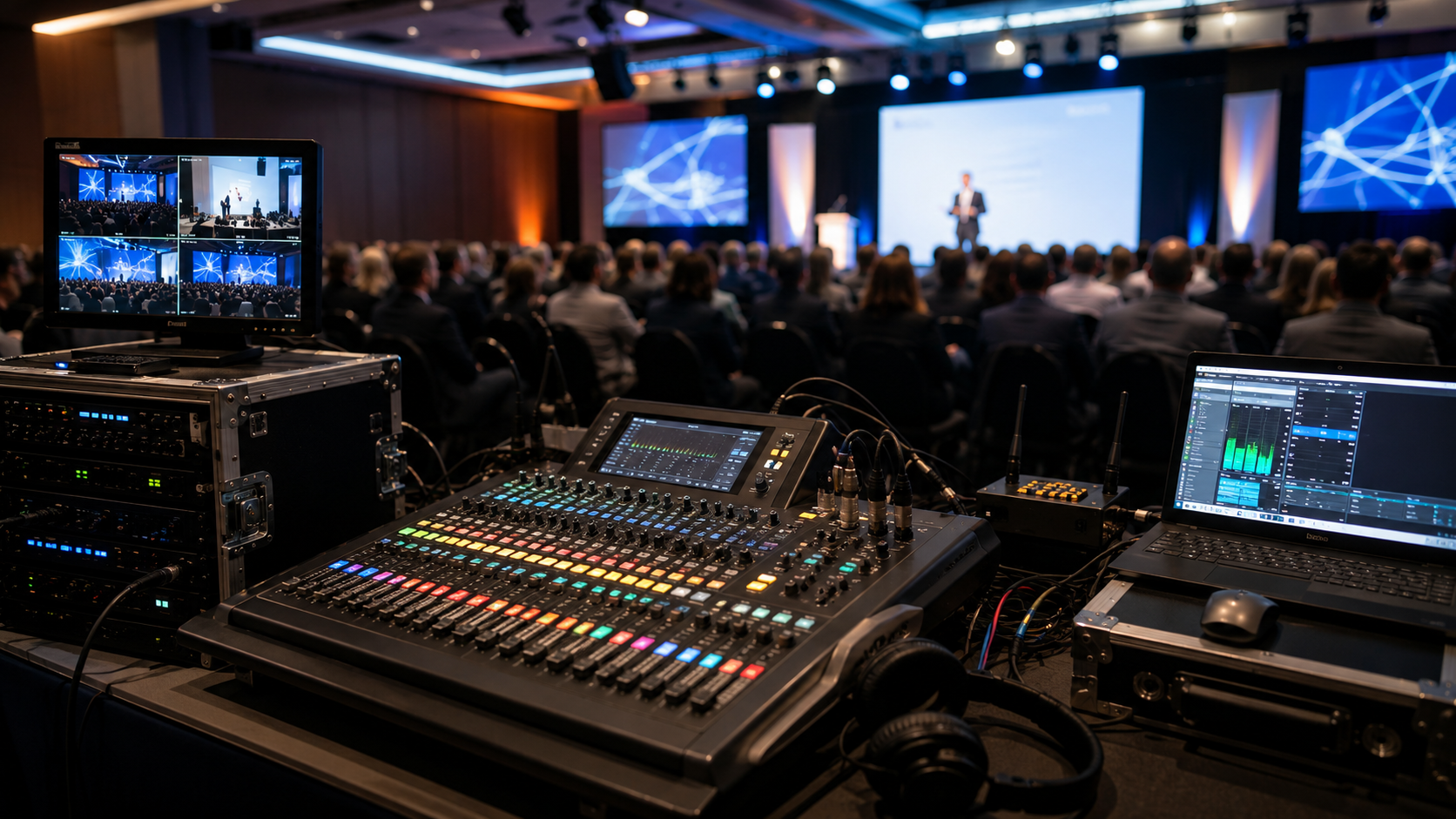
That is what makes large events harder to deliver than they look from the audience floor. A conference, awards night, product launch, or hybrid event may rely on microphones, LED walls, playback, lighting cues, confidence monitors, switching, live feeds, and fast stage transitions all working at the same time. If one part slips, the pressure quickly spreads across the whole run-of-show.
For organisers, the real challenge is not just avoiding technical faults. It is reducing risk before doors open.
This guide explains the most common technical risks large-scale events face, why they happen, and how experienced production teams prevent them through better AV planning, testing, and event-day control.
Why are technical risks higher in large-scale events?
Technical risks are higher in large-scale events because more equipment, more people, and tighter timings increase the number of failure points. When several systems depend on each other, even a minor issue can spread quickly across the show.
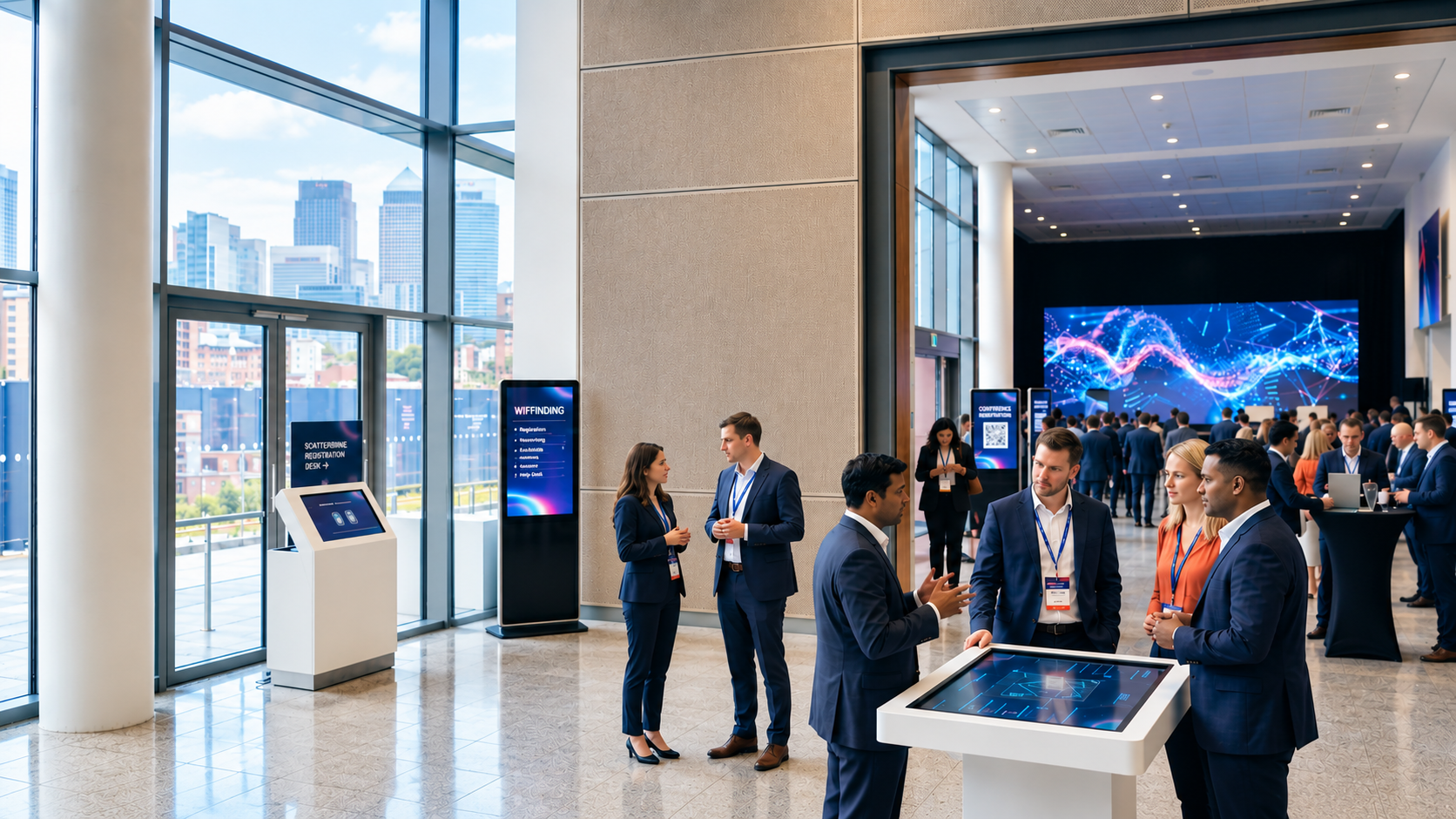
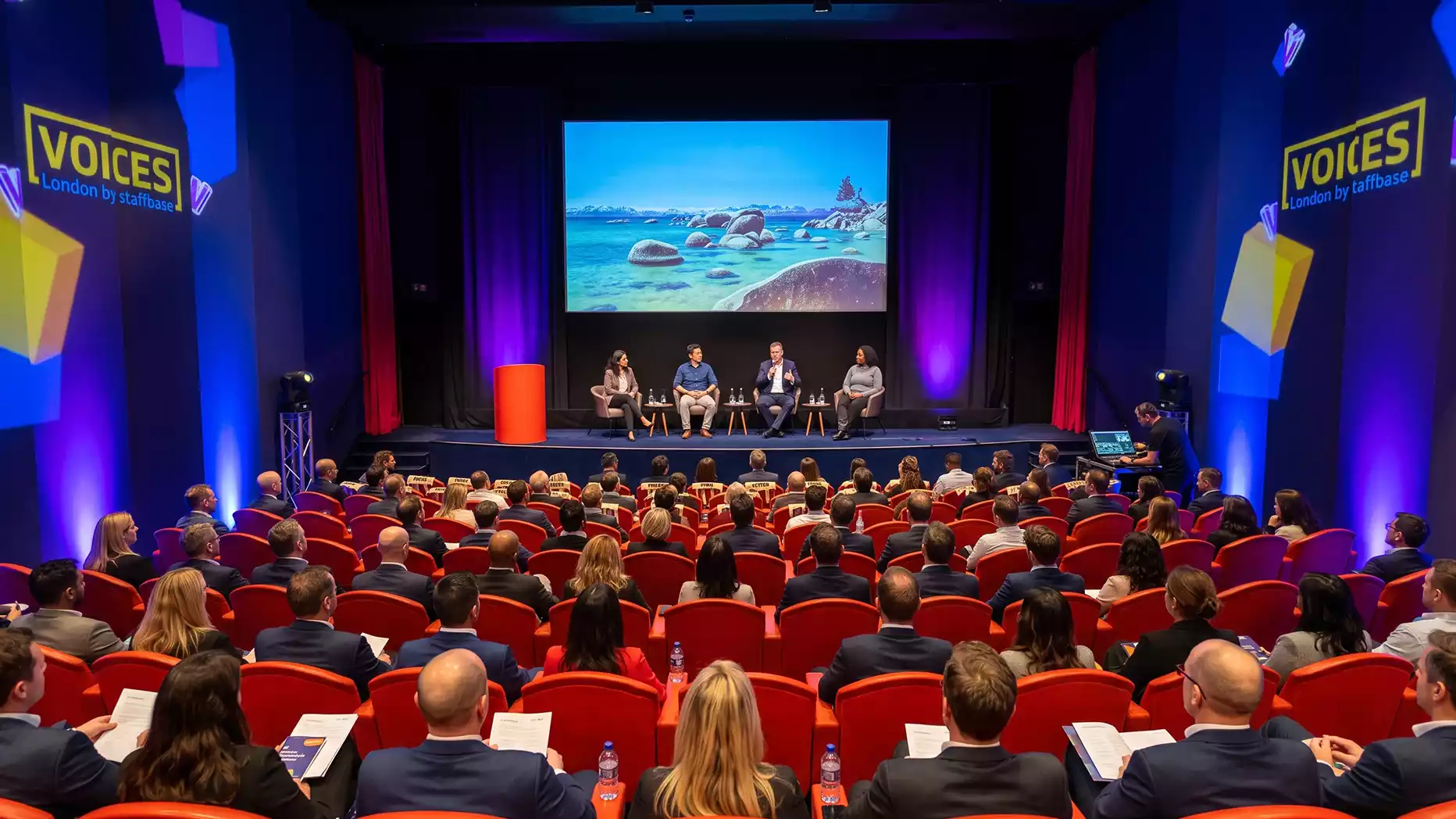
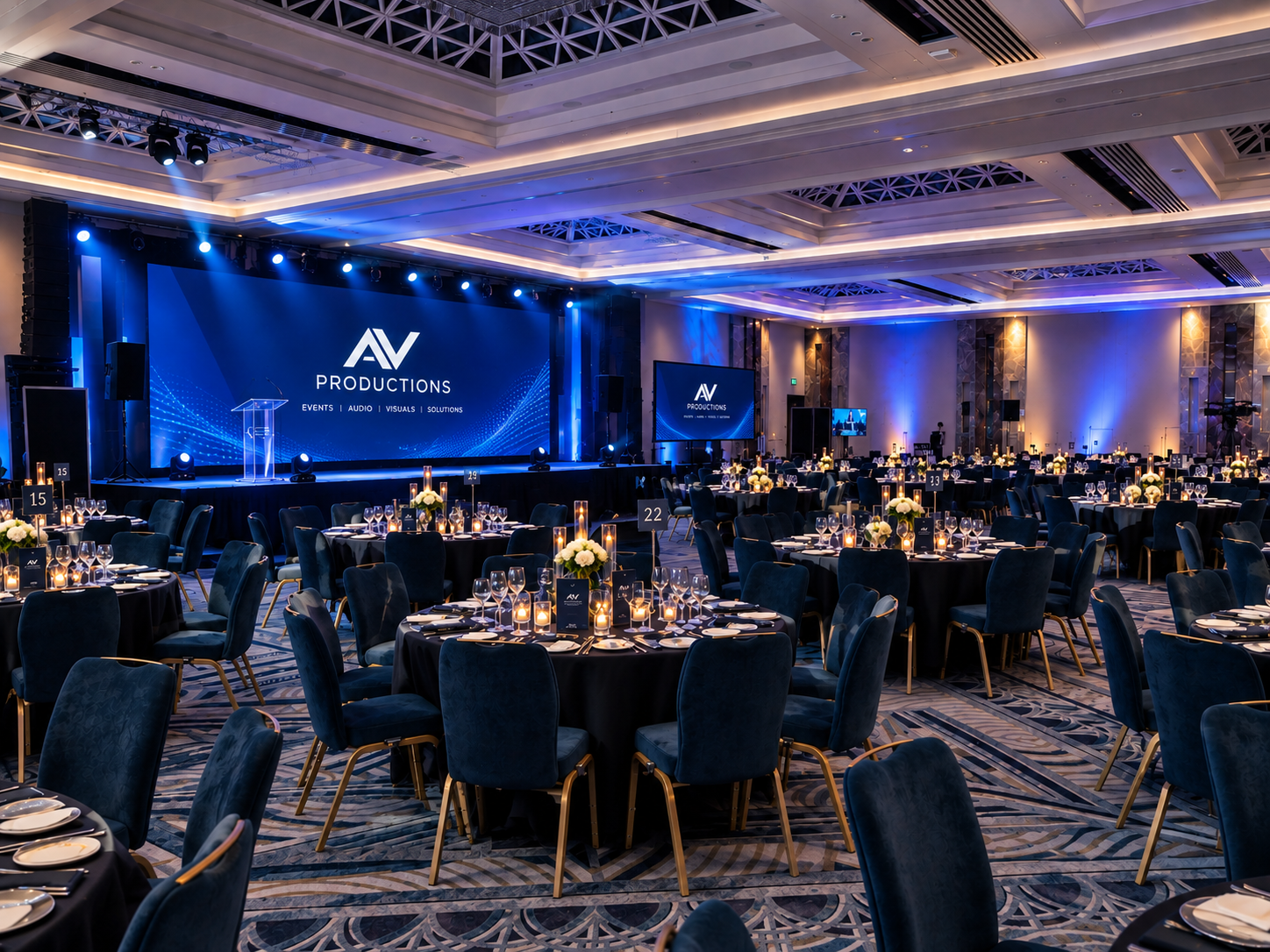
A small boardroom event might use a few microphones, one screen, and a simple playback setup. A large-scale conference production at a Central London venue can involve LED walls, multi-camera live streaming, simultaneous interpreting, three-stage lighting rigs, and dozens of wireless channels operating in parallel. Each part has to work at the right moment and in the right order.
What are the technical risks in event production?
Technical risks are the problems that can interrupt sound, visuals, staging, power, timing, streaming, or communication during a live event. In simple terms, they are the issues that stop the show from running the way it was designed.
In our experience, the biggest risk is not usually one broken item. It is the combination of unclear planning, compressed load-in windows, late decisions, and systems that were never fully tested together.
For London conferences and corporate events, venue restrictions also matter. Ceiling height, rigging rules, loading access, power limits, noise controls, Wi-Fi reliability, and strict derig timing can all shape what is realistic.
These are some of the most common reasons events don’t go as planned, and they are exactly what production teams plan against from day one.
The most common technical risks in large-scale events
The most common event production risks are audio failure, content problems, signal issues, lighting mistakes, power limits, streaming instability, and weak show coordination. These are the problems that most often delay cues, damage audience experience, or create avoidable stress backstage.
1. Power failure or unstable supply
Venues with shared circuits, generator-fed staging, or under-specced distribution can drop power mid-show. Production teams calculate full load draw, request dedicated supply where possible, and run battery-backed UPS for critical equipment.
2. Audio dropouts and RF interference
Wireless microphones in Central London compete with broadcast, mobile, and venue systems. Without proper RF coordination, you get static, dropouts, or dead mics during a keynote.
3. LED video wall signal loss
LED walls fail when processors crash, signal cables fault, or content is scaled incorrectly. Without redundant signal paths, the entire visual centrepiece can blank in seconds.
4. Live stream interruption
Encoder crashes, bandwidth drops, or single-ISP outages can take a broadcast offline. Hybrid events without redundant streaming infrastructure are particularly exposed.
5. Hybrid event audio-visual drift
Sync issues between in-room audio and remote video feeds create lip-sync errors and confuse virtual audiences. Latency must be measured and managed at the signal flow level.
6. Load-in and derig delays
Tight venue windows, lift restrictions, and overlapping bookings cause rigs to run late or compromise on safety checks. Production teams plan load-in to the minute and brief venues in advance.
7. Last-minute content changes
Speaker decks delivered 10 minutes before doors open, mismatched aspect ratios, or unsupported file formats cause playback errors. Strong content management protocols catch this early.
A common issue we see is that planners focus heavily on visible items like screens and stage design while underestimating the hidden technical chain behind them. A stunning LED wall still fails the room if the content feed is unstable. A strong keynote still loses impact if the lectern microphone is unreliable.
What causes most event production failures?
Most event production failures come from planning gaps, not from equipment alone. The show is more likely to struggle when content arrives late, roles are unclear, rehearsals are cut short, or venue limitations are discovered too late.
This is why technical event issues often feel sudden to clients but predictable to experienced crews. On event day, the visible problem may be a dead mic or frozen video. The real cause is often that the system behind it was never fully stress-tested.
How experienced production teams solve these risks
The fix for hidden technical risk is rarely one piece of kit. It is a combination of layered processes, redundancy, and people. Production teams that have run events at scale apply the same core methods regardless of venue or audience size. Most of these methods come down to one thing: thorough pre-event AV testing that catches failure points before the audience ever sees them.
| Risk | How production teams solve it |
|---|---|
| Power failure | Load calculations, dedicated circuits, UPS battery backup, and on-site power technicians. |
| Audio dropouts and RF interference | RF coordination across all wireless channels, frequency scanning, and backup wired mics on standby. |
| LED video wall signal loss | Redundant signal paths, spare processors on standby, and pre-show pixel mapping checks. |
| Live stream interruption | Encoder crashes, bandwidth drops, or single-ISP outages can take a broadcast offline. Professional event live streaming uses dual encoders and bonded internet circuits to prevent single points of failure. |
| Hybrid event drift | Sync issues between in-room audio and remote video feeds create lip-sync errors and confuse virtual audiences. Hybrid event production requires latency monitoring at the signal-flow level. |
| Load-in and derig delays | Detailed load-in schedules, venue site visits, and on-site crew briefed against the full run-of-show. |
| Last-minute content changes | Speaker portal or shared playback drive, format checks 24 hours out, and a content tech on the desk. |
A real London conference scenario
On a recent 1,200-delegate AGM at a Central London venue, the primary internet circuit dropped 45 minutes into the live stream. Because the production team had pre-configured a bonded backup circuit and a secondary encoder, the stream switched over with no visible interruption to the remote audience. The in-room speaker never paused. That is what redundancy looks like in practice: not a single piece of kit, but a planned failover that the audience never notices.
What event planners often miss in large London venues
Event planners often miss timing pressure, venue restrictions, and content discipline. These do not sound dramatic, but they cause a large share of live event issues.
For London venues especially, load-in windows can be tighter than expected. Some Central London spaces limit access hours. Others have noise rules, strict union or venue procedures, or very specific routes for kit movement. That affects how quickly a team can install, test, and sign off on the setup.
Another common miss is content control. If ten speakers all send updated slides at different times, the risk grows quickly. Playback errors, broken fonts, poor aspect ratios, and last-minute embedded video issues become much more likely.
A third issue is underplanned stage management. Many organisers focus on the audience-facing agenda but not the backstage details. Who is briefing the speakers? Who checks microphones before a walk-on? Who confirms presentation versions? Who clears the stage during fast transitions?
In our experience, this is where technical event management adds real value. It closes the gap between equipment hire and actual show delivery.
AV Productions supports events across London with AV hire, event production, LED video wall hire, live streaming, on-site technicians, setup, operation, and de-rig. For complex shows, that joined-up approach is often what keeps the day calm.
What should you do if you want lower-risk event production?
Start earlier than you think, lock the critical decisions sooner, and treat technical planning as part of the event strategy, not a last-minute supply task.
Before sign-off, ask these questions:
- Has the venue been technically assessed?
- Is the run-of-show detailed enough for every live cue?
- Are all presentations and media files tested on the actual playback system?
- Is the room audio plan built for the audience size and layout?
- Have you allowed enough time for rehearsal?
- Do you have backup plans for power, playback, microphones, and streaming?
- Does every supplier know who is calling the show?
That checklist sounds basic, but it prevents a surprising number of large event challenges.
Wrapping up
Technical risks in large-scale events are rarely random. Most come from planning gaps, missing backups, or systems that were never tested properly together. The good news is that they can be managed.
If you want a smoother London event with fewer surprises, talk to a team that understands live delivery, venue pressure, and what can go wrong before it happens. AV Productions has supported 11,000+ events across London. Call 0207 177 3405 to request a no-obligation quote and discuss the right technical setup for your event.
With 25+ years of experience, 31,000+ pieces of AV equipment, 500+ Absen LED panels, and 24/7 AV hire support, AV Productions is equipped for events where reliability matters as much as presentation quality. That is especially important for conferences, award ceremonies, product launches, fundraisers, and hybrid events where there is little room for technical drift.
FAQs
What are the biggest technical risks in large-scale events?
The biggest technical risks are usually audio failure, content playback issues, screen or LED problems, unstable live streaming, power limitations, and weak backstage coordination. Most of these issues can be reduced with earlier planning, realistic rehearsals, proper signal mapping, and backup systems for critical show moments.
How early should technical planning start for a large event?
Technical planning should start as soon as the venue and event format are confirmed. For larger conferences, hybrid events, or productions with staging and LED walls, early planning gives the team time to review the venue, build the right setup, test content properly, and avoid rushed decisions close to show day.
Do I need on-site technicians for a large event in London?
Yes, in most cases you do. Large events have too many live variables to leave unmanaged. On-site technicians handle audio, playback, lighting, screen switching, troubleshooting, speaker changes, and timing issues in real time, which helps keep the event smooth and protects the audience experience.
Do larger events always need backup systems?
Yes, for critical show elements, they usually do. Large events do not always need duplication for every item, but they do need redundancy where failure would seriously damage the audience experience or event outcome. For example, a spare clicker is sensible. A backup playback machine for the CEO’s opening film is essential. A second internet path for a high-stakes hybrid event is often worth the cost.