Your speakers cannot be heard from row eight. Your panel mics keep popping. Your walk-in music is louder than your CEO. That is what bad audio sounds like at a real London event, and it is the fastest way to undo months of planning.
Audio gear rentals are the practical fix. The challenge is that “sound equipment” means very different things depending on whether you are running a 200-seat conference, a fashion show at a Shoreditch warehouse, or a 5,000-attendee product launch at ExCeL.
This guide breaks down the audio gear you actually need by event type, what drives PA system hire cost, and the operational details event planners often miss. By the end, you will know what to specify and what to ask any London supplier before you sign off the brief.
What do audio gear rentals actually include?
Audio gear rentals are short-term hires of professional sound equipment, usually bundled with delivery, setup, on-site operation and derig. A standard package covers a PA system (the speakers and amplification used to project sound to an audience), microphones, a mixing desk, monitors, cabling and power distribution.
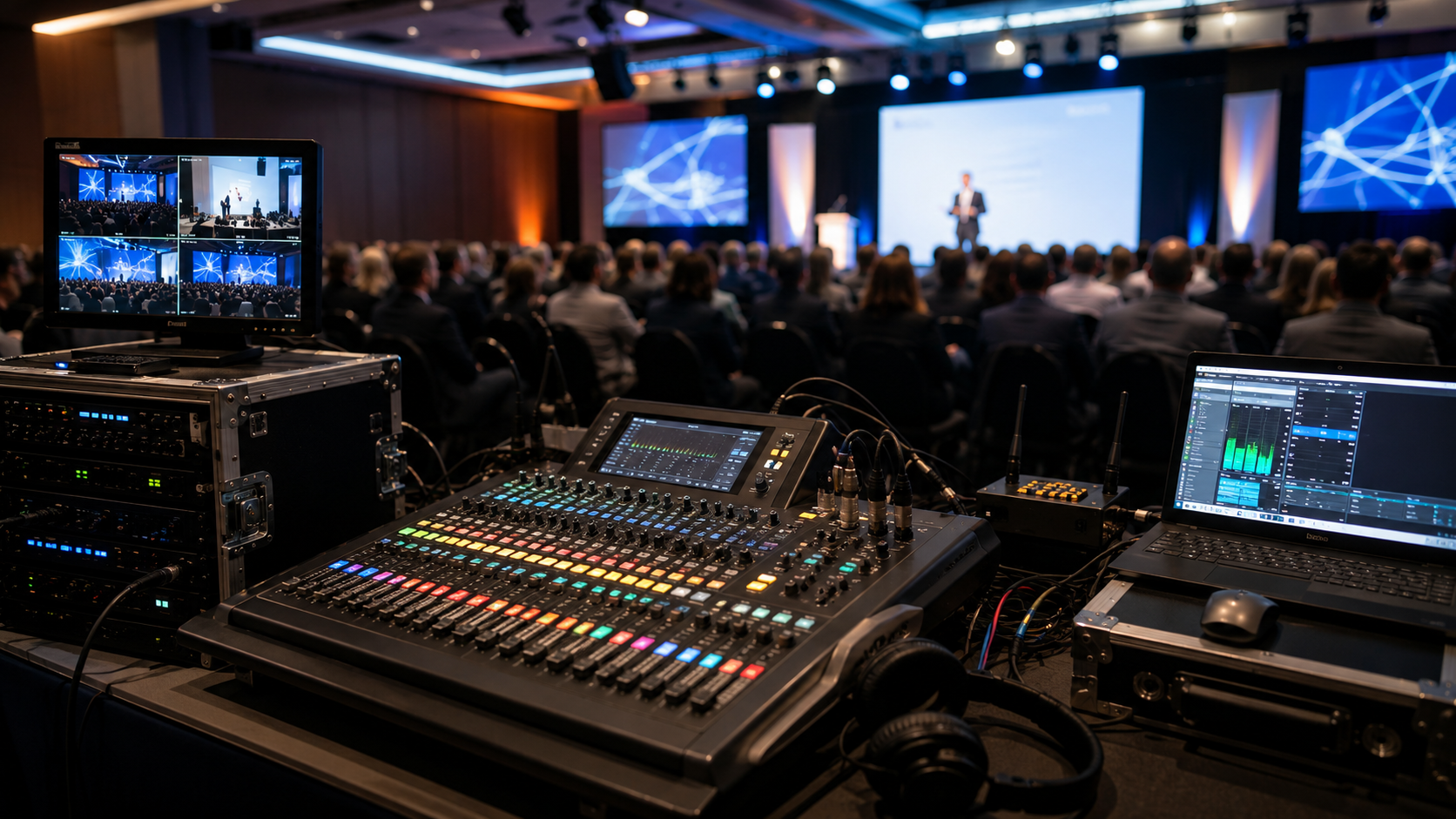
For most corporate events in London, you are not just hiring boxes. You are hiring a working signal chain: from input, such as mics and playback, through processing, such as a mixer and EQ, to output, such as speakers and monitors. You are also hiring a technician who can keep it stable during the run-of-show.
In our experience at AV Productions, the kit list looks tidy on paper but lives or dies on three things: speaker placement, mic discipline and a clean signal path. Get those right, and even modest gear sounds professional. Get them wrong, and a £30,000 system can still cause feedback during the keynote.
The core components of an event audio package
- PA speakers: The main loudspeakers covering the audience area.
- Subwoofers: Provide low-frequency support for music or large rooms.
- Microphones: Wireless handhelds, lapels (lavaliers), headsets, lectern mics.
- Mixing desk (FOH): Front-of-house console where audio is balanced.
- Stage monitors or in-ears: So speakers and performers can hear themselves.
- Playback devices: Laptops, media players for VTs and walk-in music.
- DI boxes, cabling, stands and power distribution: The unglamorous essentials.
- On-site technician: To operate, troubleshoot and adapt during the event.
Sound equipment by event type
The right audio setup depends almost entirely on what is happening in the room. A keynote panel and a live band have nothing in common acoustically, even if the headcount is identical. Below is how AV Productions typically scopes audio for common London event formats, based on supporting 11,000+ events.
Conferences and seminars
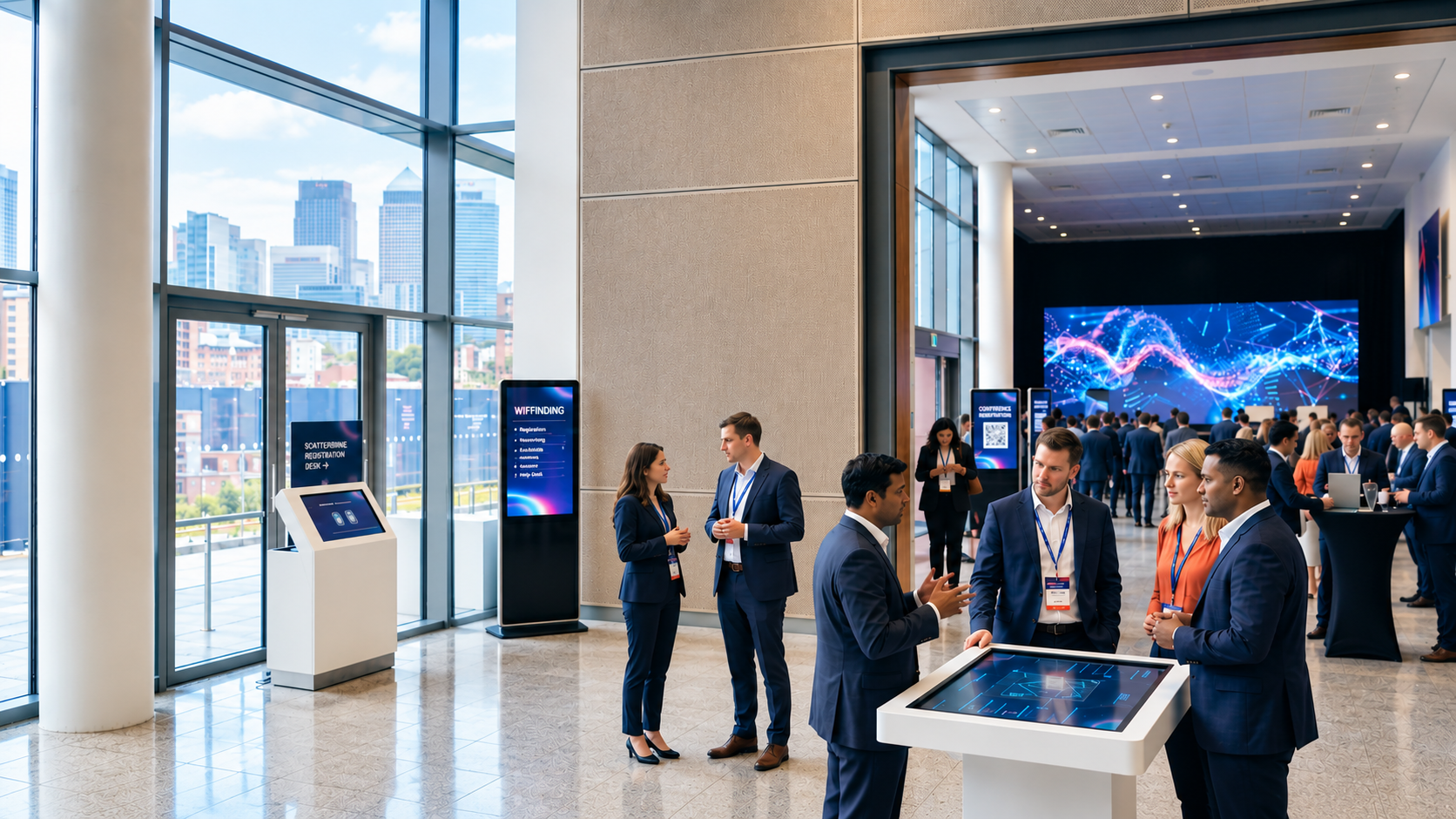
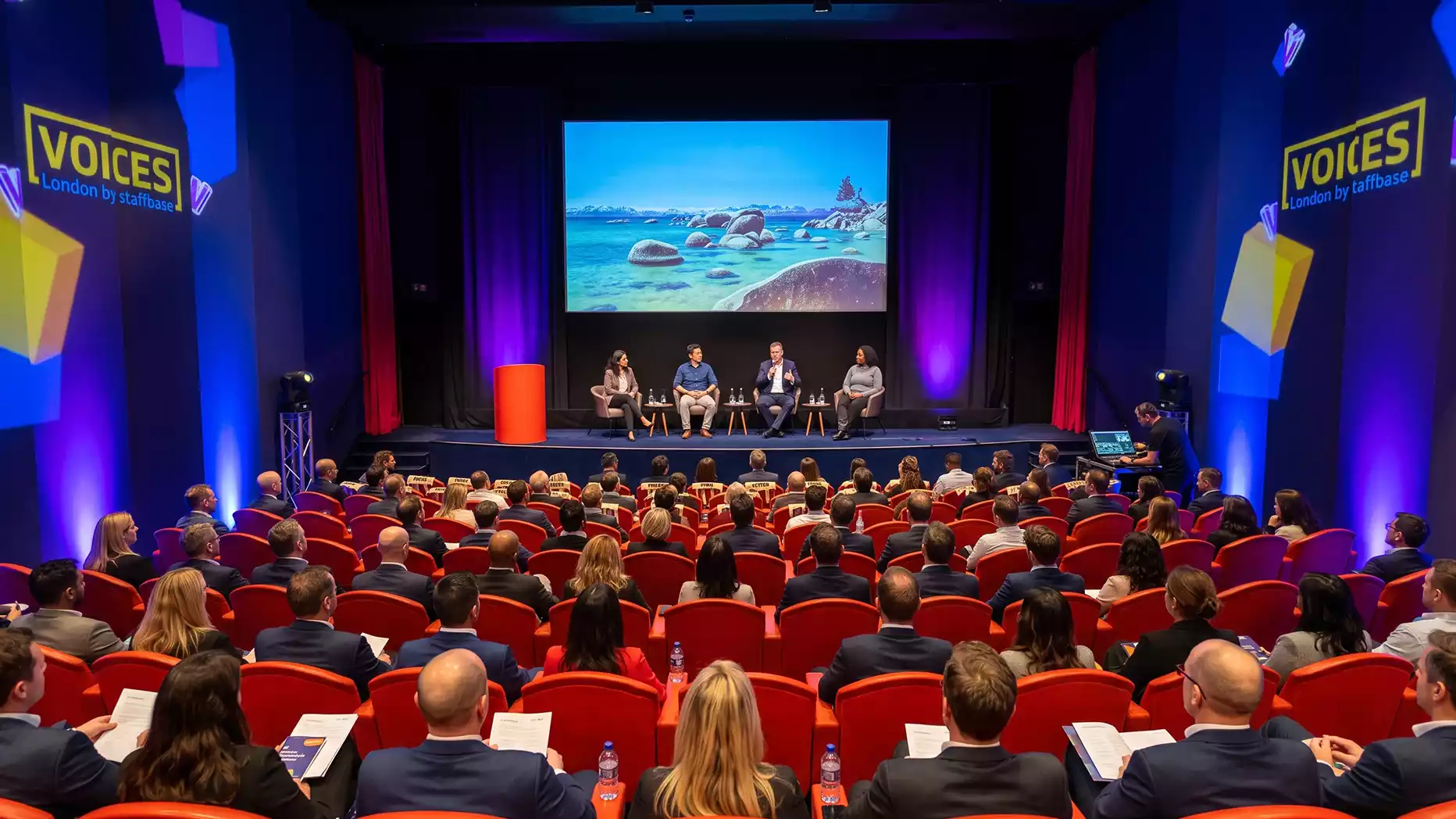
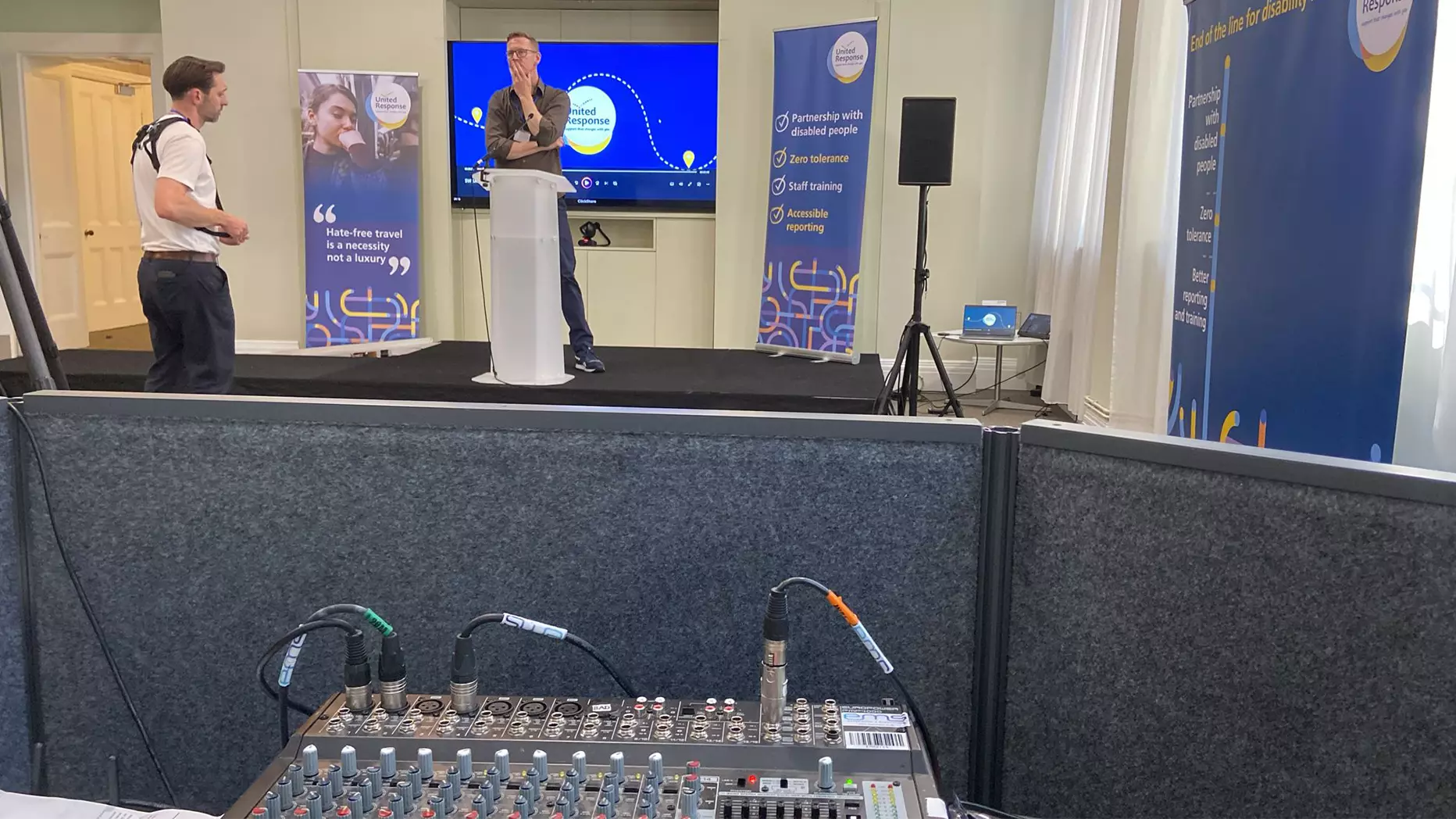
For conferences and seminars, the priority is intelligible speech across every seat. You need a clean PA system, reliable wireless mics, a lectern mic and a confidence monitor (a screen facing the speaker so they can see slides without turning around).
A typical 150–400 delegate London conference uses two main speakers on either side of the stage, and delay speakers further back if the room is long. Wireless handhelds are standard for Q&A; lapels are better for panellists who gesture or move. Always specify at least one spare wireless channel because packs fail, and you cannot pause a keynote to swap a battery in front of an audience.
A common issue we see: planners book one mic per panellist and forget the moderator. Always count every panellist, the host and at least two spare microphone channels.
Award ceremonies and gala dinners
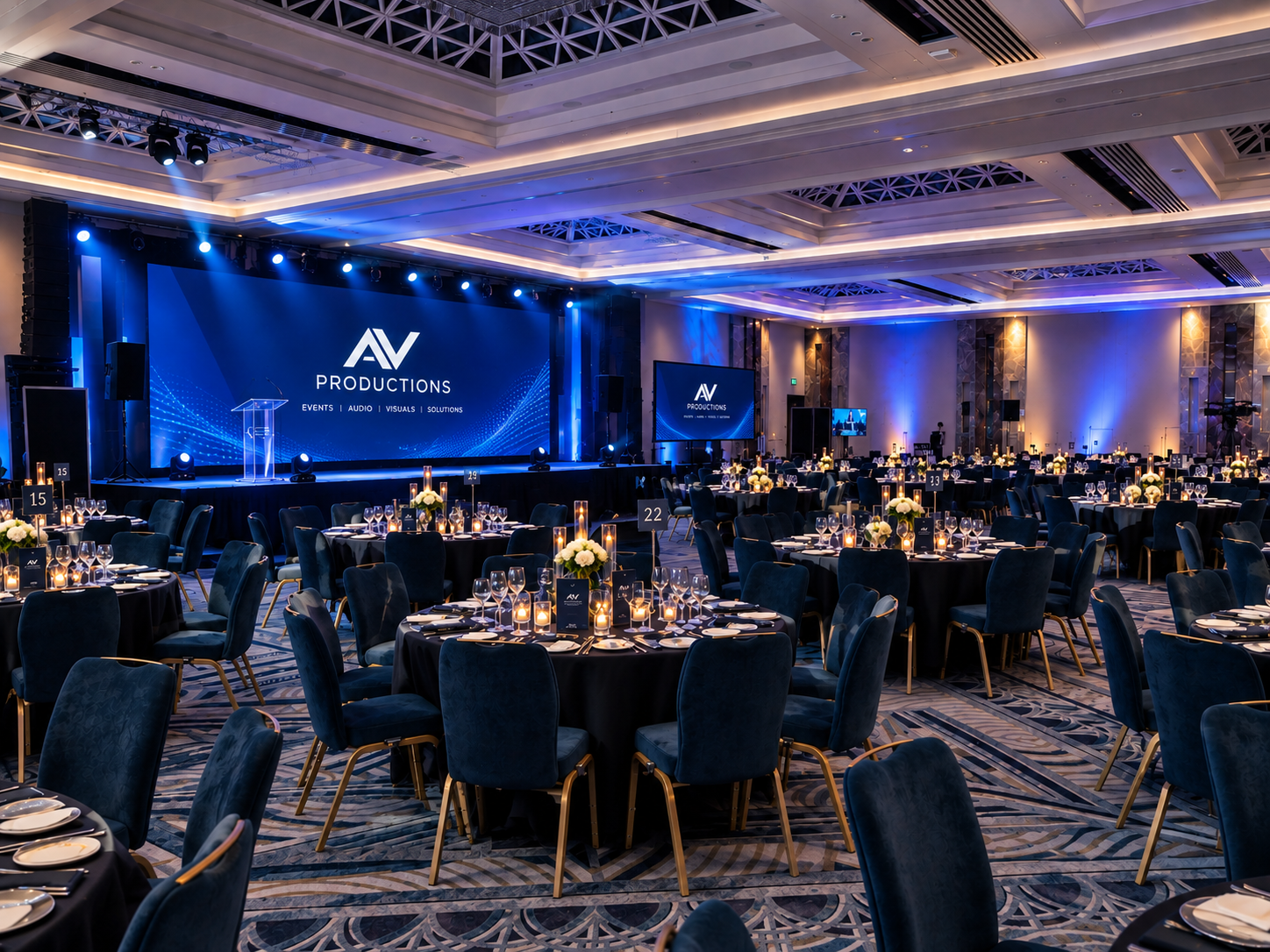
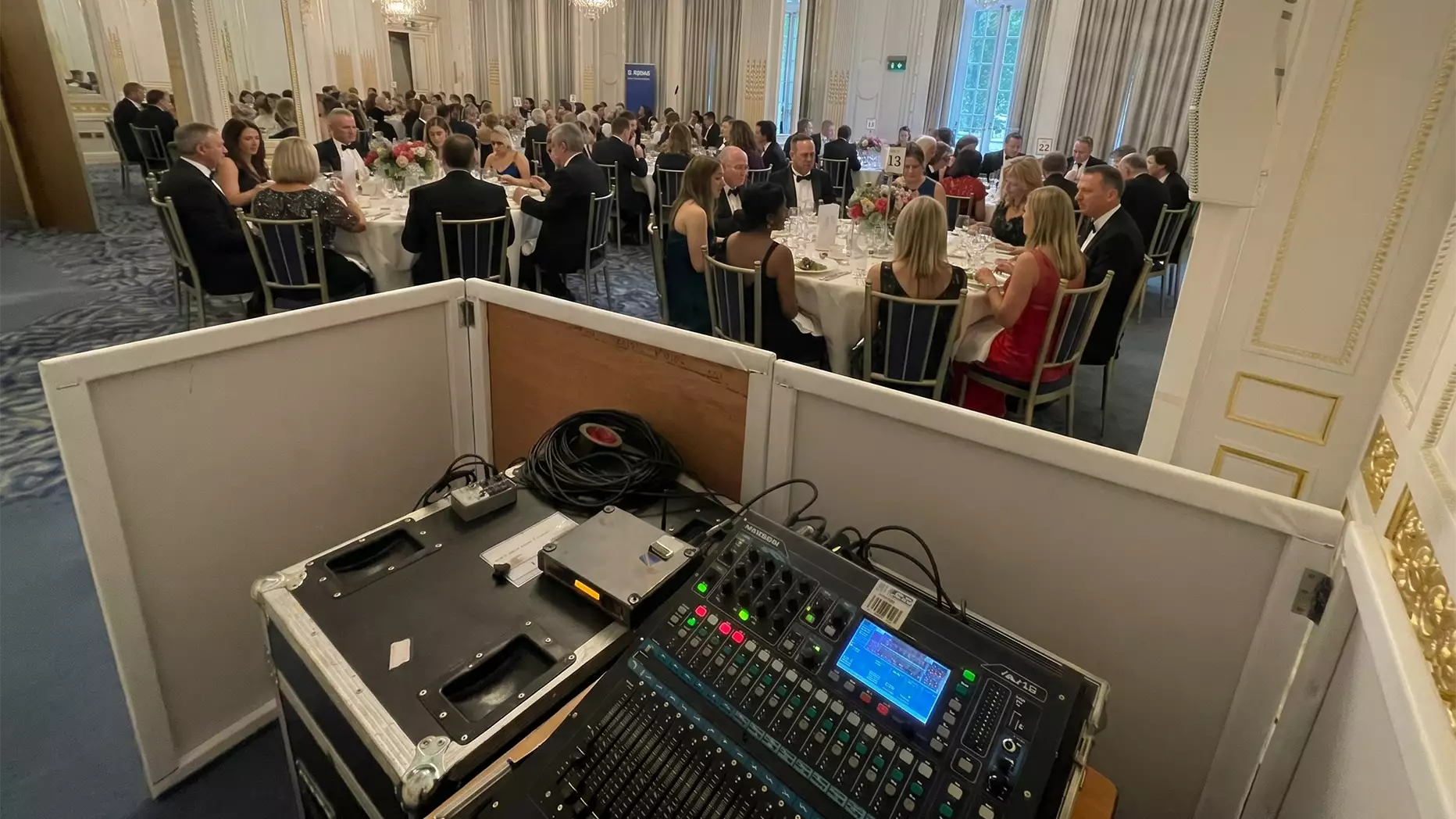
Award ceremonies need broader audio coverage because attendees are seated at round tables, often facing away from the stage. Sound has to wrap the room without becoming uncomfortable for tables nearest the speakers.
This usually means a left-right main PA and distributed delay speakers around the room, set to a slightly lower level. You will also want walk-on music playback, a wireless handheld for the host, and a reliable cue from the AV operator to the lighting and video teams. For London galas in venues like the Hilton Park Lane or The Brewery, low-profile speaker placement matters as much as the audio spec. Clients do not want black boxes blocking sightlines in table photos.
Product launches and fashion shows
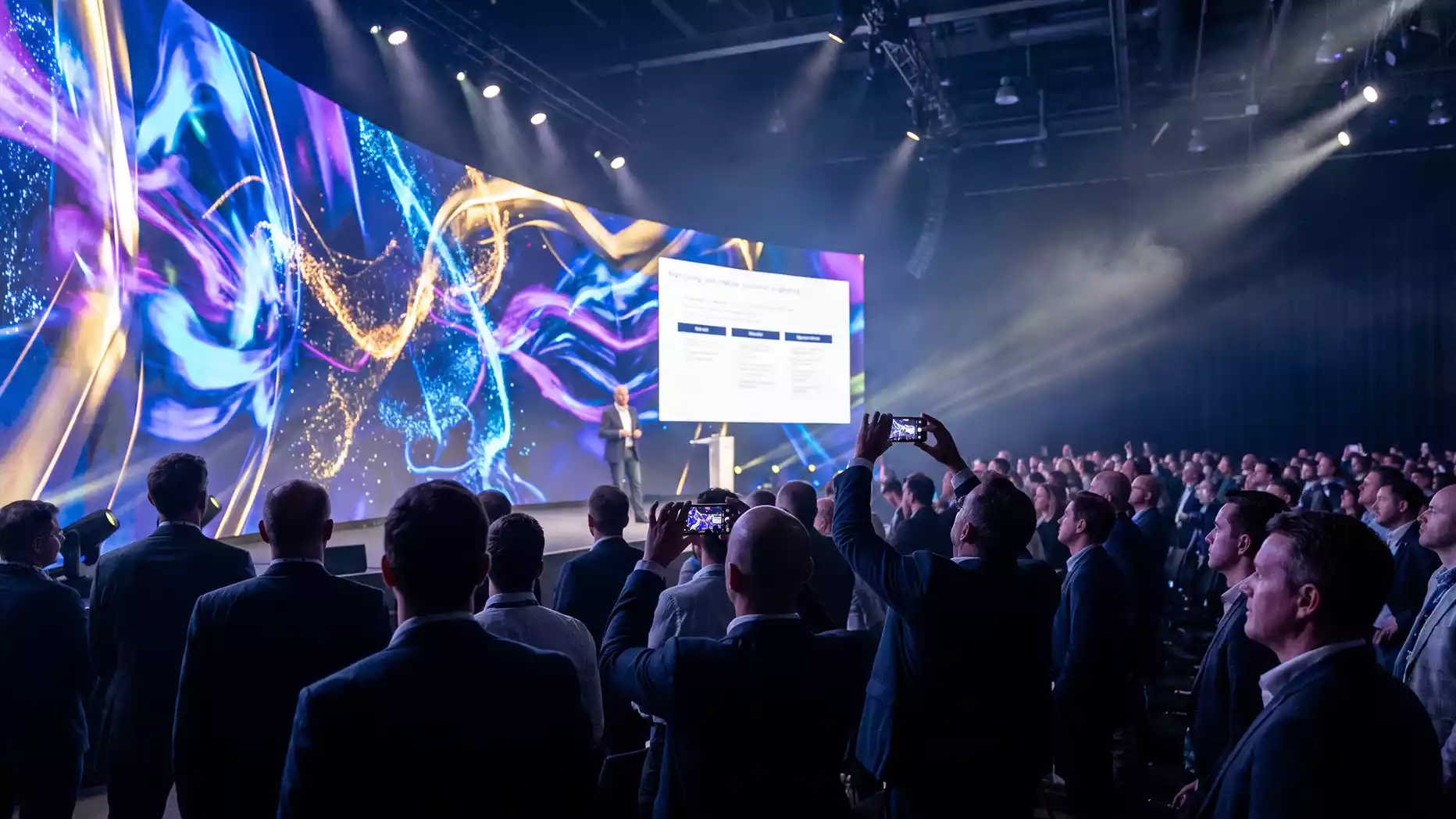
Product launches and fashion shows lean closer to a live music setup. You need a punchier PA with subwoofers, because music shapes the atmosphere, not just fills gaps. Wireless mics for the host are still required, but the mix is built around playback.
Latency (the tiny delay between source and speaker) matters more here. If a model is walking to a beat, the audio cue, lighting cue and runway timing must stay in sync. For London product launches at venues like the Roundhouse or Magazine London, we usually recommend a dedicated audio engineer separate from the video operator because there are too many sound, lighting and video cues for one person to manage safely.
Exhibitions and shell scheme stands
Exhibitions are the opposite challenge: small, zoned audio that does not bleed into the next stand. You need compact, directional speakers, often ceiling-mounted or on slim stands, paired with a small mixer and a wireless mic for presentations on a stand.
For exhibition halls like ExCeL, Olympia or Business Design Centre, venues usually have volume restrictions and sound curfews. Your audio brief should respect these limits from the start. A system that cannot be turned up is not a problem if it has been specified correctly for the room.
Hybrid and live-streamed events
Hybrid events need two audio mixes: one for the room and a separate, broadcast-quality feed for the live stream. Remote viewers notice poor sound quickly. Even mild echo, room noise or unbalanced mic levels can lose their attention within minutes.
This is where signal flow discipline matters. The streaming feed should come from a dedicated mix bus, not from a room microphone pointed at the PA speakers. AV Productions handles this routinely for London hybrid events, including simultaneous interpreting setups where each language receives its own clean audio channel for both in-room headsets and remote viewers.
What drives PA system hire cost in London?
PA system hire cost depends on five variables: system size, event duration, venue access, technician staffing and complexity. There is no single price because a 100-seat boardroom AGM and a 2,000-seat conference at the QEII Centre live in different leagues.
Below is a structured guide to what shifts the price up or down. These are the levers, not specific quotes; actual figures should always come from a site-specific quote.
| Cost driver | Lower cost | Higher cost |
|---|---|---|
| Audience size | Under 200 | 500+ |
| Venue type | Single room, ground floor | Multi-floor, restricted access |
| Mics required | 2–4 wireless | 8+ wireless, in-ears, comms |
| Event duration | Half day | Multi-day with overnight de-rig |
| Technician staffing | One operator | FOH engineer + monitor engineer + RF tech |
| Streaming and interpreting | None | Multi-language hybrid stream |
| Load-in window | Day before | Same-day, tight changeover |
For a straightforward London conference with a small PA, two wireless mics and one technician for a day, hire packages may start in the low hundreds of pounds, depending on venue access, timings and support needs. Add subwoofers, more microphones, a longer day and an FOH engineer, and the quote can move into four figures. Multi-day, hybrid or interpreted events scale further.
Always brief your supplier on venue, headcount, run time and content type before asking for a price. For more on this, see our detailed PA system hire cost guide for London events.
How to brief an audio supplier (without missing anything)
The fastest way to get an accurate audio quote is to brief your supplier on intent, not just kit. They will translate intent into a kit list. Send an unclear brief, and your supplier can only give a broad estimate.
Here is the minimum information any London AV supplier needs to scope audio properly:
- Venue name, address and room.
- Date, event run time and rehearsal time.
- Audience size and seating layout.
- Number of speakers, panellists and presenters.
- Whether there is music, video playback or live performance.
- Whether the event is being live-streamed or requires simultaneous interpreting.
- Load-in and de-rig windows.
- Any venue-imposed sound limits or curfews.
- Power availability and stage dimensions.
- Whether the content is sensitive or under embargo.
Conclusion
Audio gear rentals are not a commodity line item. The right system depends on your event type, your venue, your run-of-show and the experience of the team operating it. Specify the brief properly, and the audio becomes invisible, which is exactly what good event sound should be.
AV Productions has supported 11,000+ events across London since 1997. The team offers 31,000+ pieces of AV equipment, 24/7 hire support and MIA accreditation. We are trusted by the NHS, Lloyd’s Bank, LSE, Unilever and EDAC for conferences, award ceremonies, product launches and hybrid events.
Call 020 7177 3405 or request a no-obligation quote, and we will scope the right audio package for your event, your venue and your budget.
FAQs
How much does it cost to hire audio equipment for a corporate event?
Audio equipment hire for a London corporate event depends on size, duration and staffing. A small conference with a basic PA and two wireless mics may start in the low hundreds of pounds for a day, depending on venue access, timings and staffing. Larger events with multiple mics, subwoofers, a dedicated engineer and live streaming run into four figures. AV Productions provides itemised, no-obligation quotes based on your specific brief.
Do I need an audio technician on-site for my event?
For anything beyond a very small meeting, yes. An on-site technician handles mic checks, manages levels during the run-of-show, swaps batteries, troubleshoots feedback and protects you from technical failure during live moments. AV Productions includes trained technicians with most audio gear rentals. Operator skill, not just equipment, is what keeps a live event sounding professional from start to finish.
What is the difference between a PA system and a sound system?
A PA system, short for public address system, is built to project speech and music to an audience and is the standard for events. A ‘sound system’ is a broader term and can include domestic or installed setups. For events, you want a PA system that is rated for live use, scaled to your audience size, and operated by a technician who can adjust it in the room.