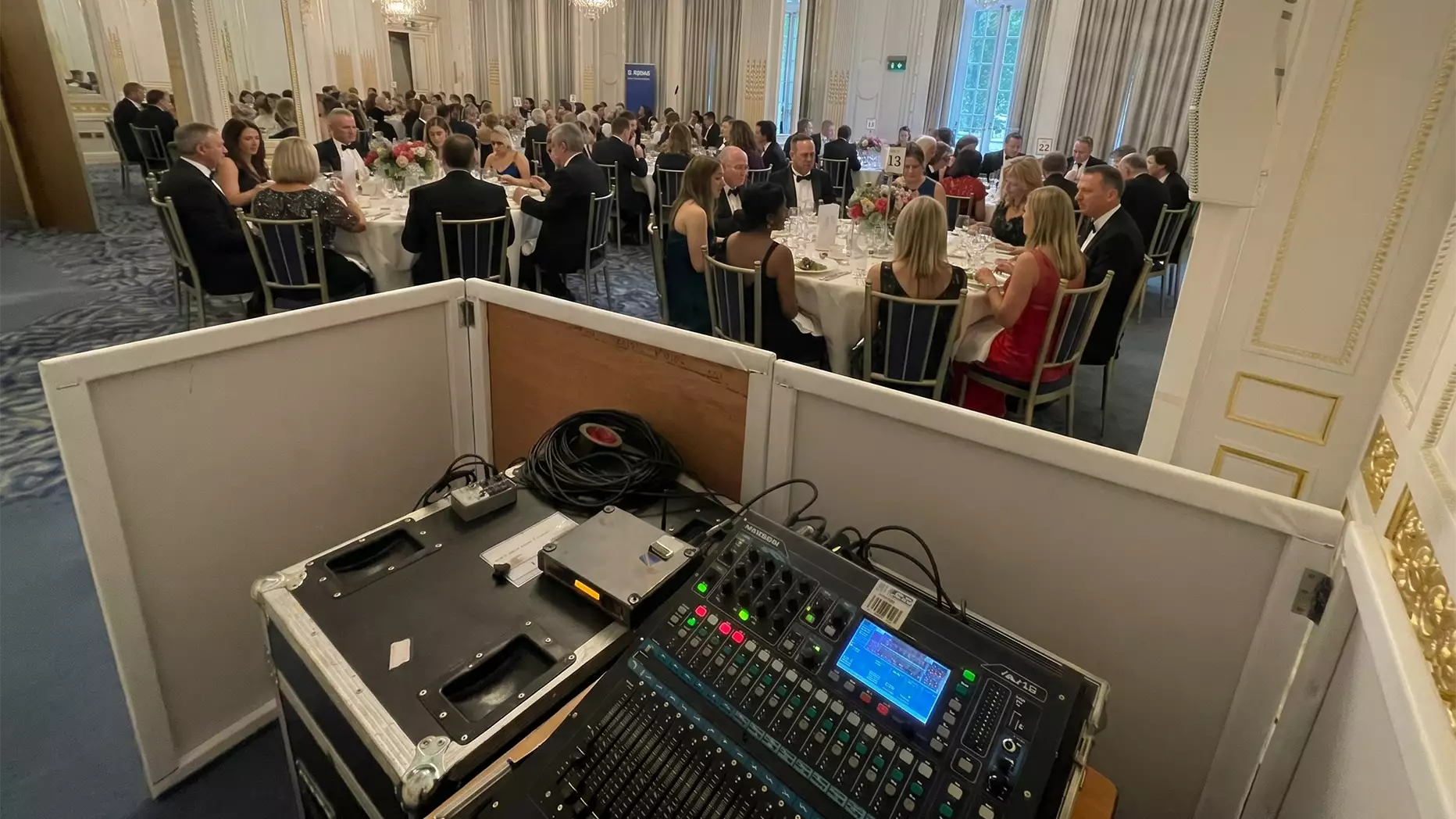
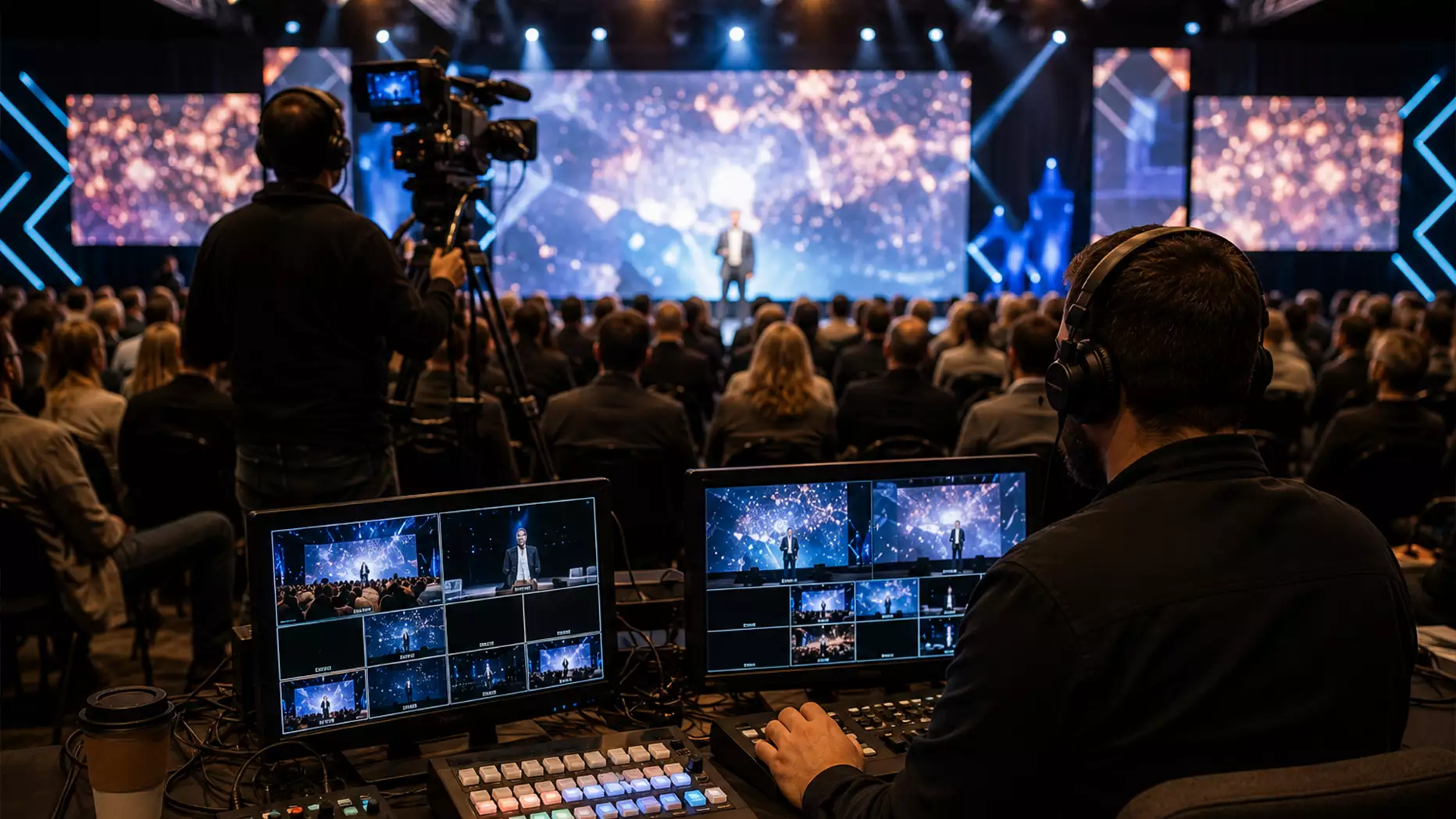
Event production management is the process of planning, sourcing, and overseeing all the physical and technical elements of an event, including AV equipment, staging, lighting, and live streaming, to ensure everything runs smoothly from setup to finish. It sits between event planning (the creative brief) and event management (the operational coordination), handling the technical execution that brings an event to life.
You’ve booked the venue. The speakers are confirmed. The catering is sorted. But then someone asks, “Who’s handling production?” and suddenly, the room goes quiet.
Many people confuse it with event planning, event management, or just ‘sorting the tech’. But it’s much more than that.
Here’s everything you need to know:
What is event production management?
Event production management is the planning, sourcing, and oversight of every physical and technical element that makes an event work. Staging, lighting, sound systems, AV equipment, LED screens, and live streaming setups all fall under this discipline.
Event planning decides what an event should look and feel like. Event management coordinates the teams who make it happen. Event production management physically builds that experience on the day.
It’s the difference between having a great concept and actually pulling it off.
What is the difference between event management and event production?
These two terms get mixed up constantly, so here’s a clear breakdown.
- Event management covers big-picture coordination, hiring staff, selecting vendors, booking the venue, and making sure every team is delivering on the day. It’s operational and logistical.
- Event production management bridges both. It means providing, installing, and managing the equipment that brings the event to life, such as microphones, projectors, stage lighting, video walls, and more.
- Event production management bridges both. It takes the creative vision and ensures the right technology is in place to deliver it, on time and within budget.
How does event production management work?
Event production management follows a clear process from brief to breakdown.
It starts during the planning phase, when a production manager reviews the event brief and advises on what technical equipment is needed based on the venue, audience size, and event format. They then source and coordinate with AV suppliers, lighting technicians, staging companies, and content creators, managing contracts, timelines, and logistics across all of them.
In the lead-up to the event, they oversee equipment delivery, installation, and testing. On the day itself, they act as the technical point of contact, managing the crew and handling anything that doesn’t go to plan. After the event, they coordinate the breakdown and sign off on the production.
The result is that the event organiser can focus on the programme and their guests, without worrying about what’s happening behind the scenes.
What does an event production manager do?
An event production manager turns a concept into a physical, working event experience. They’re part consultant, part project manager, and part technical expert.
You can hire one independently, or your AV hire company may assign one to work alongside you. Either way, their job is to ensure every technical element is sorted, from the first planning call to the final pack-down.
Their core responsibilities include:
- Technical consultation: Advising on the right equipment for your venue, audience size, and event goals. No guesswork, no overspending on a kit you don’t need.
- Vendor coordination: Managing relationships with AV suppliers, content creators, lighting technicians, and staging companies, so you’re not juggling a dozen different contacts.
- Budget management: Knowing where to spend and where to save.
- On-site oversight: On the day, they’re your technical point of contact.
- Contingency planning: Equipment fails, speakers run over, and schedules shift. A production manager builds backup plans so that when things go wrong, nobody in the audience knows.
Why does event production management matter?
Attendees feel production quality, even when they can’t name it. Bad sound makes people disengage. Dim lighting kills the energy. A screen nobody can read from the back of the room means the whole message gets lost.
Event production management prevents all of that. Here’s why it makes such a significant difference.
- It keeps everything connected
When your caterer, AV supplier, and content team are working to different timelines, things fall through the gaps. A production manager keeps everyone aligned to the same plan.
- It removes the technical burden from you
You shouldn’t need to know the difference between a line array speaker system and a column array. Your production manager does, and they’ll spec the right one for your room.
- It protects your budget
Without proper management, it’s easy to over-hire equipment or pay premium rates at the last minute. A production manager knows the market and how to negotiate.
- It reduces risk
Technical problems are a matter of when, not if. The question is whether someone is ready to handle them before they affect your audience.
- It raises the overall standard
From the moment guests arrive to the moment they leave, every sensory detail shapes how your event is remembered. Production management ensures those details are in good hands.
What do event production services include?
Event production services cover a broad range of technical provisions. Depending on the type and scale of your event, you may need some or all of the following:
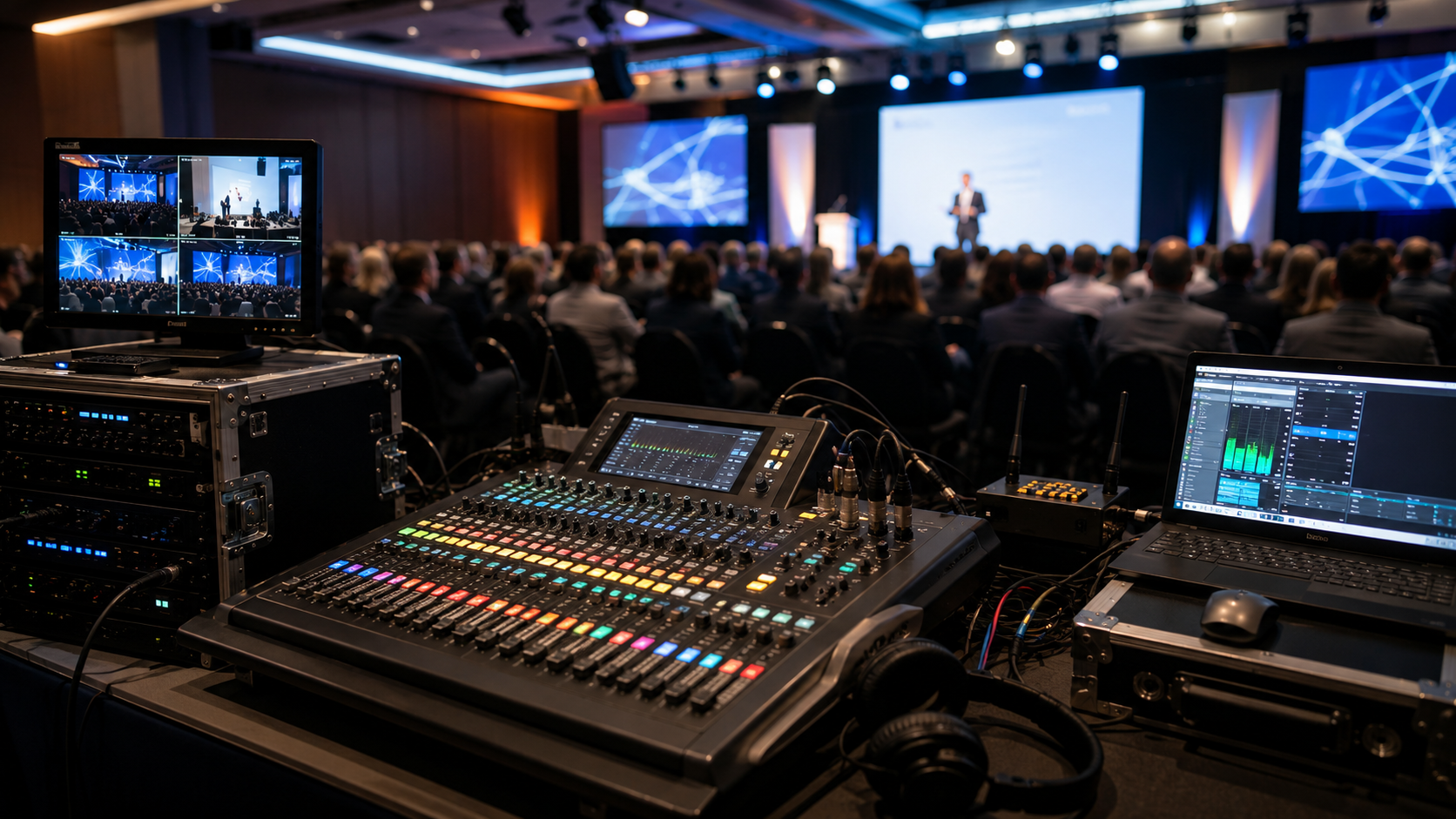
- Audio hire: PA systems, wireless microphones, monitor speakers, and mixing desks. Everything your audience needs to hear clearly.
- Visual hire: Projectors, LED video walls, plasma screens, and display monitors for presentations, live feeds, and video content.
- Staging and set design: Performance stages, exhibition stands, backdrops, pipe-and-drape systems, and display boards.
- Lighting hire: Stage lighting, uplighters, gobos, and lighting control systems that create the right atmosphere for your event.
- Live event production: End-to-end technical delivery for in-person conferences, hybrid events with remote attendees, or fully virtual productions.
- Live streaming and recording: Professional cameras, encoders, and broadcast setups that take your content beyond the room.
- Event interpretation services: Multilingual audio systems for international conferences and summits.
Do you actually need event production management?
For a small internal meeting, probably not. But if your event involves a stage, live audio, presentations, or any technical setup, dedicated production management is worth it.
The bigger and more visible the event, the higher the stakes. A technical failure at a team meeting is embarrassing. At a product launch or client summit, it can damage your brand.
Professional event production management means your guests leave talking about how well it went, not what went wrong.
Bottom line
Event production management is what separates a good event from a great one. It takes your vision off the planning document and brings it to life in the room. From AV equipment hire to on-site technical oversight, it handles every physical and technical element your event needs to succeed.
If you want your next event to run without a hitch, working with an experienced event production management team is one of the smartest decisions you can make.
Planning an event and not sure where to start with production? Get in touch with our team, and we’ll help you figure out exactly what you need.
Frequently Asked Questions
What is the difference between event production and event management?
Event management covers the operational side of running an event: coordinating teams, booking vendors, and managing logistics. Event production focuses on the technical side: sourcing, delivering, and operating the physical equipment that makes the event work, such as AV systems, staging, and lighting. Event production management oversees both the technical planning and the execution.
How much does event production management cost?
Costs vary significantly depending on the size and complexity of the event. Smaller events with basic AV requirements may cost a few hundred pounds for production management, while large-scale corporate events or conferences can run into thousands. Many AV hire companies include a production manager as part of their overall service package. The best approach is to share your brief and get a tailored quote.
How early should I hire an event production manager?
Ideally, bring a production manager on board as early as possible, at the same time you’re selecting your venue, if you can. Early involvement means they can advise on venue suitability, flag any technical limitations, and build a realistic budget from the start. Last-minute production management increases costs and reduces your options.
What equipment does an event production company provide?
A full-service event production company typically provides audio equipment (PA systems, microphones, mixing desks), visual equipment (projectors, LED screens, video walls), staging and set dressing, lighting systems, live streaming setups, and IT or AV hire for presentations. The exact kit depends on your event type and requirements.
What is AV hire and why does it matter for events?
AV hire (audiovisual hire) refers to renting the equipment needed to deliver sound and visuals at your event, such as speakers, microphones, screens, projectors, and more. It matters because the quality of your AV directly affects how well your audience receives your content. Poor sound or visuals can undermine an otherwise well-planned event. A production manager ensures the right AV kit is hired, installed correctly, and operated throughout.