Corporate event ideas in London for 2026 are shifting from passive entertainment to structured, experience-led formats. Immersive quest nights, interactive game venues, AR photo moments, live digital illustration, feature food stalls, and one timed showpiece acts (like LED drummers or robots) are reliable because they remove awkward networking and give guests something to do straight away. In a city known for strict venue constraints, sound limiters, access windows, and weather risk, the best events aren’t the most elaborate; they’re the ones designed around how London venues actually operate.
Planning a corporate event in London now means making participation easy, conversation natural, and production practical. The strongest formats combine one anchor experience, one simple participation point, and a production plan that supports clear speech and smooth flow.
This guide covers 14 corporate event ideas that work specifically in London venues, from rooftops with noise restrictions to heritage halls with limited rigging, with practical notes to help you run them successfully.
What’s changed in corporate events in London in 2026
Corporate events in London have moved away from agenda-heavy formats toward outcome-led experiences. Time pressure, hybrid work patterns, and rising venue costs mean events must justify attendance quickly.
Key shifts shaping London events in 2026:
- Structured participation replacing passive entertainment.
- Production is designed around venue constraints, not added afterward.
- Hybrid elements are treated as broadcast-quality, not secondary.
- Content capture planned from the start, not improvised on-site.
The result: fewer elements, clearer flow, and one shared moment that anchors the experience.
How do you choose the right entertainment idea?
Before you book anything and jump into the corporate entertainment ideas directly, let’s take a quick look at the checklist below for deciding which ideas will be suitable according to your event goal and audience.
1) What is your goal?
- Team bonding: break silos, build trust, get people mixing.
- Client entertaining: relaxed conversation, premium feel, easy networking.
- Awards/gala: “big moment” energy and clean run-of-show.
- Product launch: reveal moment + content capture.
- Conference / all-hands: attention + clarity + pacing.
2) Who is coming?
- Mixed ages? Mixed departments? Lots of new starters?
- Introverts in the room? Remote teams? International guests?
- Accessibility needs (hearing, mobility, sensory overload)?
3) What can the venue support?
Ask early:
- Noise limits and curfew.
- Loading access and timings.
- Power availability.
- Rigging points/ceiling height (if you want lights, truss, screens).
4) How much production do you want?
- Low: minimal kit, fast setup.
- Medium: stage + screens + lighting for atmosphere.
- Show-level: cues, rehearsals, multiple acts, filming, content.
If you want immersive, interactive, or filmed moments, treat production as core. That approach aligns with “people first” content and planning, do what genuinely helps the audience experience the event.
Now, let’s jump into the ideas:
14 corporate event ideas in London for 2026
Corporate events in London are changing. People don’t want to “stand around with a drink” for three hours. They want an event that feels easy to join, gives them something to talk about, and has at least one shared moment everyone remembers. Industry trend coverage for 2026 also points to more experience-led design, with smarter use of tech and hybrid thinking where needed. Below are 14 ideas to change the mood in the room.
1) Skyline celebration night (rooftop or high-view venue)
A skyline at night works because the view does the icebreaking for you. Guests arrive, take in the room, and conversation starts naturally without forced networking. The key is to keep the formal agenda short and timed. A tight 10–15 minute “hero block” can be enough for a milestone toast, a quick award moment, or a product reveal, then the event returns to social flow.
In London, the practical success factors are wind, temperature, and sound control. Rooftops can get cold fast, and loud audio can trigger complaints or limiter issues. This idea works best when speech is crisp, music is controlled, and the rest of the evening is built around relaxed movement and easy conversation.
2) A finale moment that feels like a headline act (drone show, where feasible)
A strong corporate event often needs one shared moment that everyone experiences together. A drone light show can deliver that, but in London it is location-and permission-dependent. Airspace restrictions, local authority approvals, crowd separation, take-off and landing space, insurer requirements, and weather minimums all affect whether it’s feasible.
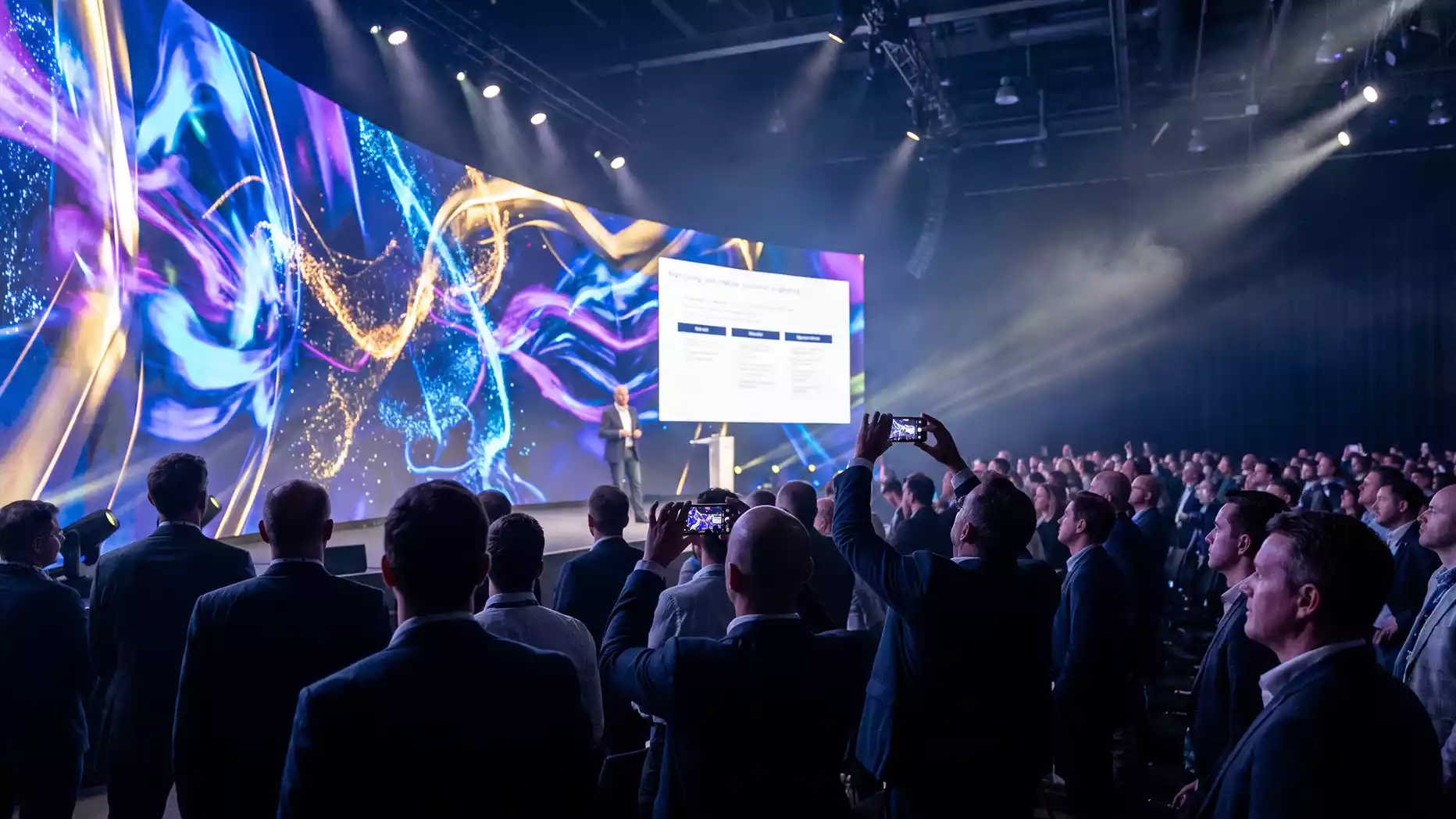
The smart approach is to build your event around the concept of a “finale moment,” not a specific technology. If drones aren’t realistic for your site, you can still create the same emotional peak with an indoor alternative like LED drummers, LED robots, a kinetic lighting feature, or a timed projection reveal. The idea stays the same: a short, planned closing sequence that tells a story and ends with a final reveal.
3) LED drummers or futuristic LED robots as a transition act
LED performers are one of the most reliable ways to shift a room from “networking mode” into “attention mode” without awkward announcements. A 4–8 minute act works well as an opener, a keynote intro, or the moment just before a reveal. It feels modern, creates immediate energy, and gives you a clear cue point in the run-of-show.
This idea succeeds when you protect it from competing noise. If catering staff are clearing plates or guests are returning to their seats during the act, the impact drops. You want a clean stage picture, a single strong music track, and tight stage management so the room gives the act its attention for a few minutes.
4) AR photo booth with instant delivery
An AR photo booth works because it’s low effort and socially safe. Guests don’t need confidence or performance energy to take part. Small groups step in, choose a filter or branded overlay, take a quick photo, and receive content instantly. That creates natural laughter and conversation without anyone feeling pressured to post online.
Placement matters more than most people expect. If the booth is near the arrival route or bar, it gets used, but it can also create queues. The best setup is visible but not blocking walkways, with a frictionless scan-to-delivery workflow so people don’t get stuck waiting.
5) Live photo mosaic wall that builds throughout the night
A photo mosaic wall turns your guests into the content, then gives you a built-in closing beat. Throughout the night, people upload photos using QR codes. On-screen, those images gradually assemble into a larger mosaic, often a brand mark, event theme, or team image. At the end, you time a reveal moment, add a short music sting, and let the room see what they created together.
This works especially well for awards nights and conferences because it gives you a shared moment without interrupting the social flow. The main risk is low participation, which is solved by simple prompts, gentle MC reminders, and obvious signage that makes it feel effortless.
6) Live digital illustration as your recap content
Live digital illustration is a smart alternative to filming everything. A professional visual artist captures keynote points, panel takeaways, and key room moments in real time, creating a visual map of the event as it happens. Guests can see the work developing, and it becomes a talking point that feels more human than another long recording.
For hybrid or content-led events, this format is powerful because remote teams benefit too. If you mirror the artwork onto screens, everyone sees the same evolving story. After the event, the final illustration becomes a recap asset that people actually open and share internally.
7) Immersive quest night built around missions and characters
If you want to remove awkward networking, an immersive quest format is one of the best ideas available. Guests enter a themed world where they have missions, characters to interact with, clues to find, and team objectives. It gives people immediate roles and talking points, so they connect naturally without forcing conversation.
The planning win is flow. Teams should be small enough to move easily, and the experience should rotate people through zones so no one is stuck waiting. The social space afterward matters too. A bar or lounge area for debriefing is where half the bonding happens, because teams compare outcomes and laugh about what went wrong.
8) Immersive game pods with short rounds and a finals moment
Game pod formats work because they are fast to understand and easy to join. Guests play short, sensor-driven or touchscreen rounds, rotate quickly, and rack up scores. It suits mixed ages and departments because it doesn’t rely on athleticism or prior knowledge. People can join in for one round or stay for multiple.
This idea becomes stronger when you add a finals moment. A visible scoreboard pulls people in, and a short “top teams playoff” near the end gives the room a shared highlight. Without that structured peak, it can feel like scattered activity rather than one cohesive event.
9) Theatrical escape challenge with story and production value
A theatrical escape experience builds trust quickly because communication matters more than confidence or job title. Teams have to listen, share information, and stay calm under time pressure. With narrative, props, sound design, and timed puzzle beats, it feels like stepping into a story rather than solving locks in a room.
The key is difficulty. Corporate groups don’t want a brutal puzzle grind. Momentum matters more than challenge level. Plan for a debrief space afterward so teams can compare what they saw and how they solved it, because those conversations are part of the value.
10) Multi-sensory team challenge for mixed seniority groups
A multi-sensory team experience can be a strong corporate event idea because it levels the playing field. It often involves tasks across the five senses, sometimes in low light, where communication and coordination matter more than status or confidence. It’s a fresh format for team bonding because it breaks normal workplace patterns.
The operational point is accessibility. Sensory intensity should be clearly flagged upfront, and alternatives should be available for guests with sensory sensitivity or mobility needs. When the pacing is tight and expectations are clear, the experience feels energising, not draining.
11) Neurowellness reset zone as a high-value add-on
A reset zone is not the whole event, but it can meaningfully improve the experience, especially for mixed audiences. A quiet side space with soft lighting, comfortable seating, and optional short guided breathwork sessions reduces event fatigue. It helps introverts, guests who get overloaded by loud environments, and leaders who need a quick mental pause.
This works when it’s physically separated from the main sound. If it’s too close to the speakers, people won’t use it. Make it clearly opt-in, simple to enter and exit, and described in a normal way so nobody feels awkward about taking a break.
12) Global street food pop-ups as the main feature
Multiple curated food stalls that feel like a mini market, katsu sandos, Korean BBQ tacos, bao, miso-glazed tofu bánh mì, and regional specials, served fast with short menus. Food becomes the conversation starter and keeps people moving and mixing instead of clustering in corners.
Design the room for flow so there’s no single choke point, label dietary options clearly, and add one short “chef moment” (2 minutes) if you want a shared highlight without turning it into a lecture.
13) Tableside mixology or live sushi rolling for premium interaction
For smaller or more premium events, tableside mixology or sushi rolling creates a relaxed, guided activity that supports conversation. Guests make something with light guidance, so networking happens naturally while their hands are busy and pressure is low. It’s particularly strong for client entertaining because it feels intentional and high quality without being loud.
Structure matters here. Keep the demo short, then get people making quickly. A strong non-alcohol route is essential so the experience feels inclusive, not split into “drinkers versus non-drinkers.”
14) Hybrid live studio all-hands that feels like a broadcast
A hybrid all-hands works when it’s designed like a studio show, not a room with a laptop stream. That means clean stage sightlines, proper cameras, lighting that flatters faces, and speech audio that works both in-room and online. Segment pacing is what keeps attention high. Eight to twelve minutes per segment is a practical sweet spot.
This format becomes more engaging when you add one participation point for the room, like an AR booth or a live illustration feed, and one clear reveal moment that anchors the story. If you treat the remote audience as an equal, the event feels modern and worth watching, not like a second-hand version of the room.
Production upgrades that make these ideas work in London venues
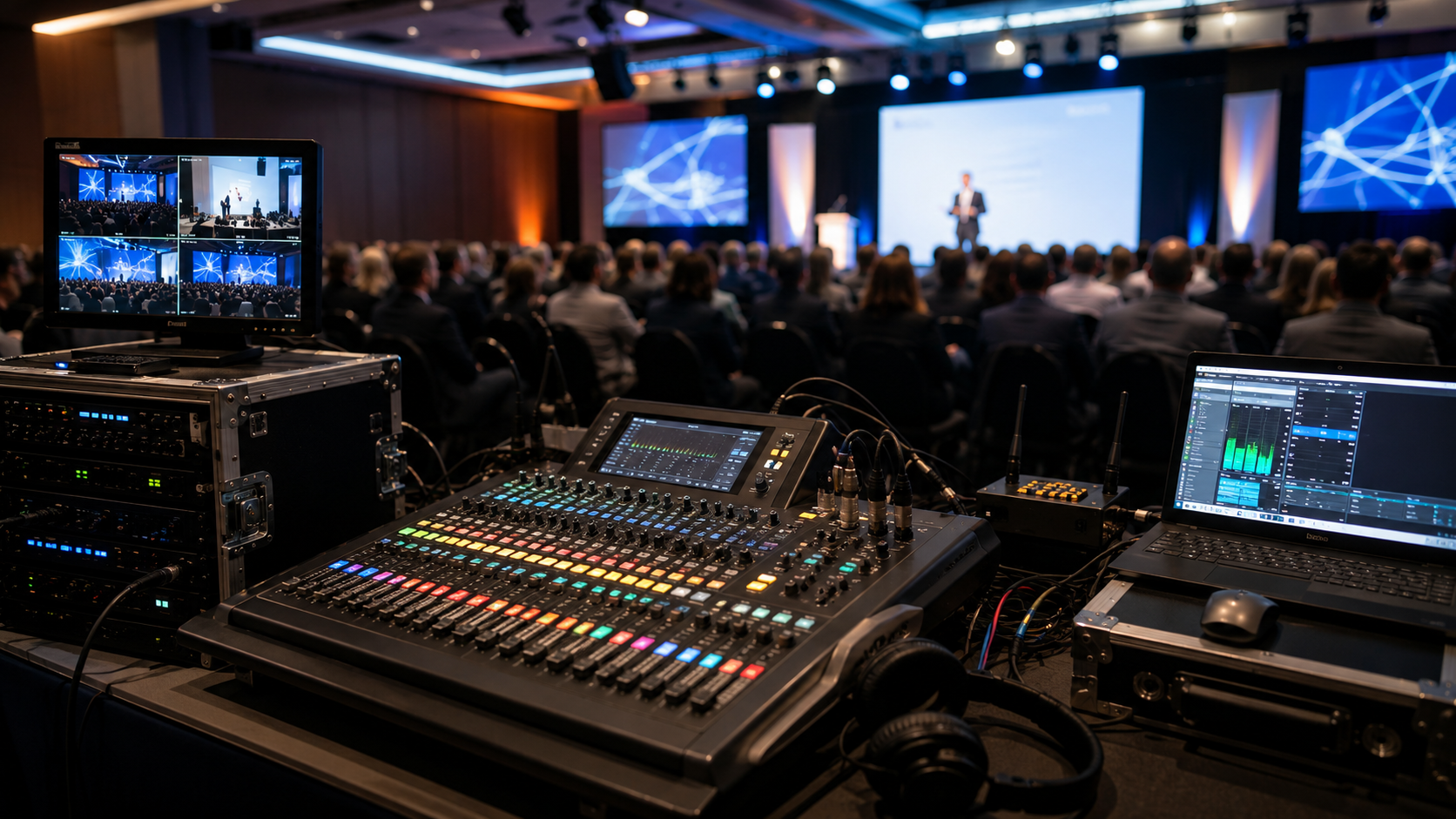
Behind most successful corporate events is production that quietly removes friction. In London venues especially, smart audio management keeps speech clear despite sound limiters, automated camera tracking supports hybrid audiences without complex setups, and predictive monitoring helps avoid technical interruptions during critical moments.
For hybrid and content-led events, real-time captions and translation tools also help ensure remote teams experience the event fully rather than passively watching it.
Technology works best when it supports flow, clarity, and participation rather than drawing attention to itself.
Final thoughts
Most corporate events don’t fail because the idea is wrong. They fail because the venue can’t support it.
Start with feasibility: sound limits, access, power, and layout. Then design one clear shared moment supported by simple participation and strong audio clarity. In London venues, especially, production realism is what turns a good concept into a successful event.
The most effective corporate events in 2026 are rarely complex. They are focused, structured, and easy for people to join.
If you’re planning a corporate event in London and want to test whether your idea will actually work in your venue, AV Productions supports event planners with feasibility guidance, rental AV equipment, and full production delivery, from load-in planning to final cue execution. The goal is simple: make your chosen format look sharp, sound clear, and run without friction.
FAQs
What are the best corporate event ideas in London?
Choose formats that are structured but optional: immersive “quest” venues (so people have a shared mission), short game-based experiences, and interactive food/drink stations. These reduce awkward networking because guests have something to do straight away (for example, immersive experiences like Phantom Peak are designed around exploration, characters, and missions that work well for groups).
What unique corporate entertainment works in London besides a DJ?
Use one showpiece moment plus one social activation. Showpiece = a short LED act (drummers/robots) as a timed reveal. Social activation = a photo mosaic or AR-style photo experience that guests can do in small groups. This combination creates a memorable “shared moment” while keeping the rest of the night conversation-friendly. (The key is planning around venue constraints like curfew and setup access.)
How do I choose the right London venue for an interactive event?
Ask early about load-in access, lifts, timed curfews, and neighbour constraints, because London venues often have strict install windows and controlled access routes. Then confirm power availability and whether the venue can support your layout and any rigging/screens you want.
What AV setup do we need for a hybrid corporate event in London?
Treat it like a broadcast and prioritise clean audio: proper microphones, someone dedicated to managing in-room audio, and tech rehearsals. Hybrid guidance consistently stresses not treating the stream as an afterthought, designing the run-of-show for both audiences and testing early.
How do noise limits and sound limiters affect corporate entertainment?
Many venues use sound limiters that can cut power if levels go too high, so bands/DJs need to know the limiter rules, dB limit, and where the limiter mic is placed. Always ask about noise restrictions and curfew before booking entertainment; your “big moment” can literally switch off mid-set.