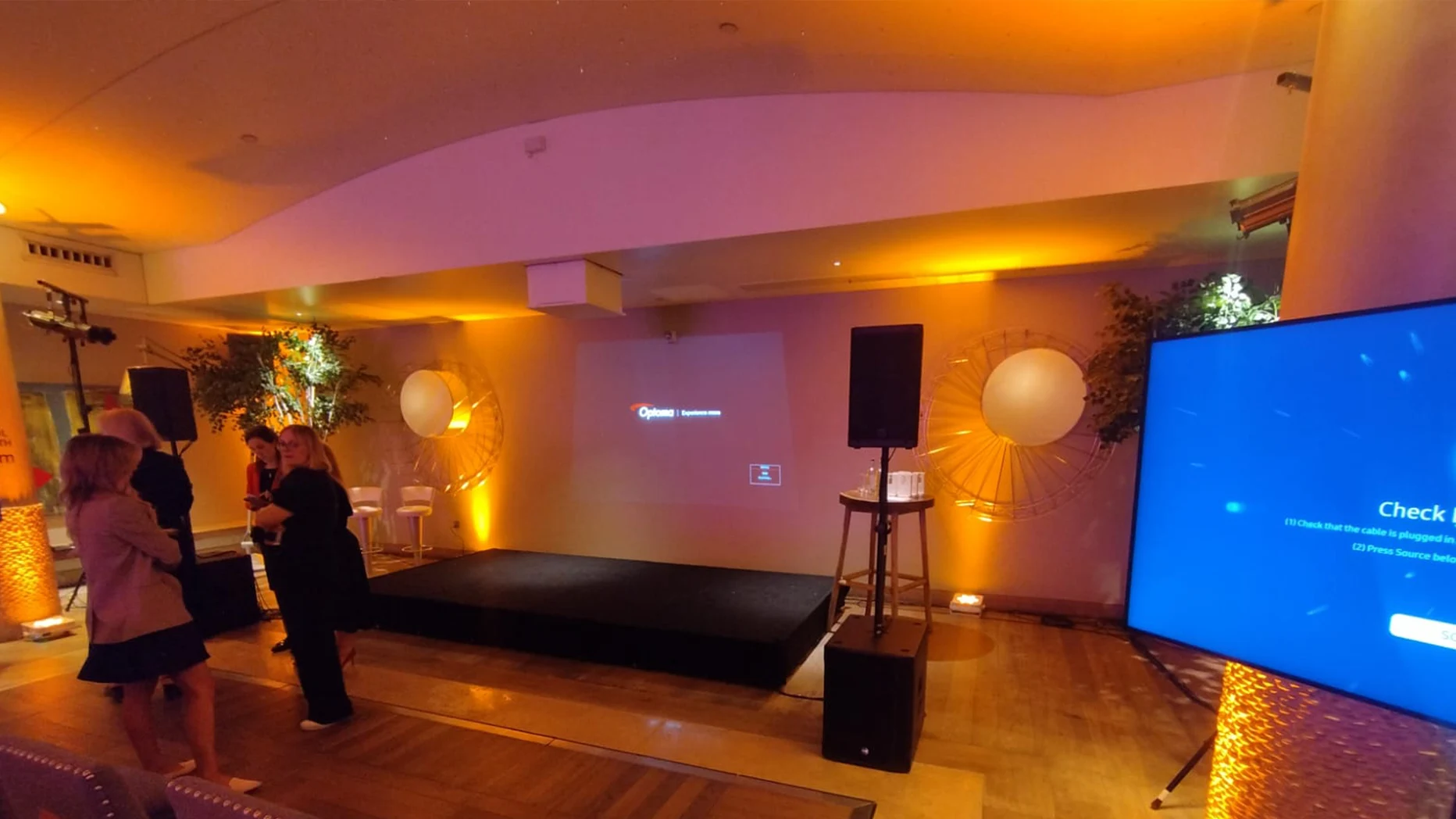
A product launch in London is not simply an event. It is the first public statement your brand makes about a product, and the production quality of that moment directly shapes how press, buyers and guests perceive what you are bringing to market.
Research consistently shows that the majority of new products fail within their first year, and a significant proportion of those failures trace back to poor launch execution: the wrong audience in the room, a message that did not land, or a live environment that undermined rather than amplified the product. Getting the production right is not a peripheral concern; it is central to whether the launch achieves its commercial objectives.
This guide covers every stage of a product launch, from audience research to post-event analysis, with specific attention to how AV production, staging, sound, lighting and visual technology determine whether a London product launch creates genuine impact or simply takes up a day in the calendar.
Why most product launches fail to deliver
Before covering what to do, it is worth being direct about where product launches most commonly go wrong, because the patterns are consistent and largely avoidable.
The audience is wrong. Inviting a room full of people who are not genuine buyers, press contacts, or decision-makers wastes the event budget and generates no useful signal about real market appetite. A launch to the right 80 people outperforms a launch to the wrong 400.
The message is unclear. A product launch is not a press conference. It needs a single, memorable story about what the product does and why it matters now. Events that try to communicate too much leave guests with nothing retained.
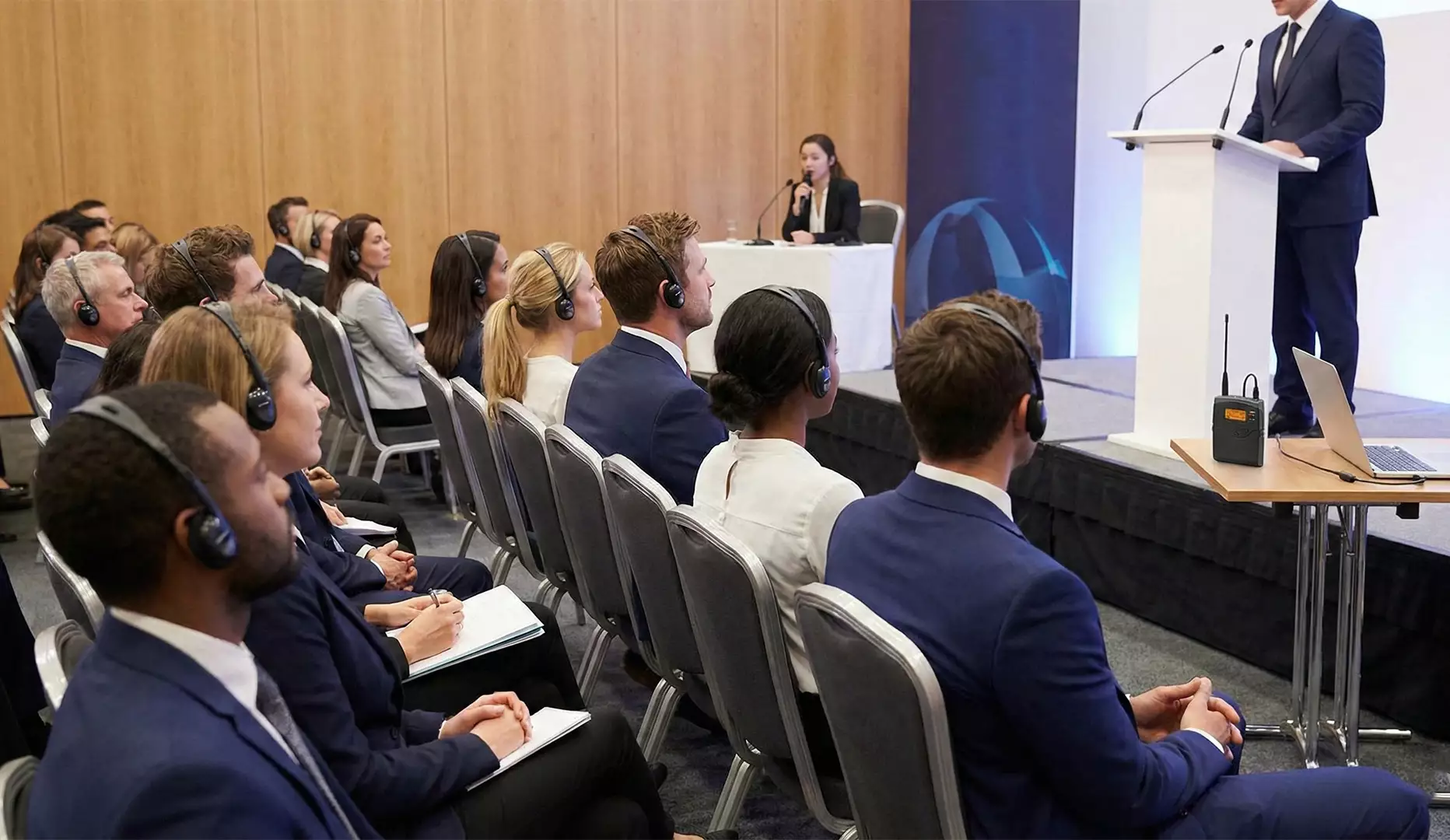
The environment works against the product. A flat, poorly lit conference room with a speaker standing at floor level and slides projected onto a screen washed out by ambient light does not create a reveal moment. It creates a presentation. The production environment is not decoration; it is the mechanism through which the product’s value is perceived.
There is no follow-through. The launch event is the beginning of the commercial campaign, not its conclusion. Organisations that treat the event as the endpoint, with no footage, no follow-up content strategy, no lead capture, lose most of the value they paid to create.
| The most overlooked failure pointMost launch posts focus on marketing strategy and messaging. Fewer examine whether the live production environment, the staging, the AV, and the room actually support the story being told. A technically poor launch can undermine even strong messaging. |
The 8-step product launch planning framework
The following steps apply to any corporate product launch in London. They are presented in planning order, not in order of importance; each is a dependency for the steps that follow.
1. Define your audience with precision
The foundation of an effective product launch is a specific, accurate picture of who needs to be in the room. For corporate product launches, this typically means a combination of trade press and specialist media, existing clients in the relevant sector, prospective buyers at the correct seniority level, and channel partners or distributors whose buy-in affects commercial rollout.
Each of these groups has different information needs and different criteria for what constitutes a successful event. A launch that tries to serve all of them equally usually serves none of them well. Decide which audience group is primary and build the event around their experience first.
2. Establish the problem your product solves
Every effective product launch is structured around a problem statement, not a feature list. The reveal moment, when the product is shown for the first time, lands hardest when the audience has already been led through a clear articulation of the problem it addresses. Without that foundation, even impressive products can feel like solutions in search of a problem.
This has direct implications for how the event is scripted and how the AV environment is designed. The problem statement is typically delivered from the stage before the product is visible. The reveal itself, whether a physical unveiling, a video presentation or a live demonstration, requires a production environment that can hold the room’s attention and then deliver a genuine moment.
3. Choose and survey your venue
London offers a wide range of corporate event venues, from hotel conference suites and exhibition halls to purpose-built event spaces and private dining rooms adapted for launch events. The right venue for a product launch is one where the room can be configured to put the product, not the architecture, at the centre of the experience.
Before confirming a venue, conduct a technical survey. Key questions: What is the ambient light level, and can it be controlled? Where are the power and data connections? What are the load-in access points and build windows? What is the ceiling height, and where are the rigging points for lighting and screens? These questions determine what AV production is possible in the space, and they should be answered before the venue contract is signed, not after.
| AV Productions recommendationAlways involve your AV production company in the venue selection process, not after it. Production constraints discovered post-booking (a ceiling too low for an LED wall, no rigging points, or a single narrow load-in door) can significantly limit what is achievable on the day and increase costs. |
4. Build your pre-launch content strategy
A product launch event does not exist in isolation. The weeks before the event are an opportunity to build genuine anticipation among your target audience, but only if the content is specific and credible rather than generic teaser material.
Effective pre-launch content for a London corporate audience typically includes: targeted outreach to trade press with a clear embargo date and a genuine news angle, direct communication to existing clients and prospects with a compelling reason to attend, and controlled social media activity that signals the launch without revealing the product. The goal is to ensure that the right people are in the room and arrive expecting to see something worth their time.
5. Design the production environment
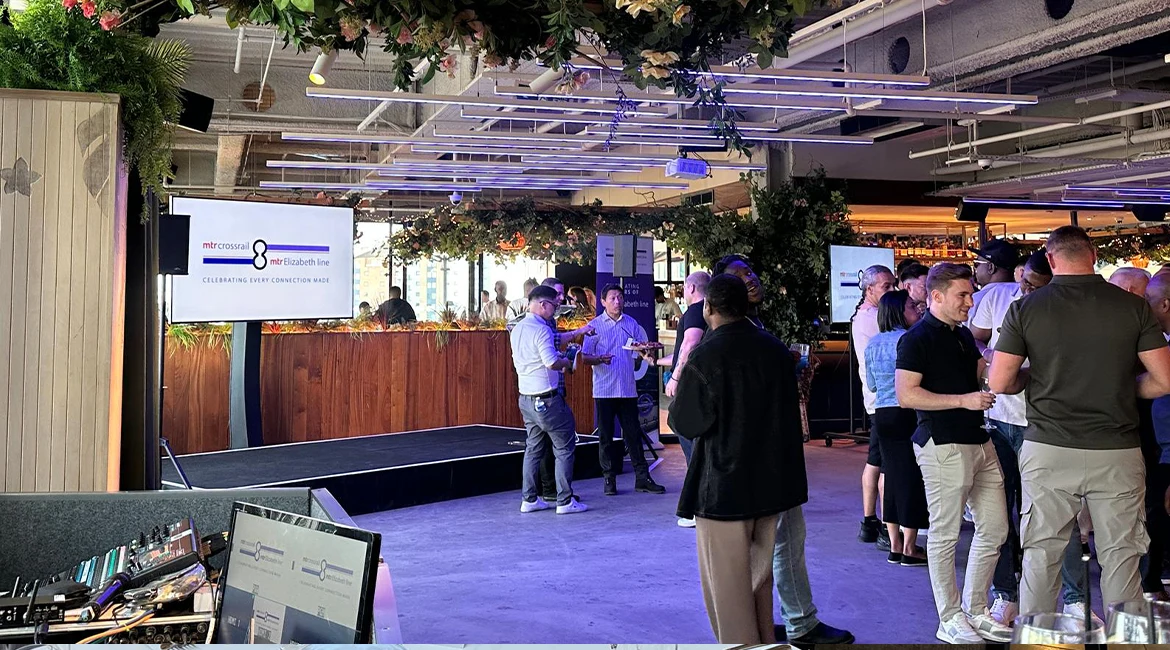
This is the step most commonly underestimated in launch planning briefs, and the one with the greatest impact on whether the event achieves its objectives. The production environment, staging, lighting, audio, visual technology and room layout are the mechanisms through which your product story is experienced by the audience.
For a London product launch, the production brief should address: the stage configuration and its relationship to the audience layout, the visual technology (LED video wall, projection, or a combination) and its suitability for the content being shown, the lighting design and specifically how the reveal moment will be lit and sequenced, and the audio setup including presenter microphones, any video playback audio and room acoustics.
Each of these elements affects the others. Stage height affects screen position. Lighting affects how the stage and product are photographed. Audio affects whether the presenter’s message is received with clarity or lost in a difficult room. These decisions need to be made together, which is why integrated AV production, with one team responsible for the full environment, consistently outperforms a piecemeal approach.
6. Brief and align all stakeholders
Product launches involve more stakeholders than most corporate events: the client team, the AV production company, the venue, PR and press agencies, any external presenters or guest speakers, brand and design teams supplying assets, and distributors or partners who may be attending as guests or participants.
The most effective way to manage this is a single master brief document and a defined run-of-show that everyone works from. Stakeholders left out of the planning process, or brought in too late to contribute meaningfully, create last-minute changes that put pressure on the production timeline. For complex launches, a production meeting two to three weeks before the event, attended by all technical and operational leads, is standard professional practice.
7. Rehearse the full production
A product launch without a full technical rehearsal is an unnecessary risk. Rehearsal is where timing is confirmed, the presenter is comfortable on stage, transitions between sections are tested, and any technical issues are identified and resolved before guests arrive.
For London product launches, the rehearsal typically takes place on the morning of the event or the evening before. It should include the presenter running the full script from the stage, all AV cues being triggered in sequence, and the reveal moment being practised exactly as it will happen on the day. Issues discovered in rehearsal take minutes to fix. The same issues discovered during the live event can be unrecoverable.
8. Plan the post-launch campaign before the event
The footage, photography and coverage generated at the launch event should be mapped out before it happens. What will be captured, by whom, and how will it be used in the days and weeks that follow? Press assets, social highlight reels, longer-form content for the website, and footage for sales and distribution teams need to be planned and briefed in advance, not assembled retrospectively from whatever was recorded on the day.
Audiovisual production for product launches in London
AV is not a service bolt-on for a product launch. It is the mechanism through which the launch experience is created. The table below covers the key AV elements for a corporate product launch, what each one delivers, and what typically goes wrong when it is absent or underspecified.
| AV Element | What It Delivers | Common Mistake Without It |
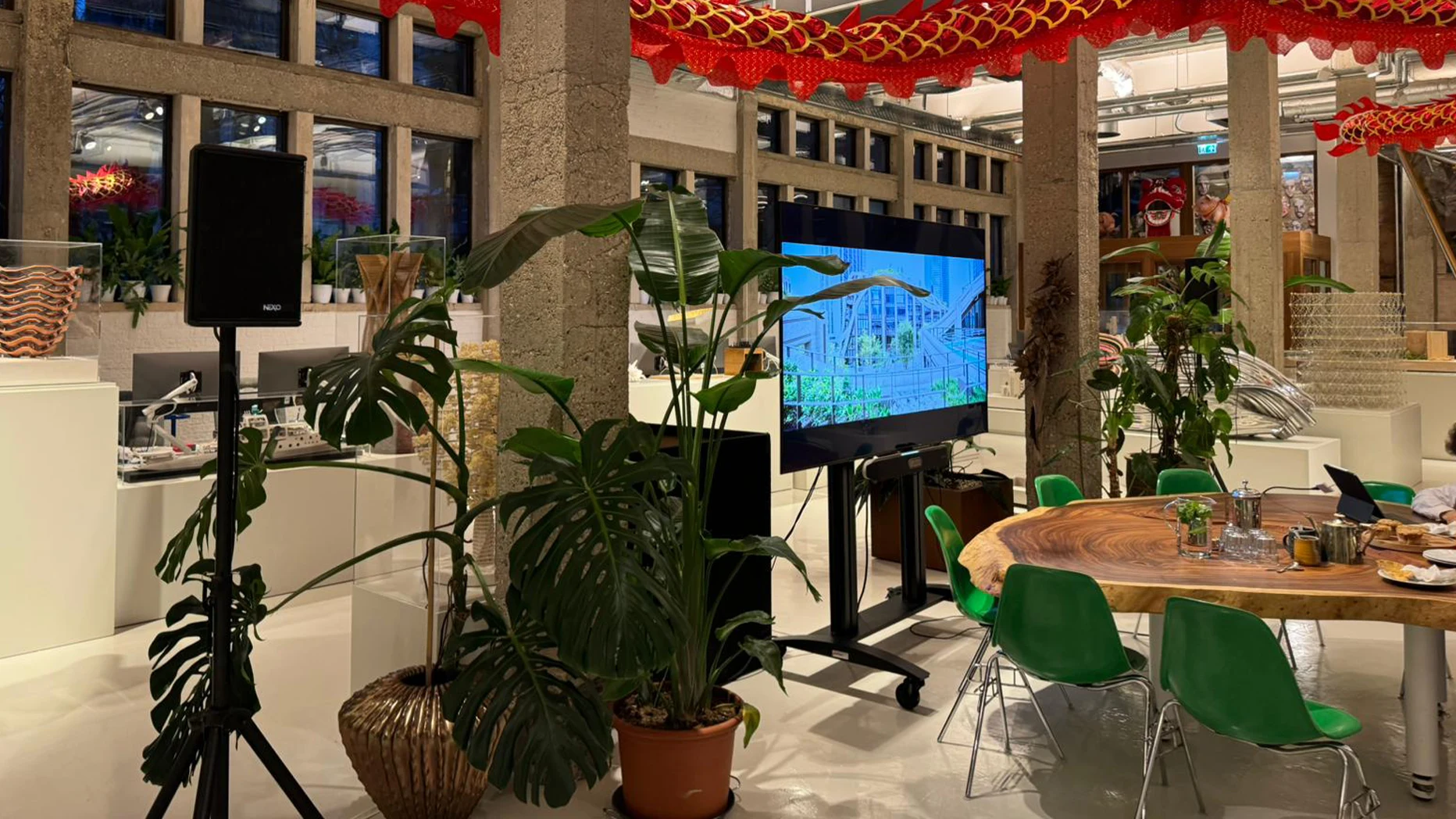
| LED video wall | Large-format product display, brand visuals, live demo content. | Projector washed out by ambient light; product detail lost. |
| Stage and staging system | Clear focal point, elevated presenter visibility, branded reveal surface. | Speaker lost at floor level; product reveal has no impact. |
| Lighting design | Controls the atmosphere, directs attention, & supports the reveal moment. | Flat, lifeless room with no build or dramatic moment. |
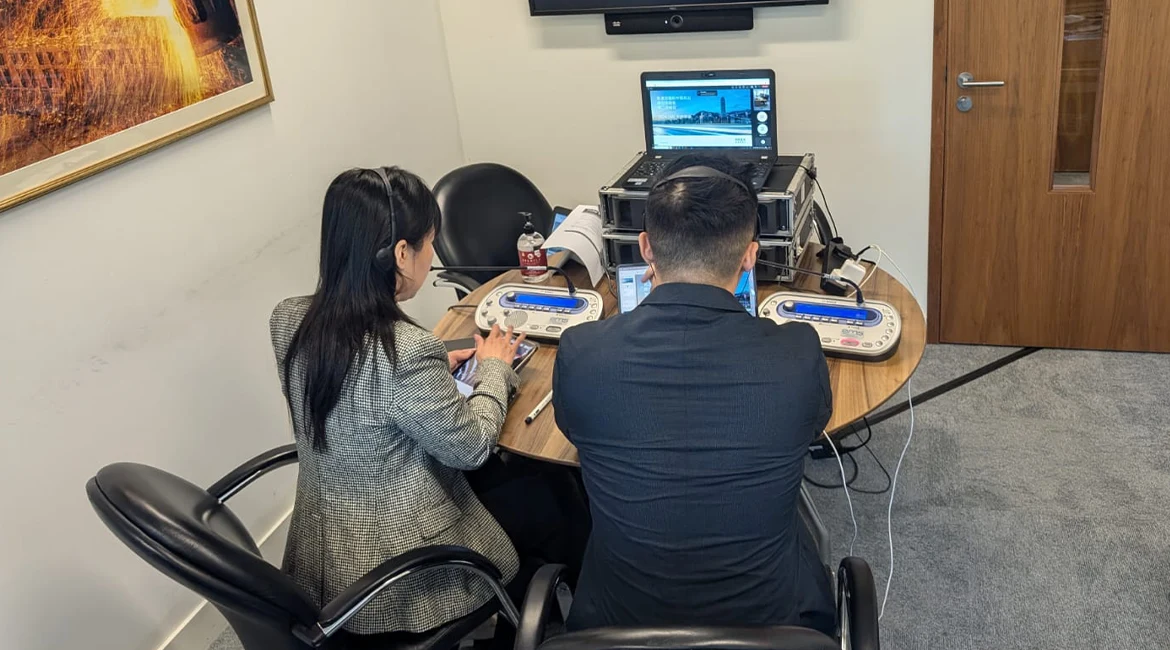
| PA system and microphones | Clear audio throughout the room, no feedback or drop-out. | Inaudible speakers, poor credibility, lost message. |
| Confidence monitors | The speaker sees slides and notes without turning away from the audience. | The presenter turns their back; the connection with the audience is broken. |
| Camera and recording | Post-event content, press assets, and social highlight footage. | No usable footage; launch impact ends when guests leave. |
The reveal moment: why production design matters most here
The reveal, the moment the product is shown for the first time, is the centrepiece of any launch event. It is the moment that generates press photography, social media content and the emotional response that guests carry away from the room. It is also the moment most dependent on AV production quality.
A well-designed reveal uses lighting, audio, and visual technology in a coordinated sequence: the room darkens, a video or audio sequence builds anticipation, the stage is lit as the presenter introduces the product, and the visual technology delivers the first full display of the product at a scale appropriate to the room. Each of these elements requires pre-programming, technical rehearsal and a crew member responsible for executing the cue sequence precisely on the day.
A reveal that depends on a presenter clicking through slides in a standard conference setup is not a reveal. It is a presentation. The production environment is what makes the difference.
| AV Productions note: We design product launch production environments from the reveal moment outward, establishing what that moment needs to feel like, then working backwards to determine the staging configuration, lighting design, visual technology and audio setup required to deliver it. The reveal is not the last thing we think about. It is the first. |
Product launch timeline: Phase by phase
The table below maps the key planning and production actions across each phase of a London product launch, from initial preparation through to post-event analysis.
| Phase | Key Actions | AV Considerations |
| Pre-launch (8–12 weeks out) | Audience research, competitor analysis, messaging, channel strategy. | Venue AV survey, staging brief, screen and lighting design. |
| Build-up (4–6 weeks out) | Content creation, partner briefing, press outreach, and team training. | Technical rehearsal planning, supplier confirmation, run-of-show draft. |
| Launch week | Final comms, social scheduling, logistics confirmation. | Full AV rehearsal, presenter run-through, contingency checks. |
| Launch day | Team briefing, guest management, live social. | Crew on-site, live operation, real-time technical support. |
| Post-launch | Coverage amplification, lead follow-up, and KPI analysis. | Highlight reel edit, footage delivery, debrief. |
The most common timeline error is compressing the pre-launch phase. Eight to twelve weeks of preparation is standard for a mid-size corporate product launch. Launches planned in under four weeks routinely encounter venue availability problems, production constraints and stakeholder alignment issues that are avoidable with adequate lead time.
How much does a product launch cost in London?
Launch costs vary significantly based on audience size, venue, production specification and the scope of pre- and post-event activity. The following ranges reflect average London corporate product launch investment levels:
- Intimate launch (up to 50 guests, private dining room or boutique venue): £8,000 to £35,000 including venue hire or minimum spend, catering/drinks, basic AV (PA + 1–2 mics), simple branding, photographer.
- Mid-size launch (50 to 150 guests, hotel event space or dedicated venue): £25,000 to £120,000 including stronger production (staging, lighting, better audio), content playback, more staffing, upgraded catering, photo/video, and tighter event design.
- Large-format launch (150 to 500+ guests, exhibition hall or major London venue): £150,000 to £400,000+ including full production design, multiple AV elements (often including LED walls), higher staffing/security, build days, scenic/décor, content creation, rehearsals, and sometimes talent/influencer fees.
The more useful framing is not what the launch costs, but what a failed or underperforming launch costs in lost commercial momentum, wasted press opportunity and the difficulty of generating a second launch moment for the same product.
| Cost planning note: Always obtain an itemised production quote that separates crew, equipment hire, delivery, build and de-rig. Aggregate quotes make it difficult to understand what you are buying and to compare suppliers accurately. A professional AV production company will provide line-by-line transparency as standard. |
Plan your London product launch with AV Productions
AV Productions designs and delivers product launch production for corporate clients across London and the UK. Our approach starts with the reveal moment, establishing what that needs to feel like, and works outward to determine the staging configuration, lighting design, visual technology and audio environment required to deliver it.
We handle the full production scope: venue survey, production design, equipment, crew, build, rehearsal and live operation. Our clients include brand and marketing teams, corporate event agencies, and in-house event planners managing product launches across a range of sectors and audience sizes.
To discuss your London product launch, share the following:
- Event date and venue (or shortlist of venues under consideration).
- Audience size and composition.
- Product category and any known reveal or demonstration requirements.
- Budget range and lead time.
- Any existing brand assets, visual guidelines or content already in production.
We provide an initial production concept and budget indication within 48 hours for most briefs.
Contact AV Productions to discuss your product launch.
FAQs
How far in advance should I book AV production for a London product launch?
For mid-size launches (50 to 150 guests), engaging your AV production company eight to twelve weeks before the event date is standard. This allows time for a venue survey, production design, asset collection from your brand team, and a full technical rehearsal. For larger or more complex productions, LED video wall builds, bespoke staging, and multi-room events, twelve to sixteen weeks is more appropriate. London venues in the September to November and January to March windows book quickly; production crew availability follows the same pattern.
What AV equipment is essential for a product launch vs optional?
The essential elements for any credible corporate product launch are: a clear PA system with appropriate microphones for the presenter format, a stage or elevated platform that gives the presenter visibility to the full room, controlled lighting that can hold a reveal moment, and a large-format visual display (LED wall or high-brightness projection) suited to the room’s ambient light conditions. Camera and recording, confidence monitors, and atmospheric lighting design are important additions for launches where post-event content and brand presentation are priorities, which describes most London corporate launches.
Can one AV company handle staging, lighting, sound and video for a product launch?
Yes, and this is the recommended approach. When a single production company is responsible for all technical elements, everything is designed to work together; stage height informs screen position, lighting positions are confirmed before build, and there is a single point of accountability on the day. Splitting staging, AV and lighting across separate suppliers requires additional coordination, creates gaps in responsibility, and commonly produces integration problems that only surface during the technical rehearsal or the live event.
What is the difference between a product launch and a press briefing?
A press briefing is a communication exercise; its primary output is coverage and editorial content. A product launch is a production exercise; its primary output is a live experience that creates commercial momentum, generates press assets, and gives buyers, distributors and partners a reason to act. Press briefings are typically smaller, more intimate and less production-intensive. A full product launch requires production design, a scripted reveal, a live audience experience and a post-event content strategy. Both may include press, but the objectives and production requirements are different.
How do I measure whether a product launch was successful?
Define your success metrics before the event, not afterwards. Typical KPIs for a corporate product launch include: press coverage volume and quality (tier-one titles versus trade press), lead capture and sales pipeline generated within 30 days of the launch, social reach and engagement from event content, distributor or partner commitments made at or immediately following the event, and post-event brand sentiment tracking. Without pre-defined metrics, post-launch analysis tends to focus on subjective feedback rather than commercial outcomes.