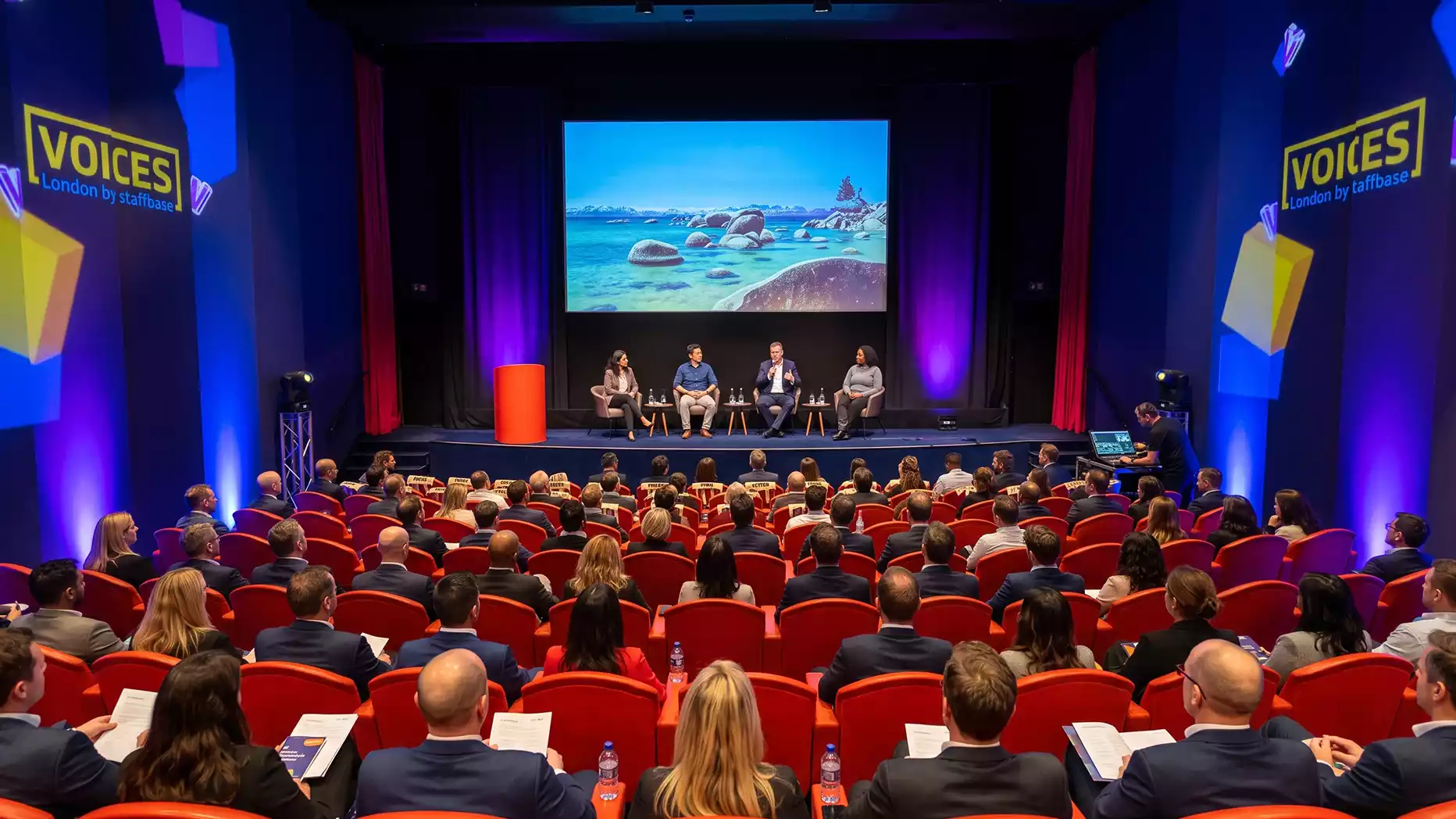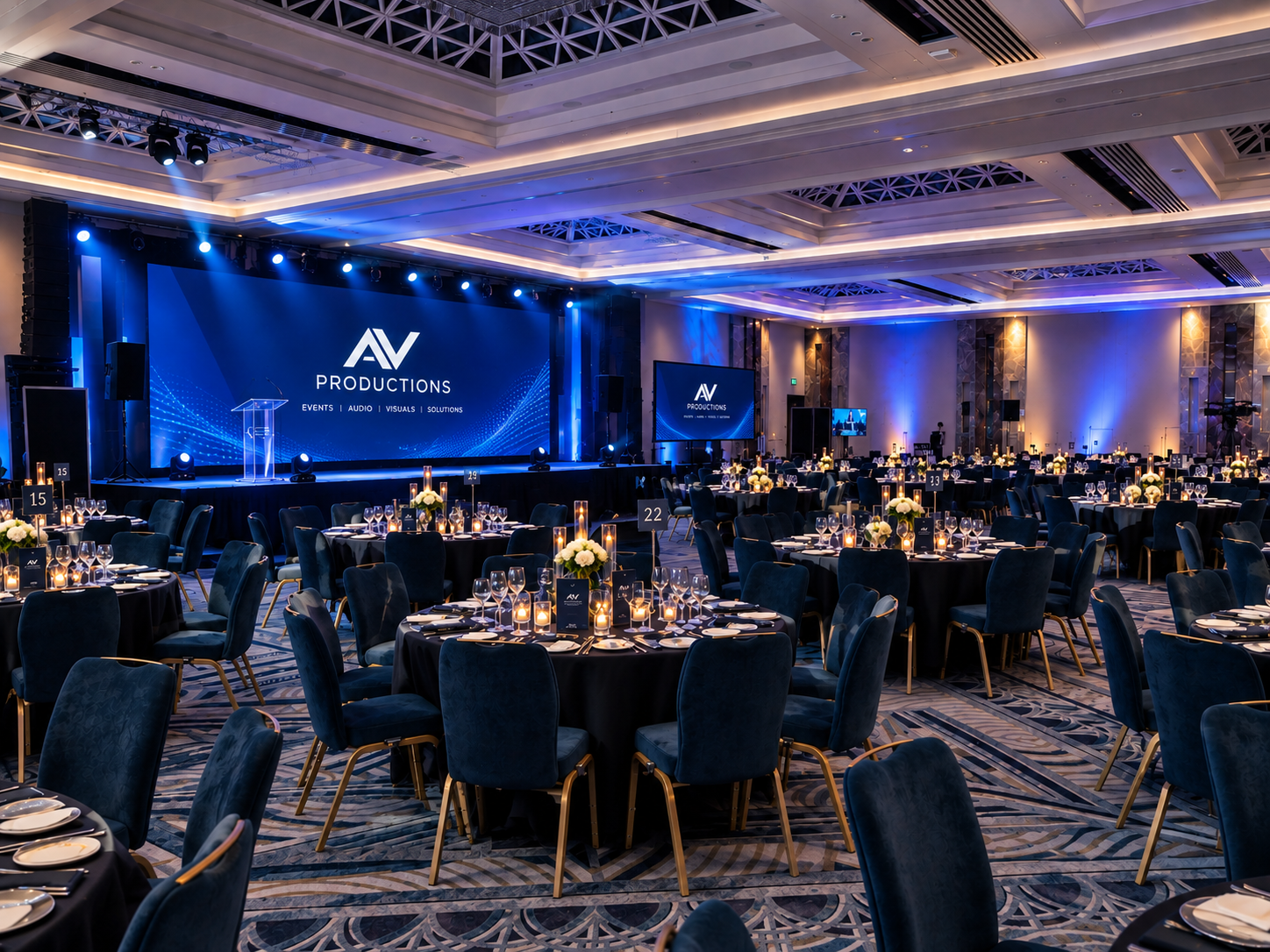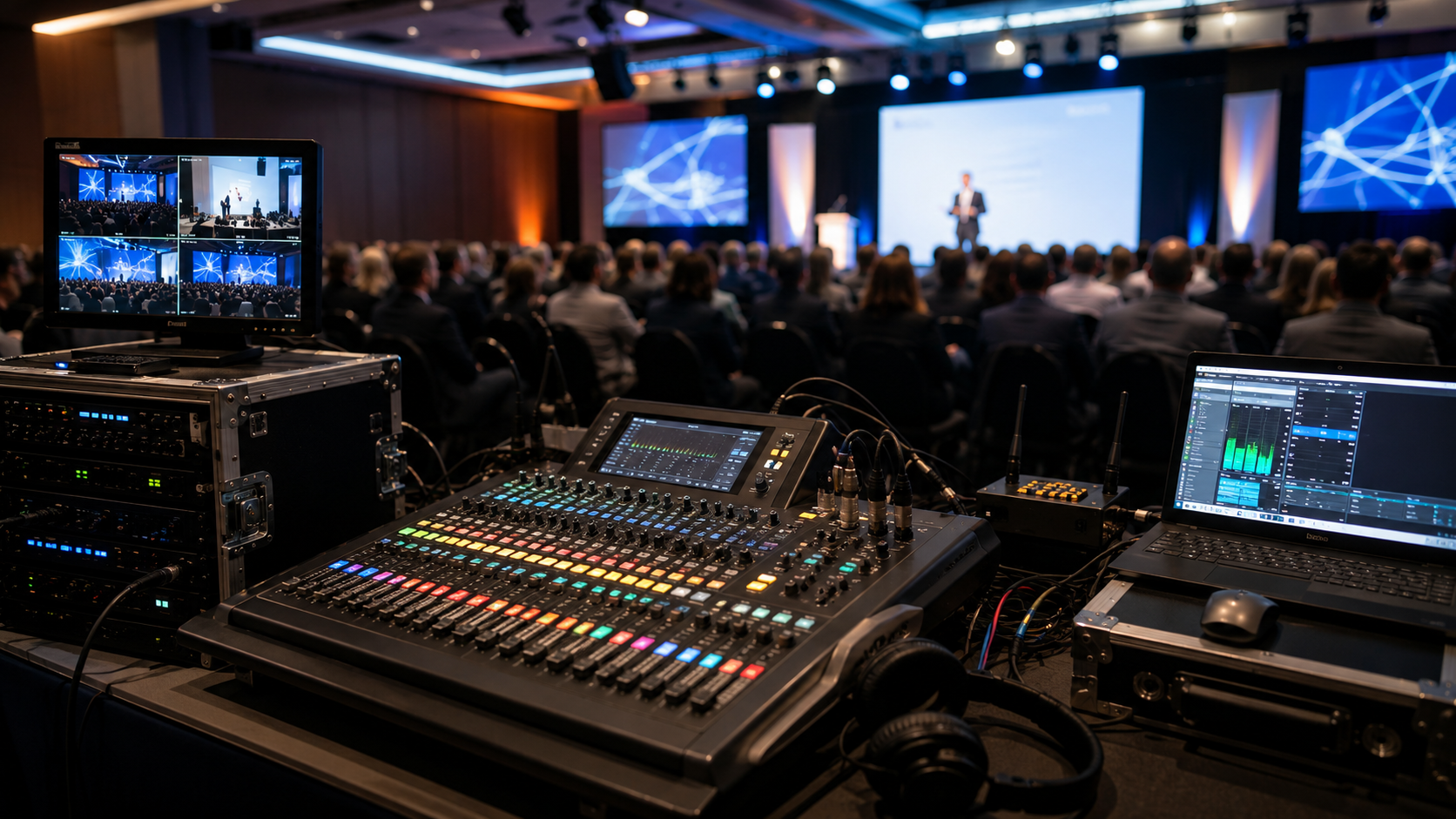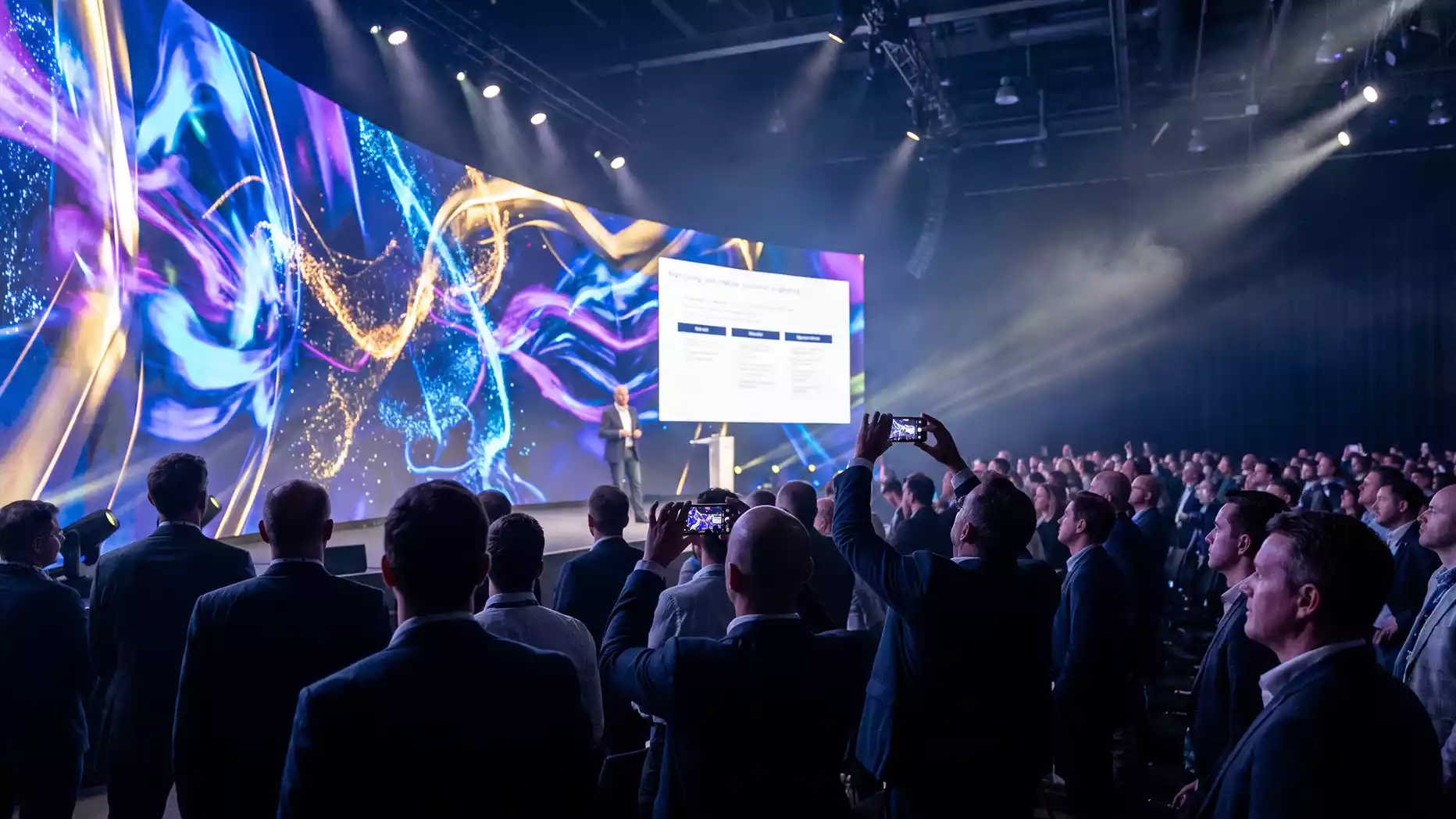
If you’re planning a conference, AGM or brand launch in the UK, the biggest stage set hire mistakes usually aren’t about the stage itself. They are about how you hire and manage the partner delivering it. The most common problems include treating staging as an afterthought, ignoring UK safety rules, forgetting how tightly staging links to AV and lighting, and underestimating venue logistics (especially in London). All of these can lead to blown budgets, overruns, safety issues, and a stage set that simply doesn’t work for your event or brand.
Mistakes can be valuable lessons. They teach us what not to do. But when repeated, they can harm progress and even damage reputations. For corporate organisations, mistakes don’t just hurt performance. They also raise questions about credibility and professionalism. A single error can ruin the event’s impact. It can leave your audience unimpressed and your company’s reputation at risk.
This guide highlights five common mistakes organisers make most often:
- Treat staging as an afterthought, not a core part of the initial brief.
- Ignore UK safety, CDM 2015, and temporary structure rules.
- Underestimate how tightly the stage must integrate with AV.
- Overlook local venue constraints and logistics, especially in London.
- Focus on day-rate price rather than total value, support and risk reduction.
Mistake 1: Treating staging as an afterthought, not a core part of the brief
This is the classic: you’ve confirmed the venue, speakers and event date… but staging is still “TBC (To be confirmed)”. The brief to suppliers says something like “standard conference stage” and arrives a few weeks (or even days) before the event.
In busy UK venues, particularly in central London, that approach almost guarantees compromises:
- Limited stock or sizes still available on your dates.
- Suboptimal layouts for cameras, interpreters, or panel sessions.
- Clashes with existing rigging, room pillars, or fire exits.
Why UK organisers fall into it
Corporate teams are under pressure. Internal comms, sponsors, travel, content and leadership diaries all demand attention. Staging feels like a detail that can “wait until we know the agenda”.
In reality, the stage set affects the whole floorplan: seating, aisles, screen size, camera positions and even where you can put catering. Leaving it late reduces your options.
What it costs (time, money, perception)
- Cost: rush charges, redesigns, or last-minute changes to AV and branding.
- Time: more back-and-forth with the venue and suppliers to make it all fit.
- Brand perception: a stage that feels cramped, off-centre, or “stuck in a corner” undermines an otherwise premium event.
How to avoid it
- Include staging in your first RFP or internal brief. Treat it as core infrastructure, not decoration.
- Share floorplans early. Mark emergency exits, pillars, sightlines and desired capacity.
- Book a site visit. For London conferences, insist on a joint visit with your stage/AV partner and venue contact; this is where practical issues surface.
- Define key use cases. Panels, fireside chats, award walks, orchestra, car on stage? Your provider can’t design the right set without this.
Mistake 2: Ignoring UK safety, compliance and temporary structure rules
On paper, the stage set “looks simple”: a platform, steps, maybe a backdrop and an LED wall. In practice, it counts as a temporary demountable structure (TDS), so UK health and safety law treats it like a small construction project.
The Health and Safety Executive (HSE) provides specific guidance on temporary demountable structures and event sites, including stages and roofs. Under the Construction (Design and Management) Regulations 2015 (CDM 2015), building temporary structures for events brings in defined roles and legal duties for the client (organiser), principal designer, and principal contractor.
Common shortcuts include:
- No formal RAMS (risk assessments and method statements).
- No structural calculations or wind-loading data for larger sets or roofs.
- Vague or missing public liability insurance details.
- No named CDM roles when multiple contractors are involved.
Why UK organisers fall into it
Many corporate teams still see staging as “equipment hire”, not construction. They assume:
- “The venue/production company will handle all that.”
- “We’re indoors, so it’s not really a structure risk.”
- “We’ve used similar stages before; it’s fine.”
However, HSE guidance is clear that organisers must understand who holds which duties and ensure temporary structures are designed, erected and inspected competently; you cannot outsource responsibility entirely.
What it costs
- Safety risk: instability, overloading, or poor access can cause falls or structural failures.
- Liability: unclear CDM roles or missing documentation can leave your organisation exposed if something goes wrong.
- Venue and insurer friction: major venues and insurers now expect robust paperwork before sign-off.
How to avoid it
Ask every stage set provider, as standard, for:
- RAMS specific to your event and venue.
- Evidence of competence: references, accreditations, and experience with similar corporate events.
- Structural calculations/design documents for significant set pieces and roofs, signed off by a competent engineer where needed.
- Confirmation of CDM roles if multiple contractors are involved (who is acting as client, principal designer and principal contractor).
Also, check their approach matches current HSE event safety guidance, which stresses planning, risk assessment and clear responsibility for temporary structures.
For complex stage sets, AV Productions can supply:
- Project-specific RAMS and, where appropriate, structural documentation.
Clear assurance on insurance and competence. - Coordination of temporary structure design with rigging, lighting and LED loads, reducing the risk of last-minute surprises.
Mistake 3: Underestimating integration with audio, lighting and visuals
A common story: staging is booked via one supplier, AV via another, and creative branding via a third. Nobody owns the full picture until load-in day.
The result might be:
- A stage height that blocks sightlines to the LED wall for the front rows.
- Lecterns or sofas sitting in shadow because the lighting trees couldn’t go where planned.
- Poor audio coverage because speaker positions clash with the set design.
- Awkward camera angles for hybrid or recorded events.
Given that UK venues hosted over 1.08 million conferences and meetings in 2024, welcoming 95.4 million delegates and generating around £19.3 billion in spend, the pressure to get sightlines, audio and visuals right is huge.
Why UK organisers fall into it
Procurement frameworks and legacy supplier lists often separate:
- “Staging and set”
- “AV and lighting”
- “Branding / creative”
On paper, this seems tidy. In reality, it splits decisions that should be made together at the outset and during design.
What it costs
- Audience experience: poor sightlines or dull lighting make even the best speakers feel flat.
- Hybrid reach: badly positioned screens and cameras limit what remote audiences can see.
- Schedule risk: last-minute re-rigging on-site, with overtime fees to match.
How to avoid it
- Choose a single technical partner for staging, AV, lighting and LED wherever feasible.
- If you must split suppliers, nominate a lead production partner to coordinate all technical drawings and sign-offs.
- Request combined plans showing stage, screens, truss, sound system and seating in one drawing.
- Share your camera plan early if you are streaming or recording – this affects stage dimensions and backdrop design.
As a full-service technical partner, AV Productions designs the stage, AV package and lighting as one system, then stress-tests it against your agenda and venue.
Mistake 4: Overlooking venue constraints and logistics in UK cities
The stage set looks perfect in the PDF. Then the crew arrives at a central London venue and discovers:
- The loading bay is shared and tightly timed.
- The goods lift is too small for full-size scenic flats.
- There’s a low ceiling or limited rigging points over part of the room.
- Curfews and noise limits restrict overnight builds or late-night changeovers.
This is not just a London issue; similar constraints exist in city-centre venues across the UK, but London tends to combine tight access, residential neighbours and busy schedules.
Why UK organisers fall into it
When you’re viewing the room on a site visit, it’s easy to focus on decor, room capacity and catering. Access routes, floor loadings and rigging grids rarely come up unless you ask.
If the staging provider hasn’t worked in that venue before, they may underestimate how long it will actually take to get equipment in, built and tested within the venue’s rules.
What it costs
- Delays: crews waiting for access windows or lifts.
- Design compromises: scenic elements abandoned on the truck because they physically won’t fit.
- Overtime and re-plans: extra crew or extended build slots.
How to avoid it
Build a simple logistics checklist into your brief:
- Access & loading: Where is the loading bay, are there time restrictions, and how far is it from the room?
- Lifts & doors: What are the dimensions and any weight limits?
- Ceiling height & rigging: Maximum height over the stage area; any no-rig zones?
- Floor loadings: Any restrictions for heavy structures or vehicles on stage?
- Noise and curfews: Building or local rules on out-of-hours noise and operation.
Ask your staging / AV partner to liaise directly with the venue’s technical or operations team to confirm these points before finalising designs.
Because AV Productions works regularly across major London venues (from ExCeL and the QEII Centre to museums and hotels), our team already understands many of these constraints and can advise on realistic build schedules and designs from the outset.
Mistake 5: Focusing only on the day-rate price, not the total value and support
What the mistake looks like
A spreadsheet compares three quotes. The cheapest one wins. On the surface, it’s a like-for-like price comparison: stage size, backdrop, maybe some steps and handrails. Hidden differences include:
- Does the price include design and drawings?
- Is there a site visit?
- Are RAMS and safety documentation included or charged extra?
- Is there rehearsal support or just a drop-and-go crew?
- What happens if you need last-minute changes?
The UK events sector generates tens of billions of pounds of economic impact and is forecast to grow 3–5% annually through 2027. In that context, the cheapest staging day rate is rarely the biggest risk. Failed events and damaged reputations are.
Why UK organisers fall into it
Procurement often has to demonstrate savings. It’s easier to compare unit costs than to quantify resilience, experience and risk management.
But staging is not a commodity. It is a risk-bearing, safety-critical, experience-defining asset.
What it costs
- Change orders and extras: overtime, additional crew or extra equipment that weren’t in the original scope.
- Stress: More firefighting from your team when the provider doesn’t proactively manage issues.
- Reputation: If the stage fails, no one remembers that you saved £800 on day one.
How to avoid it
When comparing proposals, look beyond the day rate. Ask:
- Who owns CDM and safety coordination for the structure?
- What on-site support is included during build, rehearsals and show?
- Does the provider include detailed drawings, load calculations and risk assessments?
- How quickly can they respond to changes (agenda tweaks, extra panels, additional branding)?
- Do they have sufficient in-house inventory to cope with late additions, or will everything be sub-hired?
How a London-based technical production partner reduces these risks
Working with a joined-up partner for stage set hire and technical production gives you:
- One integrated design: Stage, AV, lighting and LED built to work together.
- Clear safety ownership: RAMS, CDM roles and temporary structure documentation coordinated centrally.
- Local venue knowledge: Realistic plans for London and UK venues, including access, rigging and curfews.
- Consistent crew and project managers: The same people from planning through to de-rig.
- Scalability: A large in-house inventory that can flex for last-minute changes.
AV Productions’ event production service in London combines that technical depth with practical, corporate-friendly support across conferences, AGMs, awards and brand experiences, so your team can focus on content, stakeholders and guests, not on staging spreadsheets.
Final thoughts
The UK business events sector is growing fast, with over a million conferences and meetings a year and billions in delegate spend. In that context, avoiding these five stage set hire mistakes is not just about saving money on kit. It’s about protecting:
- Your event schedule.
- Your attendees’ experience.
- Your organisation’s reputation and legal position.
Treat staging as a core part of your brief, take UK safety and CDM duties seriously, integrate AV and set design from the start, respect the realities of London and UK venues, and compare suppliers on value and risk reduction, not just headline price.
If you’d like a second opinion on an upcoming conference, AGM or product launch, you can speak to AV Productions’ team about staging hire and corporate event production in London. We help you turn your stage set from a risk into a reliable asset for your next UK event.
FAQs
How much notice do UK stage providers usually need?
For a typical London conference or AGM, most reputable staging and technical providers will prefer 6–12 weeks’ notice, especially if you need custom scenic elements, LED walls or complex rigging. Shorter lead times are often possible, but you’ll have fewer design options and less flexibility on build slots. For larger multi-day events or highly branded sets, treat staging as part of the initial venue decision, not an afterthought.
What licences and safety documents should I ask for when hiring a stage set?
At minimum, ask for:
- RAMS (risk assessments and method statements).
- Proof of public liability insurance.
- Structural calculations or design documentation for significant sets or roofs.
- Confirmation of compliance with HSE guidance on temporary demountable structures and CDM 2015 roles and duties for event construction work.
Your venue or local authority may also request copies of this paperwork before approval.
Do I really need a site visit before confirming staging in London?
For anything beyond the most basic platform, yes, a joint site visit is strongly recommended. Central London venues can have unusual access routes, low ceilings in specific areas, or strict build and noise windows. A site visit with your stage/AV partner allows them to measure, check rigging and access, and foresee issues before they become costly changes.
What’s the difference between hiring staging from the venue versus a specialist AV company?
Many venues can supply a basic “house” stage, which is often suitable for simple lectures. However, a specialist AV and staging partner can:
- Design a custom set that aligns with your brand.
- Integrate staging with screens, lighting, cameras and audio.
- Provide detailed safety documentation and CDM-compliant management for temporary structures.
For high-profile corporate events, awards, hybrids or complex events, a specialist partner usually offers more flexibility and risk control than a generic in-house package.