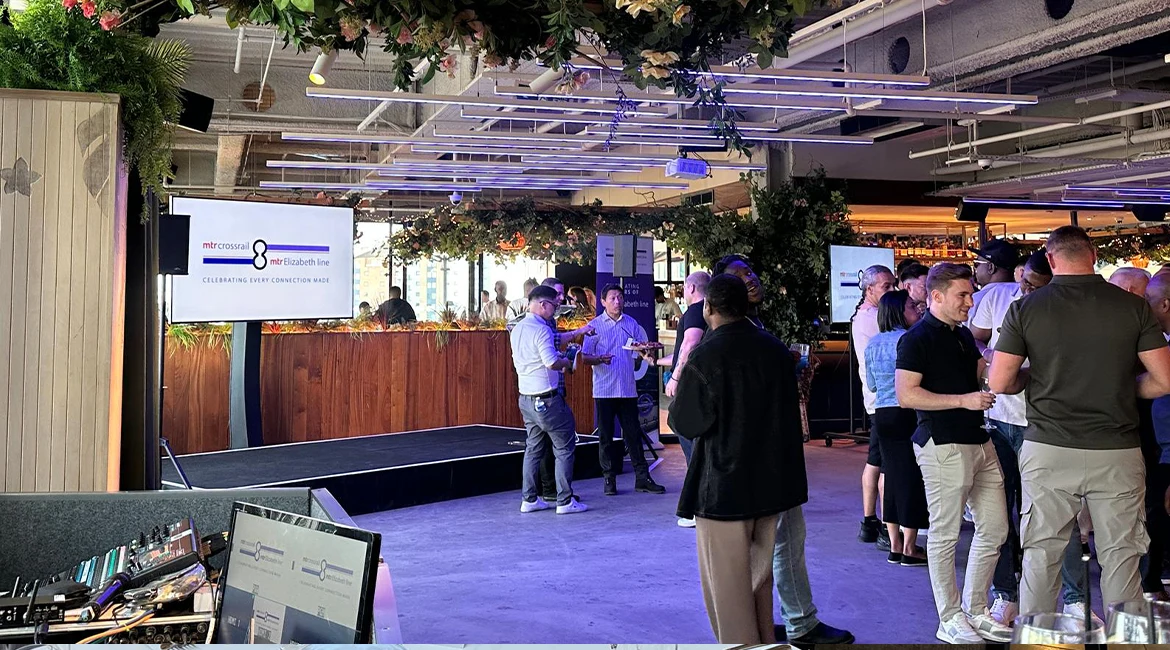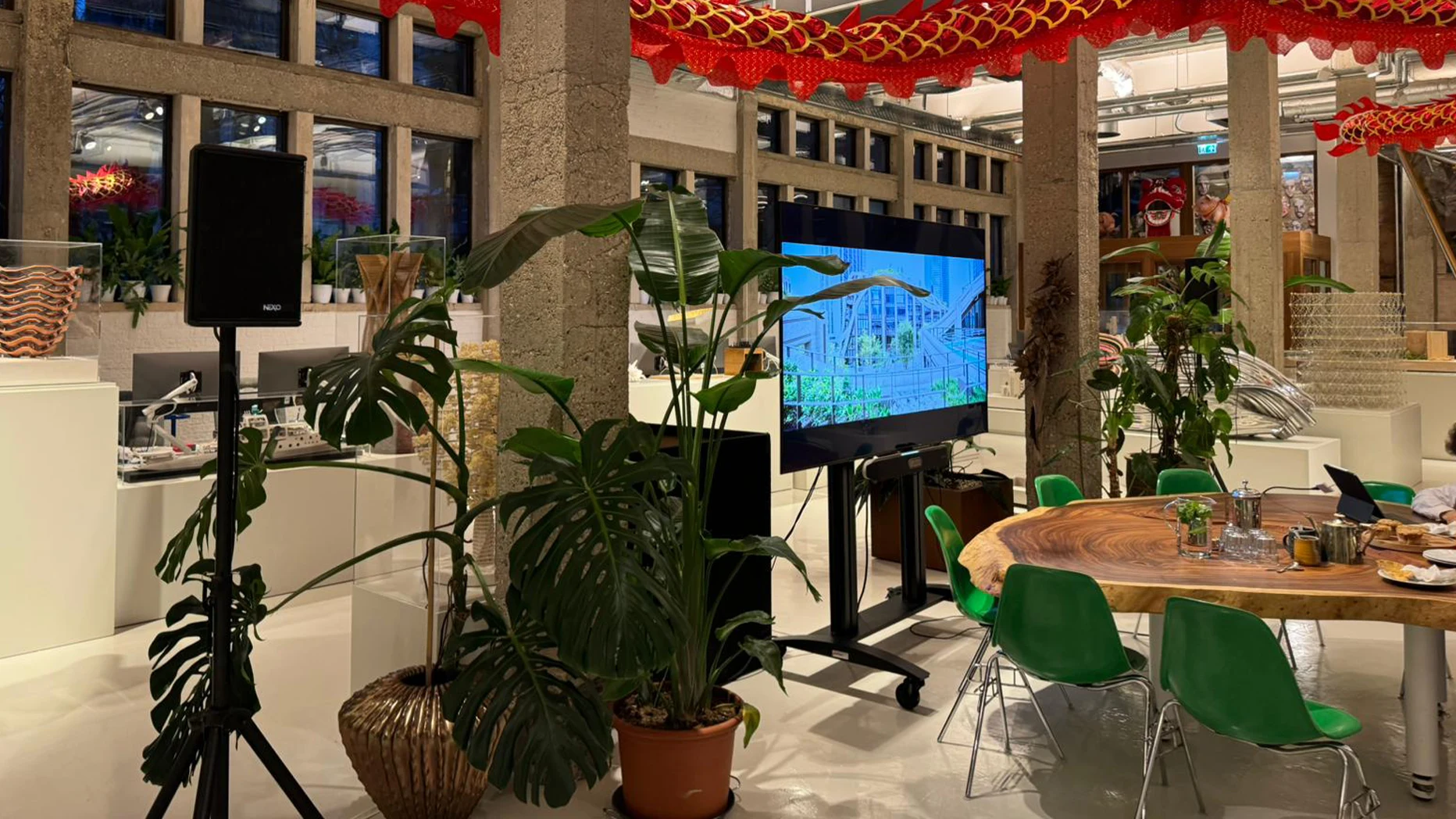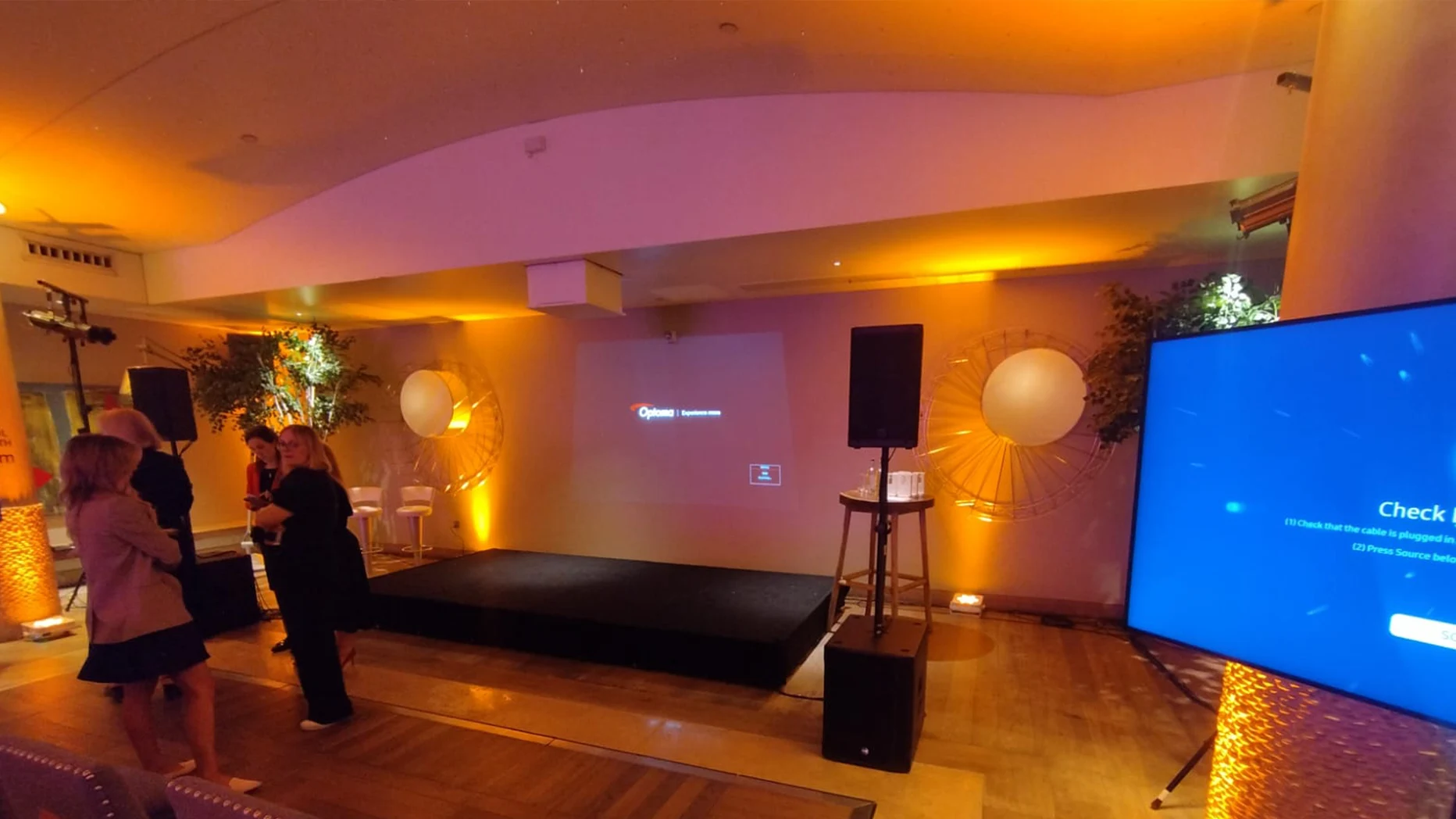
Start with your venue location. If guests can arrive easily by train, bus, or on foot, you’ve already tackled one of the biggest sources of event emissions: audience travel. Then keep it simple, use local, seasonal catering, cut single-use plastics, and replace print where you can with digital signage and LED-powered AV.
Track what you can and report it clearly. For measurement, many UK teams use free tools like Julie’s Bicycle Creative Climate Tools, or event-focused platforms like TRACE by Isla for live, hybrid, and digital events. Even doing three of these well will put you ahead of most UK corporate events right now.
Planning a sustainable event doesn’t have to mean cutting corners or doubling your budget. In fact, when it’s done well, it often feels more organised, more modern, and more premium. The trick is to stop thinking of sustainability as “extra tasks” and start treating it like smart event design.
This guide will help event managers, brand teams, and office professionals who are planning corporate events, product launches, conferences, and hybrid formats in London and across the UK.
Why sustainability in events matters
Events can leave a large carbon footprint, often driven mainly by travel (around 70%) and waste (up to 30%). One attendee can create up to 2,000 pounds of CO₂ (about 900 kg) if air travel is involved. To tackle this, the Events Industry Council (EIC) introduced sustainability principles in 2019, urging planners and suppliers to adopt greener practices. Choosing sustainable options not only helps the environment but also creates better, more meaningful event experiences. Here are some tips for planning a sustainable event:
Start where the impact is biggest: “travel”
Most people start sustainability planning with waste. It’s visible, it’s easy to talk about, and it feels like progress. But in many events, travel is the heavy hitter, especially if guests drive to a venue outside the city or fly in.
You can’t control how people travel, but you can absolutely influence it. The simplest way is to stop making travel an afterthought.
- Create a Simple Attendee Travel Plan
Instead of a vague “how to get here” link, send a short travel guide as part of your confirmation email. Keep it friendly and direct. Tell people the best routes from the places they’re coming from. Add walking time from the nearest station. Include step-free routes if available. Mention cycle parking. If your crowd drives, add a car-share option so it feels normal, not “extra work.”
- Go one step further
And yes, incentives can help. A small prize draw for guests who arrive by public transport or bike is cheap, and it nudges behaviour without sounding preachy.
- Venue choice matters too
If you’re planning in London, there’s an easy rule that improves everything: prioritise venues within about a 10-minute walk of a major station. Guests arrive calmer. Fewer people get lost. You avoid the late-arrival wave that hits when everyone’s stuck in traffic.
Choose the right venue and ask the right questions
Sustainable event planning begins at venue selection. When briefing venues, go beyond ‘do you have a recycling policy?’ and ask specifically:
- Do you hold ISO 20121 certification or actively work towards it?
- What percentage of your energy comes from renewable sources?
- Do you have on-site composting or a certified waste processing partner?
- Are refill stations possible, so we can reduce bottled water?
- Can you support separate waste streams and show us the plan?
- Can you provide waste or recycling data after the event?
- What was your food waste diversion rate at recent events?
The Green Tourism accreditation and ISO 14001 are good baseline indicators for UK venues. ISO 20121 goes further; it is the international standard specifically for sustainable event management and covers environmental, social, and economic impacts together. If a venue holds this certification, it is already thinking the way you need it to.
If a venue can answer clearly, planning gets easier fast. If they can’t, you can still run a good event, but you’ll need more workarounds and more hands-on staff guidance.
Make catering choices simple and planned
Food is one of the easiest ways to make sustainability feel normal. Not by making the menu “about sustainability”, but by making it good and thoughtful.
For most corporate events, the biggest wins are where the food comes from and how much gets wasted.
- Source locally and seasonally
Local and seasonal sourcing usually helps, and in London, you have plenty of caterers who can deliver at scale. Then shift the menu gently toward plants. You don’t need to go fully vegan to reduce impact. Even a plant-forward menu with smarter protein choices can make a meaningful difference.
- Shift the menu toward plants
A majority plant-based menu has a much lower carbon footprint than a meat-heavy one. You do not need to go fully vegan; replacing red meat with chicken, fish, or plant alternatives makes a meaningful difference.
- Tackle food waste properly
Build accurate RSVP numbers into your catering order and arrange surplus food donation before the event day, not after. Platforms like Olio and Too Good To Go can connect you with local charities and residents. Make sure a specific contact is confirmed in advance, not left as a vague intention. This isn’t just a moral idea; it’s recognised best practice.
The compostable trap (quick warning)
Compostable cups and plates sound like the perfect fix. But they only help if the venue has the right collection and processing route. If compostables go into general waste, they can still end up as landfill. If they go into recycling, they can contaminate the stream.
So ask this one question early: “Do you have an industrial composting collection route for compostables?” If the answer is no, reusable or recyclable is usually the safer choice.
Rethink waste and signage from the ground up
If bins are hard to find, poorly labelled, or placed in the wrong spots, people will do what humans do: throw things in the closest opening and move on.
Set up waste stations where decisions happen, near food, exits, and busy walkways. Make labels obvious. If you can, brief your staff to guide guests (especially at peak times). A few small prompts can massively reduce contamination.
Signage is another hidden waste driver. Most events print foam boards or PVC banners for one day and bin them immediately. That’s not “bad planning”, it’s just the default approach.
A better approach is circular signage:
Circular signage is one of the most overlooked areas of event sustainability.
- Invest in a modular, reusable signage system with interchangeable inserts, and use it across multiple events.
- Use digital wayfinding screens powered by your AV setup.
- Replace printed programmes and agendas with a QR-linked digital version.
- If you must print, use recycled paper and vegetable-based inks, and collect materials at the exit for reuse.
This is one of the rare areas where sustainability can look more premium instantly. Set up clearly labelled stations for recycling, composting (only if the venue can process it), and general waste, and brief your staff to guide attendees. Behaviour follows clear prompting.
Green your AV and power setup
Your sustainable corporate event strategy needs to include AV. Large events can draw significant power, and the choices you make with your AV supplier have a real environmental impact.
The EIC standards include criteria for Audio Visual and Production, including having a power-down policy, which is basically: if you’re not using it, don’t leave it running.
Good AV sustainability looks like this:
- LED fixtures as standard: LED lighting uses a fraction of the energy of traditional tungsten or halogen. Ask your AV supplier upfront: ‘Is LED your default?’ It should be.
- Smart power planning: A good AV partner will calculate your expected draw and ensure equipment is not running on standby unnecessarily. This is not just greener, it is cheaper.
- Reusable rigging and cable management: avoid single-event rigging solutions. Reusable systems reduce waste and cost over time.
- Consolidated deliveries: ask your AV supplier to combine all logistics into a single vehicle run. Multiple small vans from the same supplier are entirely avoidable.
- Digital signage replacing print: a single LED screen running dynamic content replaces dozens of printed items, directional signs, sponsor boards, and agenda displays. It also looks better. See digital-signage.
Digital Sustainability for Hybrid Events
Hybrid events feel “lighter,” but streaming still has an impact. Data centres and data transfer use energy, and unnecessary streaming choices add up. You don’t need a technical overhaul to improve this. Start with common settings:
- Stream in 1080p unless you truly need 4K.
- Avoid autoplay in follow-up emails.
- Use a streaming platform with published sustainability or energy efficiency commitments.
- Turn off unused camera feeds when they’re not needed.
If you want to measure and report consistently across live + hybrid + digital formats, TRACE by ISLA is designed for that.
Qualify your suppliers with a simple scorecard
Even if you do everything right, one supplier can undo it with wasteful packaging, multiple delivery runs, or one-off materials.
Your green event is only as sustainable as your supply chain. Use this short scorecard when briefing any key vendor, catering, AV, furniture, print, or transport:
| Question | Yes / No / Partial |
| Do you have a written sustainability or environmental policy? | |
| Do you use renewable energy at your premises or operations? | |
| Do you actively minimise single-use packaging in your deliveries? | |
| Can you consolidate deliveries to reduce vehicle movements? | |
| Do you hold accreditation (ISO 14001, B Corp, or equivalent)? | |
| Do you measure and report your own carbon footprint? | |
| Do you offer reusable, hireable items rather than one-off purchases? | |
| Have you supported sustainable events or initiatives in the past year? |
A vendor who cannot answer most of these questions has probably not thought about it, which means you are taking on the risk. Aim for partners who score at least 5 out of 8.
Sustainability includes people, not just the planet
Event sustainability is not only environmental. The ISO 20121 framework explicitly includes social and economic sustainability, and the EIC standards reflect this too.
That means thinking about who can actually attend your event. Is the venue fully accessible to wheelchair users? Have you considered neurodivergent attendees in your environment and sensory planning? Are your transport options accessible to everyone? Have you actively included suppliers from underrepresented communities?
These are not add-ons. They are part of what makes an event genuinely sustainable, and increasingly what clients and delegates expect to see.
Leave a legacy, not just a low carbon number
A sustainable event shouldn’t stop when the doors close.
- If you’ve used reusable signage frames, keep them and build a system around them.
- If you have surplus materials, find a sensible donation route. If the event has a theme (education, community, wellbeing), a small legacy action can turn a one-day gathering into something with real value.
It’s also one of the easiest things to report to stakeholders, because it’s tangible.
| Tight Budget or Short Timeline? Do These 3 Things First1. Send a travel plan. It costs nothing to create a simple one-pager with the best tube, train, and bus routes plus a map of cycle parking. This single action can cut your event’s carbon footprint more than any other.2. Remove single-use plastic. Talk to your venue this week. Ask for water stations instead of plastic bottles, real crockery instead of disposable plates. This is usually free or has a marginal cost and makes an instant, visible difference.3. Ask your AV supplier for LED. Swapping out traditional fixtures for LED reduces power draw significantly. Any reputable London AV company should offer this as standard. |
How to measure and report your event’s sustainability
Reporting is how you avoid greenwashing and build trust. The key is to measure a baseline before the event, track actuals where possible, and report honestly — including what did not go to plan.
Carbon footprint: use the free tools from Julie’s Bicycle (designed for arts and events) or the Isla platform (widely used across UK events). Both allow you to estimate emissions from travel, energy, catering, and waste.
KPIs to track:
- % of attendees who travelled by public transport or active travel (survey at registration)
- Total waste generated vs diverted from landfill (request data from venue or waste contractor)
- Food waste in kg (ask your caterer)
- Energy consumed in kWh (from venue meter or AV supplier power plans)
- Carbon offset vs carbon reduced report both separately, never conflate them
Sharing results without greenwashing: include actual numbers, not vague claims. Share what went well and what did not. Transparency builds far more credibility than a ‘we’re a green event’ badge.
| Sustainable Event Checklist Venue: accessible by public transport / green certification confirmed / travel plan sent to all attendeesCatering: local and seasonal sourcing confirmed / majority plant-based menu / surplus food donation partner confirmed in advanceWaste: single-use plastic removed / compostables only if venue can process/labelled waste stations plannedSignage: digital or reusable only / no one-off foam board or PVCAV: LED confirmed with supplier/power draw planned / consolidated delivery confirmedSuppliers: scorecard completed for all key vendors / local suppliers, prioritisedMeasurement: carbon baseline calculated before event / post-event report scheduled for stakeholders |
Make your next event greener, starting with your AV
At AV Productions, we help teams across London and the UK reduce environmental impact without reducing production quality. That means LED screens and fixtures, smarter power planning, reusable rigging, consolidated logistics, and digital signage that replaces single-use print.
Sustainable event planning shouldn’t mean compromise. Talk to our team today.
FAQs
What is sustainable event planning?
Sustainable event planning means designing and delivering events that minimise environmental impact, support social inclusion, and make responsible use of budget. It covers venue choice, travel, AV, catering, waste, and how you measure and report results. ISO 20121 is the international standard covering all of this.
What is the biggest contributor to an event’s carbon footprint?
For most corporate events, audience travel, particularly by car or plane, is the largest single source of emissions. Focusing on venue accessibility and sending a compelling travel plan to attendees is the highest-impact action most planners can take.
How do I find a sustainable venue in London?
Look for venues with ISO 20121 certification, ISO 14001 environmental accreditation, or Green Tourism registration. Many major London venues publish sustainability policies and ask for them directly. Prioritise venues within 10 minutes’ walk of a mainline station or tube stop.
Are compostable cups and plates actually sustainable?
Only if your venue has an industrial composting collection. Compostable items sent to general waste or standard recycling go to the landfill and can contaminate recycling streams. Always confirm your venue’s waste processing before specifying compostables.
How can I make a hybrid event more sustainable?
Right-size your stream resolution (1080p is usually sufficient), disable autoplay on recordings, use a streaming platform with clear energy commitments, and reduce unnecessary camera feeds during low-activity periods. These small digital choices add up across large audiences.
How do I know if my suppliers are genuinely sustainable?
Use a short scorecard with direct yes/no questions about energy, packaging, delivery, and certification. Any supplier serious about sustainability will have answers. If they cannot answer, factor that into your decision.